


تحسين النتائح
ترتيب حسب
من
الى

Camenzind's Compact Objects in Astrophysics gives a comprehensive introduction and up-to-date overview about the physical processes behind these objects, covering the field from the beginning to most recent results, including all relevant observations.
Classical Methods of Statistics is a blend of theory and practical statistical methods written for graduate students and researchers interested in applications to plasma physics and its experimental aspects. It can also fruitfully be used by students majoring in probability theory and statistics. In the first part, the mathematical framework and some of the history of the subject are described. Many exercises help readers to understand the underlying concepts. In the second part, two case studies are presented exemplifying discriminant analysis and multivariate profile analysis. The introductions of these case studies outline contextual magnetic plasma fusion research. In the third part, an overview of statistical software is given and, in particular, SAS and S-PLUS are discussed. In the last chapter, several datasets with guided exercises, predominantly from the ASDEX Upgrade tokamak, are included and their physical background is concisely described. The book concludes with a list of essential keyword translations.
This book stresses the unity of electromagnetic theory with electric and magnetic fields developed in parallel. SI units are used throughout and considerable use is made of tensor notation and the Levi-Cevita symbol. To more closely display the parallelism, extensive use is made of the scalar magnetic potential particularly in dealing with the Laplace and Poisson equation. 85 worked problems illustrate the theory. Conformal mappings are dealt with in some detail. Relevant mathematical material is provided in appendices.
This concise research monograph introduces and reviews the concept of chiral soliton models for baryons. In these models, baryons emerge as (topological) defects of the chiral field. The many applications shed light on a number of bayron properties, ranging from static properties via nucleon resonances and deep inelastic scattering to even heavy ion collisions. As far as possible, the theoretical investigations are confronted with experiment. Conceived to bridge the gap between advanced graduate textbooks and the research literature, this volume also features a number of appendices to help nonspecialist readers to follow in more detail some of the calculations in the main text.

This book provides an introduction and guide to modern advances in charged particle (and antiparticle) confinement by electromagnetic fields. Confinement in different trap geometries, the influence of trap imperfections, classical and quantum mechanical description of the trapped particle motion, different methods of ion cooling to low temperatures, and non-neutral plasma properties (including Coulomb crystals) are the main subjects. They form the basis of such applications of charged particle traps as high-resolution optical and microwave spectroscopy, mass spectrometry, atomic clocks, and, potentially, quantum computing.

Charge migration through DNA has been the focus of considerable interest in recent years. A deeper understanding of the nature of charge transfer and transport along the double helix is important in fields as diverse as physics, chemistry and nanotechnology. It has also important implications in biology, in particular in DNA damage and repair. This book presents contributions from an international team of researchers active in this field.
This book is intended as an introduction to the field of planetary systems at the postgraduate level. It consists of four extensive lectures on Hamiltonian dynamics, celestial mechanics, the structure of extrasolar planetary systems and the formation of planets. As such, this volume is particularly suitable for those who need to understand the substantial connections between these different topics.

This new edition strives yet again to provide readers with a working knowledge of chaos theory and dynamical systems through parallel introductory explanations in the book and interaction with carefully-selected programs supplied on the accompanying diskette. The programs enable readers, especially advanced-undergraduate students in physics, engineering, and math, to tackle relevant physical systems quickly on their PCs, without distraction from algorithmic details. For the third edition of Chaos: A Program Collection for the PC, each of the previous twelve programs is polished and rewritten in C++ (both Windows and Linux versions are included). A new program treats kicked systems, an important class of two-dimensional problems, which is introduced in Chapter 13. Each chapter follows the structure: theoretical background; numerical techniques; interaction with the program; computer experiments; real experiments and empirical evidence; reference.
The second law of thermodynamics is considered one of the central laws of science, engineering and technology. For over a century it has been assumed to be inviolable by the scientific community. Over the last 10-20 years, however, more than two dozen challenges to it have appeared in the physical literature - more than during any other period in its 150-year history. The number and variety of these represent a cogent threat to its absolute status. This is the first book to document and critique these modern challenges. Written by two leading exponents of this rapidly emerging field, it covers the theoretical and experimental aspects of principal challenges. In addition, unresolved foundational issues concerning entropy and the second law are explored. This book should be of interest to anyone whose work or research is touched by the second law.
Cell motility is a fascinating example of cell behavior which is fundamentally important to a number of biological and pathological processes. It is based on a complex self-organized mechano-chemical machine consisting of cytoskeletal filaments and molecular motors. In general, the cytoskeleton is responsible for the movement of the entire cell and for movements within the cell. The main challenge in the field of cell motility is to develop a complete physical description on how and why cells move. For this purpose new ways of modeling the properties of biological cells have to be found. This long term goal can only be achieved if new experimental techniques are developed to extract physical information from these living systems and if theoretical models are found which bridge the gap between molecular and mesoscopic length scales. Cell Motility gives an authoritative overview of the fundamental biological facts, theoretical models, and current experimental developments in this fascinating area.
Contents are divided into major topics where the three "souls" of modern celestial mechanics (dynamical systems, Solar System and stellar systems, spaceflight dynamics) play a major role.
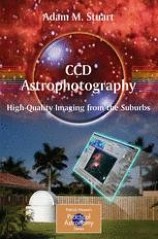
This is a reference book for amateur astronomers who have become interested in CCD imaging. Those glorious astronomical images found in astronomy magazines might seem out of reach to newcomers to CCD imaging, but this is not the case. Great pictures are attainable with modest equipment. Adam Stuart’s many beautiful images, reproduced in this book, attest to the quality of – initially – a beginner’s efforts. Chilled-chip astronomical CCD-cameras and software are also wonderful tools for cutting through seemingly impenetrable light-pollution. CCD Astrophotography from the Suburbs describes one man’s successful approach to the problem of getting high-quality astronomical images under some of the most light-polluted conditions.

Cathodic Arcs: From Fractal Spots to Energetic Condensation is the first book in over a decade dedicated to the physics and technology of cathodic arcs. It includes a detailed account of arc history, a textbook-like introduction to cathode phenomena, and some basic physics of expanding plasmas; it deals with the infamous macroparticle issue and describes a host of practical plasma filter solutions. In contrast to previous books on cathodic arcs, the focus is on the relation of arc plasmas and their properties to surface modification and thin film deposition. The book contains sections on basic plasma physics and thin film materials science. It also deals with practical issues of coatings such as stress control and the often-underrated issue of the coating’s color. By stressing the fractal nature of cathode spots, the theme of fluctuations can be found throughout the book: fluctuations affect all plasma properties and thereby have consequences for plasma-based surface modifications and film growth.
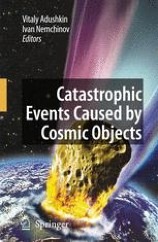
Many times all of us could hear from mass media that an asteroid approached and swept past the Earth. Such an asteroid or comet will inevitably strike the planet some day. This volume considers hazards due to collisions with cosmic objects, particularly in light of recent investigations of impacts by the authors. Each chapter written by an expert contains an overview of an aspect and new findings in the field. The main hazardous effects – cratering, shock, aerial and seismic waves, fires, ejection of dust and soot, tsunami are described and numerically estimated. Numerical simulations of impacts and impact consequences have received much attention in the book. Fairly small impacting objects 50 -100 m in diameter pose a real threat to humanity and their influence on the atmosphere and ionosphere is emphasized.

The carbon nanotubes field has evolved substantially since the publication of the bestseller "Carbon Nanotubes: Synthesis, Structure, Properties and Applications". The present volume builds on the generic aspects of the aforementioned book, which emphasizes the fundamentals, with the new volume emphasizing areas that have grown rapidly since the first volume, guiding future directions where research is needed and highlighting applications. The volume also includes an emphasis on areas like graphene, other carbon-like and other tube-like materials because these fields are likely to affect and influence developments in nanotubes in the next 5 years.
Carbon-based materials and their applications constitute a burgeoning topic of scientific research among scientists and engineers attracted from diverse areas such as applied physics, materials science, biology, mechanics, electronics and engineering. Further development of current materials, advances in their applications, and discovery of new forms of carbon are the themes addressed by the frontier research in these fields. This book covers all the fundamental topics concerned with amorphous and crystalline C-based materials, such as diamond, diamond-like carbon, carbon alloys, carbon nanotubes. The goal is, by coherently progressing from growth - and characterisation techniques to technological applications for each class of material, to fashion the first comprehensive state-of-the-art review of this fast evolving field of research in carbon materials.
Canonical Perturbation Theories, Degenerate Systems and Resonance presents the foundations of Hamiltonian Perturbation Theories used in Celestial Mechanics, emphasizing the Lie Series Theory and its application to degenerate systems and resonance. This book is the complete text on the subject including advanced topics in Hamiltonian Mechanics, Hori’s Theory, and the classical theories of Poincaré, von Zeipel-Brouwer, and Delaunay.
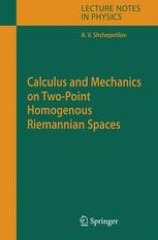
The present monograph gives a short and concise introduction to classical and quantum mechanics on two-point homogenous Riemannian spaces, with empahsis on spaces with constant curvature. Chapter 1-4 provide the basic notations from differential geometry for studying two-body dynamics in these spaces. Chapter 5 deals with the problem of finding explicitly invariant expressions for the two-body quantum Hamiltonian. Chapter 6 addresses one-body problems in a central potential. Chapter 7 studies the classical counterpart of the quantum system of chapter 5. Chapter 8 investigates some applications in the quantum realm, namely for the coulomb and oscillator potentials.

Einstein's Enigma, or black holes in my foam bath, tells the story of the theory of gravitation, from its beginnings to the latest developments in astrophysics, focusing on Albert Einstein's theory of general relativity and the physics of black holes. Through engaging conversations and diagrams scribbled on paper napkins, the rudiments of relativity, space-time and many aspects of modern physics follow one another. In skits narrated with pedagogical skill and remarkable literary talent, the reader will come across the informal lessons that a cosmopolitan astrophysicist gives to his friend Alfie, a free lance organizer of research projects. Join in the intellectual fun and get excited with sparkling ideas, while with your imagination you enjoy a relaxing soak in this magical tub!

Lays out a vision for a coherent framework for understanding complex systems'' (from the foreword by J. Doyne Farmer). By developing the genuine idea of Brownian agents, the author combines concepts from informatics, such as multiagent systems, with approaches of statistical many-particle physics. This way, an efficient method for computer simulations of complex systems is developed which is also accessible to analytical investigations and quantitative predictions. The book demonstrates that Brownian agent models can be successfully applied in many different contexts, ranging from physicochemical pattern formation, to active motion and swarming in biological systems, to self-assembling of networks, evolutionary optimization, urban growth, economic agglomeration and even social systems.

سوريا - اتستراد درعا - غباغب
+963-15 2050 - 15 860 380 /1/2/3 - 11 662 3900