


تحسين النتائح
ترتيب حسب
من
الى

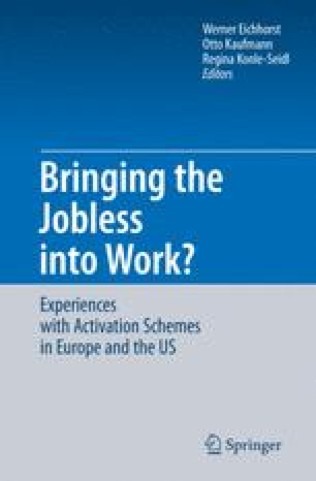
Over the last decade, many industrialized countries shifted from passive unemployment and welfare benefit regimes and traditional active labor market and social policies to activation strategies by making benefit receipt conditional upon accepting job offers or participation in active labor market schemes. But countries differ with regard to the design of activation instruments and their implementation, the definition of target groups and the effects of activation in the national labor market setting. This volume provides an up-to-date overview of activation strategies in unemployment benefit systems and social assistance in selected European countries and the US. A particular focus lies on the development of activation schemes, governance and implementation as well as on the outcomes of activation in terms of labor market and social integration. The volume is the first to address these issues both from a socio-economic and a legal perspective.

Color is a visible technology that invisibly connects so many puzzling aspects of modern Western consumer societies research and development, making and selling, predicting fashion trends, and more. Building on Regina Lee Blaszczyk’s go-to history of the “color revolution” in the United States, This book explores further transatlantic and multidisciplinary dimensions of the topic. Covering history from the mid nineteenth century into the immediate past, it examines the relationship between color, commerce, and consumer societies in unfamiliar settings and in the company of new kinds of experts. Readers will learn about the early dye industry, the dynamic nomenclature for color, and efforts to standardize, understand, and educate the public about color.

This short-form book provides a comprehensive overview of research evidence on several core branding topics whilst acting as a catalyst for advancing future research and informing business practice. The book represents a timely compendium on popular topics in branding and aims to be a valuable addition to knowledge in branding. The book focuses on reviewing research in branding and brand management, and proposes areas for expanding research in the field.

Focuses on the concept of “brand hate” and consumer negativity in today’s digital markets. It explores the emotional detachment consumers generate against valued brands and how negative experiences affect their and other consumers' loyalty. The book defines consumer brand hate and discusses its dimensions, antecedents, and consequences as well as the semiotics and legality of such brand hate activities based on current brand dilution arguments. It describes the situations which lead to anti-branding and how consumers choose to express their dissatisfaction with a company on individual and social levels. This newly updated edition discusses recent research findings from brand hate literature with new cases and extended managerial analysis.

In this invigorating and highly practical book, serial entrepreneur Carl Reader provides exactly the fire and guidance you need to get started. Designed to cut through the business jargon, this handy guide will take you through everything you need to establish and run your own business - from the mindset it takes to turn a dream into a plan, to the need-to-know practical stuff for running and growing a business.
Blockchain technology and artificial intelligence (AI) have the potential to transform how the accounting and financial services industries engage with the business, stakeholder and consumer communities. Presenting a blend of technical analysis with current and future applications, this book provides professionals with an action plan to embrace and move forward with these new technologies in financial and accounting organizations.
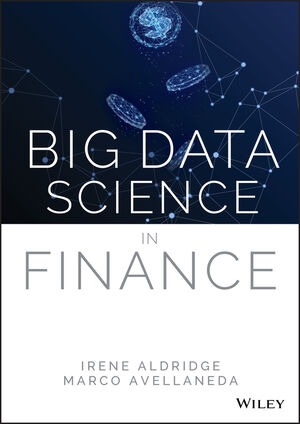
Explains the mathematics, theory, and methods of Big Data as applied to finance and investing Examines the mathematics, theory, and practical use of the revolutionary techniques that are transforming the industry. Designed for mathematically-advanced students and discerning financial practitioners alike, this energizing book presents new, cutting-edge content based on world-class research taught in the leading Financial Mathematics and Engineering programs in the world. Marco Avellaneda, a leader in quantitative finance, and quantitative methodology author Irene Aldridge help readers harness the power of Big Data. Provides a complete account of Big Data that includes proofs, step-by-step applications, and code samples Explains the difference between Principal Component Analysis (PCA) and Singular Value Decomposition (SVD) Covers vital topics in the field in a clear, straightforward manner Compares, contrasts, and discusses Big Data and Small Data Includes Cornell University-tested educational materials such as lesson plans, end-of-chapter questions, and downloadable lecture slides

Investigates why, despite more and more resources devoted to safety training, expectations are not entirely met, particularly in the industrial sectors that have already achieved a high safety level. It not only reflects the most precious viewpoints of experts from different disciplines, different countries, with experiences in various industrial fields at the cutting edge of theories and practices in terms of safety, professionalization and their relationships. It also consolidates the positioning of the Foundation for an Industrial Safety Culture, highlighting what is currently considered at stake in terms of safety training, taking into account the system of constraints the different stakeholders are submitted to. It reports some success stories as well as elements which could explain the observed plateau in terms of outcome. It identifies some levers for evolution for at-risk industry and outlines a possible research agenda to go further with experimental solutions.
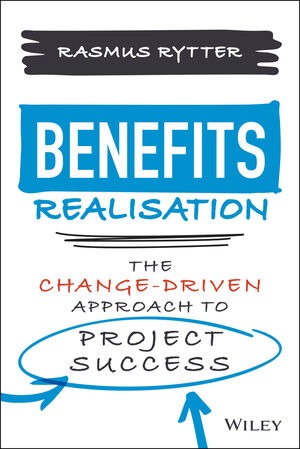
In Benefits Realisation: The Change-Driven Approach to Project Success, renowned benefits realisation expert, speaker, and consultant Rasmus Rytter introduces a new approach to change projects where benefits realisation defines the design of the project and how it’s led. Once the project’s benefits have been defined, the key question for the project to answer is: ‘How might we help our colleagues change their behaviour? Thus, identifying behavioural change as the key driver of benefit realisation.

Designed for investors who are serious about maximizing their gains, in this book you’ll discover how to: ● Take control of your decision-making—even when challenging markets push greed and fear to intolerable levels ● Reflect on how to make investment decisions using data-backed and substantiated information instead of emotion and bias ● Counter deep-seated biases like loss aversion, hindsight and overconfidence with self-awareness and hard facts ● Identify your personal investment psychology profile, which you can use to inform your future financial decision making

In the German banking sector, management is continually increasing its focus on shareholder interests. This can be seen in the ambitious profitability targets set by management in this sector. Some municipalities are also putting increasing pressure on Landesbanks and saving banks, as members of the largest German banking group, to create greater financial value.
Banking Sector Liberalization in India explores in detail the changes in the Indian banking sector over the last 20 years, and puts them into a comparative perspective with the Chinese banking sector. For this purpose, the author develops a detailed indicator-based framework for assessing the liberalization of a banking sector along various process steps based on financial liberalization and transformation studies. This framework, along with the indicators for the process and the results of liberalization, is applied to the banking sectors in India and China to test for the effects of liberalization on the sector and the macro level. The key finding is that while liberalization has improved the sectoral performance, it has so far had no effect on the macro level. The book features a detailed description of recent reforms in the Indian banking sector, a set of indicators for evaluating banking sector reforms, and a large number of graphs with key figures for the banking sectors in India and China.
Provides a tailored overview of what AI specifically means for financial services, a highly regulated yet also disrupted industry. it investigates the current state of AI applications in financial services today along with the state of funding and partnerships between tech and banking industries. it also examines the key pillars of responsible AI and the importance of keeping humans in the loop. the book takes a deep dive into the use cases in the financial services industry, the challenges and opportunities, and the fragmented regulatory landscape. how can we effectively assess risks, and balance innovation and customer centricity with trust in AI in financial services? can smaller organizations reap the benefits of the technology? how can institutions deploy AI responsibly and securely, and promote a fairer and more equitable future for more people?

Hints of globalization have actually been around for several decades, even though they made only a modest impact; however, the availability of global capital and advances in communication technology have emp- sized the process of internationalization and the tools available to connect and integrate business activities to answer to more complex needs of c- ents. Moreover, the financial scandals and the review of mutual fund trade activity in the US by the Attorney General Elliot Spitzer have highlighted the importance to focus all efforts on renewing the confidence of prof- sional investors and their clients who have entrusted their capital to asset managers. Therefore, there is a growing need in the market to reinforce the concept of “Shared Positive Values” among the entire industry and among its stakeholders.

The introduction of the Mercedes-Benz Production System (MPS) is exemplary of a trend within the automotive industry: the creation and introduction of company-specific standardised production systems. This book contributes to the debate about production systems by examining the social and economic implications of the role of standardisation in production systems. In this context it addresses three core issues: First, the driving forces behind the changing forms and functions of standardisation and the role of institutions therein. Second, the impact of standardisation on the evolution of automotive production systems. Third, based on the author's own empirical research conducted over a three year period at the Mercedes-Benz plant Stuttgart-Untertürkheim/Germany, the book examines the influence of standardisation on the work of actors on the shop floor in terms of organisational learning processes and the regulation of work.
Studies the interaction of the financial market, economic activity and the macroeconomy from a dynamic perspective. The financial market to be studied here encompasses the money and bond market, credit market, stock market and foreign exchange market. Economic activity is described by the activity of firms, banks, households, governments and countries. The book shows how economic activity affects asset prices and the financial market and how asset prices and financial market volatility feed back to economic activity. The focus in this book is on theories, dynamic models and empirical evidence.
This book investigates the origins and evolution of Asia’s new institutional architecture in trade, finance, and security from both a theoretical and empirical perspective. The traditional institutional equilibrium in Asia has come under heavy strain in the "post triple shocks period" - the post-Cold War, the post-financial crisis of 1997-98, and the post-9-11 attacks. The new dynamics of rivalry and cooperation among states at both the intraregional and transregional levels is now shaping a new institutional architecture. Political and business leaders from Northeast and Southeast Asia interact with each other more frequently. South Asia’s participation in the rest of Asia in recent years is truly impressive. As we show, the future institutional trajectory of Asia is still open, but we believe that the book provides a timely examination of key shifts in the region. In doing so, our hope is to provide policymakers and analysts with an institutional road map for the future.

The book has three parts. Part I describes the characteristics and historical origins of these markets. Part II examines the contemporary bond markets and shows how they contribute to general welfare, describes the relationship between the banking sector and capital markets, and assesses prospects for reform in Asia's governmental and corporate debt markets. Part III explains the micro-level impediments and obstacles that must be the first targets of any reform efforts, provides an appraisal of attempts at regional cooperation to stimulate structural reform, and lastly contributes proposals to accelerate the growth and reach of bond markets throughout Asia.
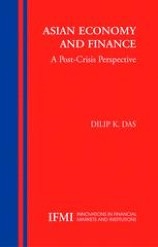
Topicality of Asian economy has refused to fade for almost four decades; if anything it has been levitating. The Asian economy has changed markedly since the economic and financial crisis of 1997-1998 and is continuing to evolve. As a scholarly subject matter, Asian economy has not stopped attracting academicians, policy mandarins, decision makers in the arena of business and students of Asian economy. The Asian crisis was a cataclysmic event for the region and brought to the surface several systemic limitations, like those in the financial sector, corporate governance, regulatory oversight, legal framework, and exchange rate management. Managers of Asian economy need to get to the bottom of these acutely problematical systemic issues. Additionally, Asian economies need to change with the demands of time and devise their post-crisis development strategy. Asia’s growth model, that served it so well for four decades, is overdue for renewal so that it can re-strengthen its bonds with the ever-evolving regional and global economic reality. The old growth model is likely to be less relevant and effective in the post-crisis future of the Asian economies. It is sure to run into the wall of diminishing returns.
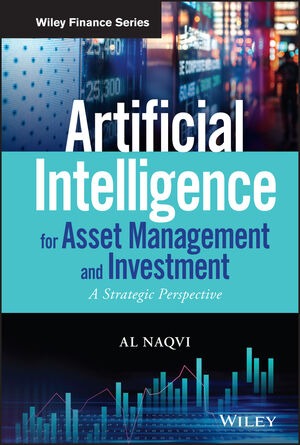
The rise of artificial intelligence is nothing short of a technological revolution. AI is poised to completely transform asset management and investment banking, yet its current application within the financial sector is limited and fragmented. Existing AI implementations tend to solve very narrow business issues, rather than serving as a powerful tech framework for next-generation finance. Artificial Intelligence for Asset Management and Investment provides a strategic viewpoint on how AI can be comprehensively integrated within investment finance, leading to evolved performance in compliance, management, customer service, and beyond.

سوريا - اتستراد درعا - غباغب
+963-15 2050 - 15 860 380 /1/2/3 - 11 662 3900