


تحسين النتائح
ترتيب حسب
من
الى

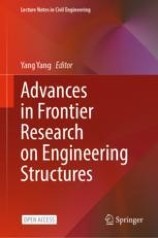
Focuses on the research of advanced structures and anti-seismic in civil engineering. It features the most cutting-edge research directions and achievements related to civil and structural engineering. Subjects in this book include: ·Engineering Structure and Seismic Resistance ; ·Structural Mechanics Analysis ; Components and Materials ;·Structural Seismic Design ; 3D Printing Concrete ; Other Related Topics ; The works of this book promote development of civil and structural engineering, resource sharing, flexibility, and high efficiency.

Covers topics on both theoretical control systems and their applications across engineering domains such as automatic control, robotics, and adaptive controller design. It discusses several signal processing domains such as image, speech, biomedical signal processing and their applications in IOT, control, robotics, power and energy systems. The book emphasizes both conventional and non-conventional energy, environment, and green processes as related to energy and power systems engineering.
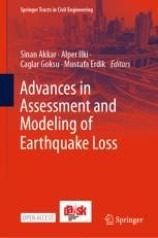
Originates from an international workshop organized by Turkish Natural Catastrophe Insurance Pool (TCIP) in November 2019 that gathered renown researchers from academia, representatives of leading international reinsurance and modeling companies as well as government agencies responsible of insurance pricing in Turkey. The book includes chapters related to post-earthquake damage assessment, the state-of-art and novel earthquake loss modeling, their implementation and implication in insurance pricing at national, regional and global levels, and the role of earthquake insurance in building resilient societies and fire following earthquakes. The rich context encompassed in the book makes it a valuable tool not only for professionals and researchers dealing with earthquake loss modeling but also for practitioners in the insurance and reinsurance industry.
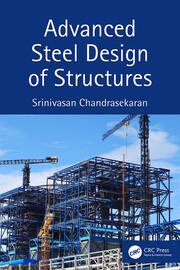
Examines the design principles of steel members under special loads and covers special geometric forms and conditions not typically presented in standard design books. It explains advanced concepts in a simple manner using numerous illustrative examples and MATLAB® codes.

This book, building on research initiated by scholars from the Leiden-Delft-Erasmus Centre for Global Heritage and Development (CHGD) and ICOMOS Netherlands, presents multidisciplinary research that connects water to heritage.
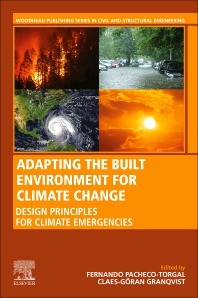
Adapting the Built Environment for Climate Change: Design Principles for Climate Emergencies analyzes several scenarios and proposes various adaptation strategies for climate emergencies (heat waves, wildfires, floods, and storms). Divided into three themes, the book offers an organized vision of a complex and multi-factor challenge. It covers climatic resilience and building refurbishment, implications for service life prediction and maintainability, and climate adaptation in the maintenance and management of buildings. Sections cover infrastructure materials, climate emergency adaptation and building adaptation to heat waves, wildfires, floods and storms.
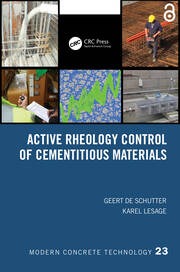
The research presented here develops a new method of actively controlling the rheology of fresh concrete during casting operations by incorporating specially designed responsive components. This results in real-time changes to the rheological behaviour of the cementitious material, allowing the user to intervene actively after the cementitious material has left the mixing phase. This newly gained agility contributes to increased processing speed and placement reliability in the case of traditional casting methods and can also facilitate advanced 3D concrete printing. The different routes followed to achieve this Active Rheology Control are explained within.
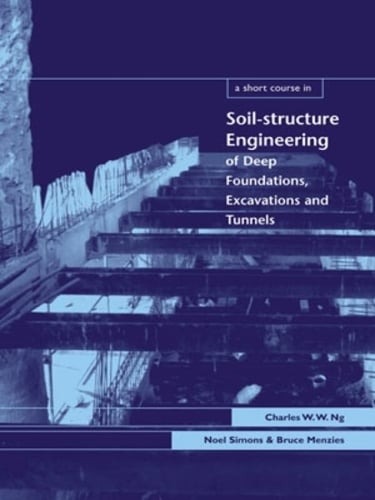
A Short Course in Soil-structure Engineering of Deep Foundations, Excavations and Tunnels, focuses on the three major geotechnical challenges of static soil-structure interaction problems. Deep foundations - piles, barrettes, Multi-propped deep excavations and Bored and open face tunnels beneath cities. This book gives both students and practising civil engineers an authoritative review of the state-of-the-art of designing deep foundations, excavations and tunnels. In addition, the case studies and numerical modelling presented will give valuable insights into the challenges of soil-structure engineering.
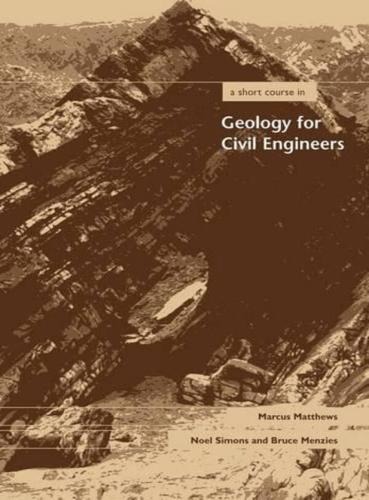
Explains the process of ground formation - what it is made of and how it behaves as an engineering material. This enables the civil engineer to work from a few first principles to determine if the ground is an asset or a hazard. It focuses on the tectonic plate mechanisms that give rise to the geology of our planet and describes the way these create hazards such as volcanic eruptions, earthquakes and tsunamis. The authors state that groundwater can be both a resource and a hazard and through this book they provide an overview of the origins of geomaterials.
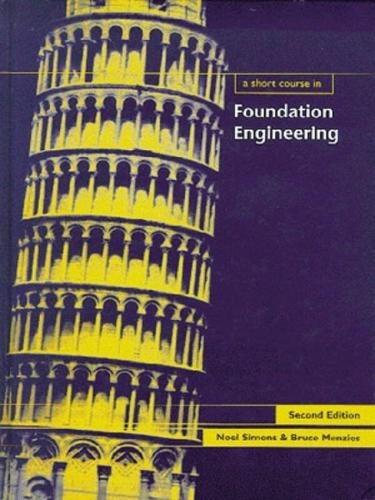
Although there are now a large number of computer programmes for solving all sorts of foundation design problems, the need to check these outputs by 'hand-calculation' has become vitally important. This book concentrates on getting the fundamentals right and then using them in practical applications. The book is illustrated with numerous worked examples and with quick-reference tables and charts.
A Primer to Theoretical Soil Mechanics is about adapting continuum mechanics to granular materials. The field of continuum mechanics offers many fruitful concepts and methods, however there is declining interest in the field due to its complex and fragmented nature. This book's purpose is therefore to facilitate the understanding of the theoretical principles of soil mechanics, as well as introducing the new theory of barodesy.
In this new edition, the fundamental material on classical linear aeroelasticity has been revised. Also new material has been added describing recent results on the research frontiers dealing with nonlinear aeroelasticity as well as major advances in the modelling of unsteady aerodynamic flows using the methods of computational fluid dynamics and reduced order modeling techniques.
Includes recording and analysis of maritime archaeology through emerging technologies, including both practical and theoretical contributions. Topics include photogrammetric recording, laser scanning, marine geophysical 3D survey techniques, virtual reality, 3D modelling and reconstruction, data integration and Geographic Information Systems. This convergence of digital technologies such as underwater photography and photogrammetry, 3D sonar, 3D virtual reality, and 3D printing has highlighted a pressing need for these new methodologies to be considered together, both in terms of defining the state-of-the-art and for consideration of future directions.
This collection of formulas constitutes a compendium of mathematics for eco nomics and business. It contains the most important formulas, statements and algorithms in this significant subfield of modern mathematics and addresses primarily students of economics or business at universities, colleges and trade schools. But people dealing with practical or applied problems will also find this collection to be an efiicient and easy-to-use work of reference. First the book treats mathematical symbols and constants, sets and state ments, number systems and their arithmetic as well as fundamentals of com binatorics. The chapter on sequences and series is followed by mathematics of finance, the representation of functions of one and several independent vari ables, their differential and integral calculus and by differential and difference equations. In each case special emphasis is placed on applications and models in economics. The chapter on linear algebra deals with matrices, vectors, determinants and systems of linear equations. This is followed by the representation of struc tures and algorithms of linear programming. Finally, the reader finds formu las on descriptive statistics (data analysis, ratios, inventory and time series analysis), on probability theory (events, probabilities, random variables and distributions) and on inductive statistics (point and interval estimates, tests). Some important tables complete the work.

This book is entirely devoted to discrete time and provides a detailed introduction to the construction of the rigorous mathematical tools required for the evaluation of options in financial markets. Both theoretical and practical aspects are explored through multiple examples and exercises, for which complete solutions are provided. Particular attention is paid to the Cox, Ross and Rubinstein model in discrete time.

This is the perfect book for any undergraduate course in experimental economics or behavioral game theory. New material on topics such as matching, belief elicitation, repeated games, prospect theory, probabilistic choice, macro experiments, and statistical analysis Participatory experiments that connect behavioral theory and laboratory research Largely self-contained chapters that can each be covered in a single class Guidance for instructors on setting up classroom experiments, with either hand-run procedures or free online software End-of-chapter problems, including some conceptual-design questions, with hints or partial solutions provided
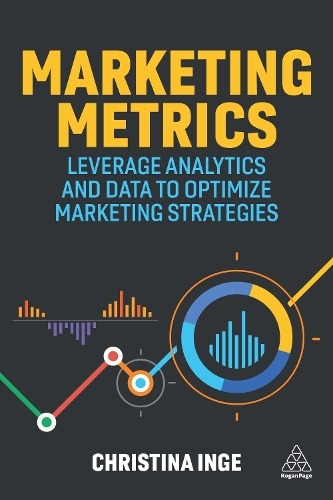
Featuring examples from a range of organizations including Coca-Cola and Mercedes-Benz, it shows how to create a strategy which leverages consumer data for customer-centric marketing, establishes the ROI of channels and campaigns, strengthens brands and creates data-driven product strategies. Covering the range of new global laws that impact consumer privacy and data collection and usage, Marketing Metrics shows how to use data in a non-invasive, secure and ethical way.
Sheds light on marketing effectiveness and accountability marketing in small and medium-sized enterprises (SMEs). Using a multi-method investigation, it includes a knowledge inquiry of marketing knowledge and customer knowledge, a qualitative inquiry utilizing semi structured interviews and thematic data analysis, a quantitative analysis utilizing survey and structural equations modelling, and a case study that employs both narrative (storytelling) data analysis and an accountability audit with a techno marketing SME.
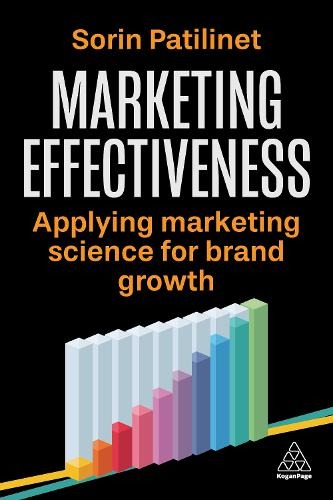
Contrary to popular belief marketing effectiveness is not just about the measuring of ROI. The lens of effectiveness must be applied to all marketing mix elements, from strategy to pricing and product, to media and advertising. It's a strategic shift that demands robust evidence-based decisions and consistent application in order to grow. Written by leading marketing practitioner, Sorin Patilinet, this book enables mid-senior level marketers to integrate the scientific methods and advanced measurements required for true marketing effectiveness into their marketing strategies, in order to reap the benefits of strong customer understanding and developing decision-making processes for growth. Covering everything from neuroscience and its application to marketing to advanced analytics and machine learning models, this book provides a comprehensive practical guide for marketers.
Offers something for everyone working with market segmentation: practical guidance for users of market segmentation solutions; organisational guidance on implementation issues; guidance for market researchers in charge of collecting suitable data; and guidance for data analysts with respect to the technical and statistical aspects of market segmentation analysis. Even market segmentation experts will find something new, including a vast array of useful visualisation techniques that make interpretation of market segments and selection of target segments easier. The book talks the reader through every single step, every single potential pitfall, and every single decision that needs to be made to ensure market segmentation analysis is conducted as well as possible. All calculations are accompanied not only with a detailed explanation, but also with R code that allows readers to replicate any aspect of what is being covered in the book using R, the open-source environment for statistical computing and graphics.

سوريا - اتستراد درعا - غباغب
+963-15 2050 - 15 860 380 /1/2/3 - 11 662 3900