


تحسين النتائح
ترتيب حسب
من
الى

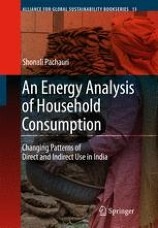
The book presents a novel socio-economic approach to analysing the - ergy system and energy consumption in India from a household persp- tive. In doing so, it views households as the ultimate end-consumers and estimates and analyses the direct and indirect energy requirements of household consumption, both at an aggregate national level as well as at a disaggregate household level. In addition, the work incorporates two c- cial aspects often ignored by many energy studies that are characteristic of most developing countries, namely the importance of non-commercial sources of biomass energy in the energy systems of these countries, and the enormous diversity and inequity in the patterns of energy access and use across households with different lifestyles and levels of well being.
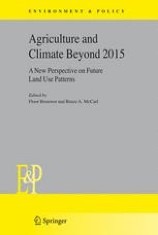
Interactions between agriculture, climate and patterns of land use are complex. Major changes in agriculture, and land use patterns are foreseen in the next couple of decades in response to shifts in climate, greenhouse gas management initiatives, population growth and other forces. The book explores key interactions between changes in agriculture, patterns of land use and efforts to reduce greenhouse emissions from agriculture. The volume is based on inter-disciplinary science and policy interactions, exploring the way land use may aid in addressing or be affected by the onset of climate change and alterations in food demand. Future forces shaping land use decisions are examined, and its sensitivity to climate change is highlighted. Patterns of land use and the agricultural role in climate change mitigation are explored. Also, policy and social responses to the new perspectives on future land use patterns are identified. The perspective of the book is beyond the year 2015.
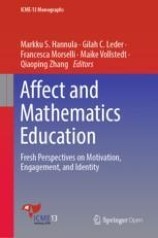
Presents the latest trends in research in the area. Following an introduction and a survey chapter providing a concise overview of the state-of-art in the field of mathematics-related affect, the book is divided into three main sections: motivation and values, engagement, and identity in mathematics education. Each section comprises several independent chapters based on original research, as well as a reflective commentary by an expert in the area. Collectively, the chapters present a rich methodological spectrum, from narrative analysis to structural equation modelling.
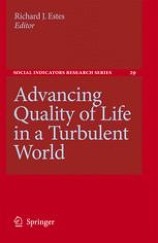
Environmental issues continued to loom large in the last decade of the twentieth century,especially environmental problems related to rising levels of CO emissions and 2 other greenhouse gases on the planet’s average temperatures and, subsequently, storm patterns. Floods and droughts, in combination with unseasonably high and low temperatures became the norm rather than the exception for large expanses of Africa,Asia and Oceania. Even large areas of Europe and NorthAmerica were s- jected to recurrent floods and droughts and experienced unseasonable extremes of hot and cold temperatures associated with man-made intrusions into the natural environment. And, still, a global plan of action to haltman-related patterns of def- estation, desertification, and over-fishing of the seas has yet to come into being. At the same time, the number of regional conflicts and civil wars increased and, with them, the lives of many women, children, old people and other n- combatants were lost in these conflicts.
The future of Earth’s ecosystems is increasingly influenced by the pace and patterns of urbanization. One of the greatest challenges for natural and social scientists is to understand how urbanizing regions evolve through the complex interactions between humans and ecological processes. Questions and methods of inquiry specific to our traditional disciplinary domains yield partial views that reflect different epistemologies and understandings of the world. In order to achieve the level of synthesis required to see the urban ecosystem as a whole we must change the way we pose questions and search for answers. Cities are the result of human and ecological processes occurring simultaneously in time and in space and the legacy of the simultaneous processes of the past. Urban ecology is the study of the co-evolution of human-ecological systems. Scholars of both urban systems and ecology must challenge the assumptions and world views within their disciplines and work towards a hybrid theory that builds on multiple world views.

Advanced Organic Chemistry Part A provides a close look at the structural concepts and mechanistic patterns that are fundamental to organic chemistry. It relates those mechanistic patterns, including relative reactivity and stereochemistry, to underlying structural factors. Understanding these concepts and relationships will allow students to recognize the cohesive patterns of reactivity in organic chemistry. Part A: Structure and Mechanism and Part B: Reaction and Synthesis - taken together - are intended to provide the advanced undergraduate or beginning graduate student in chemistry with a foundation to comprehend and use the research literature in organic chemistry
A Geometry of Approximation' addresses Rough Set Theory, a field of interdisciplinary research first proposed by Zdzislaw Pawlak in 1982, and focuses mainly on its logic-algebraic interpretation. The theory is embedded in a broader perspective that includes logical and mathematical methodologies pertaining to the theory, as well as related epistemological issues. Any mathematical technique that is introduced in the book is preceded by logical and epistemological explanations. Intuitive justifications are also provided, insofar as possible, so that the general perspective is not lost.

Examines the triangle between family, gender, and health in Europe from a demographic perspective. It helps to understand patterns and trends in each of the three components separately, as well as their interdependencies. It overcomes the widely observable specialization in demographic research, which usually involves researchers studying either family or fertility processes or focusing on health and mortality.

سوريا - اتستراد درعا - غباغب
+963-15 2050 - 15 860 380 /1/2/3 - 11 662 3900