


تحسين النتائح
ترتيب حسب
من
الى

The book is structured into three sections (research, practice, and technologies), with the goal of creating a new framework useful for widespread awareness necessary to initiate technology transfer processes for the benefit of the public sector, universities, research centers, and innovative companies, and a new professional figure capable of controlling the entire process is essential. Thus, the book chapters arouse a series of relevant topics such as computational and parametric design, performance-based architecture, data-driven design strategies, parametric environmental design and analysis, computational and parametric structural design and analysis

Addresses the changing nature of public life alongside an analysis of changes in the architectural profession. Contains thought-provoking chapters from some of the disciplines' leading thinkers and draws together new research that helps us to look again at the question of urban development. Focuses on the link between architecture, urban theory and societal ideas.
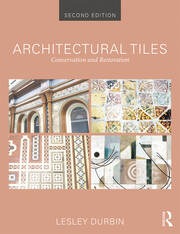
It not only contains new and up to date information on materials, practical methods, and historical research but also reflects changes in the attitudes, outlook and perceptions within the wider conservation, architectural heritage and construction communities which give a new dimension to the conservation and restoration. The growing interest in the preservation of post war ceramic tile murals and the subsequent demand for information pertaining specifically to this era is a welcome and useful addition.
Reports on several advances in architectural graphics, with a special emphasis on education, training and research. It gathers a selection of contributions to the 19th International Conference on Graphic Design in Architecture, EGA 2022, held on June 2–4, 2022, in Cartagena, Spain, with the motto: "Beyond drawings. The use of architectural graphics".
Reports on several advances in architectural graphics, with a special emphasis on education, training, and research. It gathers a selection of contributions to the 19th International Conference on Graphic Design in Architecture, EGA 2022, held on June 2–4, 2022, in Cartagena, Spain, with the motto: "Beyond drawings. The use of architectural graphics".
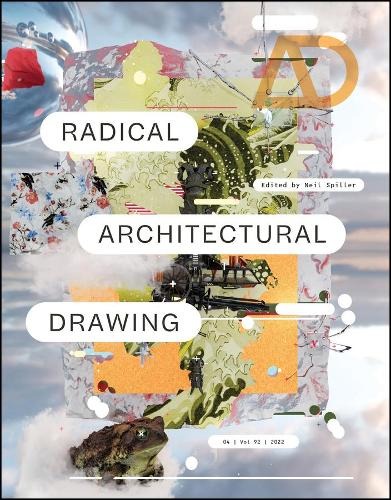
Seeks to showcase the architects who are pushing the envelope of drawing in extraordinary ways, and their insights into architecture’s future spatial dexterity. The issue is built around an international group of architects involved in an ongoing KU Leuven Faculty of Architecture international drawing research project, who are creating new drawing methodologies in new and exciting realms.
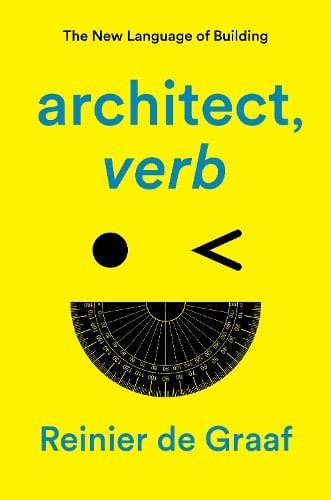
Leading architect Reinier de Graaf De Graaf punctures the myths behind the debates on what contemporary architecture is, with wit and devastating honesty. Architecture, it seems, has become too important to leave to architects. No longer does it suffice to judge a building solely by its appearance, it must be measured, and certified. When architects talk about "Excellence," "Sustainability," "Well-being," "Liveability," "Placemaking," "Creativity," "Beauty" and "Innovation" what do they actually mean? In Architect, Verb, De Graff dryly skewers the doublespeak and hot air of an industry in search of an identity in the 21st century
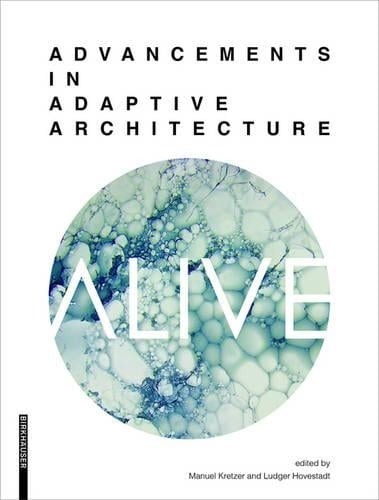
Proposes to embrace the unknown and cultivate the architectural discipline towards an integrated and cross-disciplinary practice. It unravels compelling innovative and forward-thinking design narratives by leading international practitioners and researchers who investigate novel associations between architecture, nature and humanity for a future, alive architecture.
provides thought-provoking and inquisitive insights into how we can prolong the useful life of buildings by designing them to be more adaptable, and hence create a more sustainable built environment. The book provides a theoretical foundation counterpointed by the experiences and ideas of those involved in the design and use of buildings. It explains many approaches to designing for change, with lessons from history, and case studies including The Cedar Rapids Public Library, Kentish Town Health Centre and Folkestone Performing Arts Centre, which stretch our thinking beyond the conventional notions of adaptability. The authors reveal the many conditions that make it a complex design phenomenon, by considering the purpose, design and business case of buildings as well as the physical product. Full of summaries, diagrams, reference charts, tables, and photos of exemplar solutions for use as conversational tools or working aids, this book is for any professional or student who wants to research, question, imagine, illustrate - and ultimately design for - adaptation.
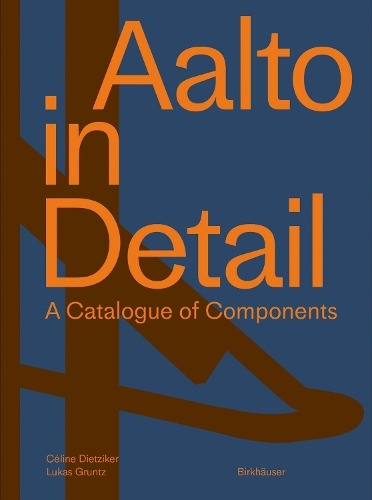
Celebrates the rich detail in the work of Aino, Elissa, and Alvar Aalto. Every support, railing, and handle is the result of intensive formal and functional research. The authors document 50 Aalto buildings - some well-known and others less so - and arrange their photographs by component into 20 chapters. The result is a rich photographic record that will serve as a source of inspiration for every architect. From door handles to skylights: Aalto's infinite wealth of components Inspiring documentation with 400 systematically arranged photos Unconventionally detailed solutions with special attention paid to technical feasibility
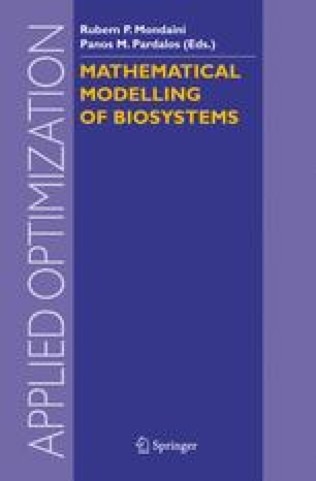
This volume is an interdisciplinary book, which introduces, in a very readable way, state of the art research in the fundamental topics of mathematical modelling of Biosystems. These topics include: the study of Biological Growth and its mechanisms, the coupling of pattern to form via theorems of Differential Geometry, the human immunodeficiency virus dynamics, the inverse folding problem and the possibility of analysing true protein backbone flexibility, the Biclustering techniques for the organization of microarray data, the analytical approach to the modelling of biomolecular structure via Steiner trees, the action of biocides on resistance mechanisms of mutated and phenotypic bacteria strains, a description of the fundamental processes for the distribution and abundances of species towards a unified theory of Ecology, and a special introduction to Protein Physics aiming to explain the all-or-none first order phase transitions from native to denatured states.
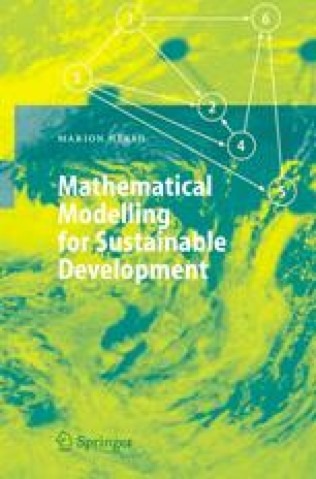
Mathematics needs Sustainable Development. When science was gradually reinvented in European medieval societies, it was legitimised as contributing to the disclosure of God’s divine creation. The conflicts that emerged became well known as a result of the clash between Galileo and the Church. Science found a new legitimacy through recognition that it was a powerful force against superstition. In the Enlightenment the argument was pushed forward by attributing Progress to the advancement of science: science could produce a better world by promoting rationality. In our modern society, science has become intimately linked to technology. Science for its own sake unfortunately rarely has positive outcomes in terms of research grant applications. Meanwhile, science and technology, and the progress they are supposed to produce, meet with wide scale scepticism. We all know of the current global problems: climate change, resource depletion, a thinning ozone layer, space debris, declining biodiversity, malnutrition, dying ecosystems, global inequity, and the risk of unprecedented nuclear wars
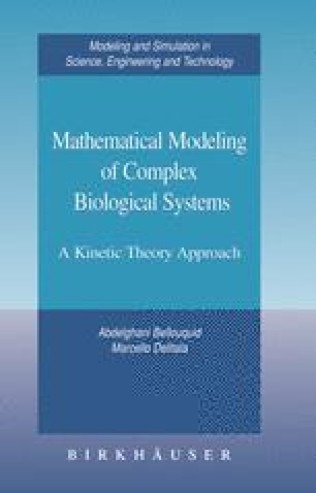
This book describes the evolution of several socio-biological systems using mathematical kinetic theory. Specifically, it deals with modeling and simulations of biological systems—comprised of large populations of interacting cells—whose dynamics follow the rules of mechanics as well as rules governed by their own ability to organize movement and biological functions. The authors propose a new biological model for the analysis of competition between cells of an aggressive host and cells of a corresponding immune system.Because the microscopic description of a biological system is far more complex than that of a physical system of inert matter, a higher level of analysis is needed to deal with such complexity. Mathematical models using kinetic theory may represent a way to deal with such complexity, allowing for an understanding of phenomena of nonequilibrium statistical mechanics not described by the traditional macroscopic approach. The proposed models are related to the generalized Boltzmann equation and describe the population dynamics of several interacting elements (kinetic population models).The particular models proposed by the authors are based on a framework related to a system of integro-differential equations, defining the evolution of the distribution function over the microscopic state of each element in a given system. Macroscopic information on the behavior of the system is obtained from suitable moments of the distribution function over the microscopic states of the elements involved. The book follows a classical research approach applied to modeling real systems, linking the observation of biological phenomena, collection of experimental data, modeling, and computational simulations to validate the proposed models. Qualitative analysis techniques are used to identify the prediction ability of specific models.
The aim of this volume is to bring together research directions in theoretical signal and imaging processing developed rather independently in electrical engineering, theoretical physics, mathematics and the computer sciences. In particular, mathematically justified algorithms and methods, the mathematical analysis of these algorithms, and methods as well as the investigation of connections between methods from time series analysis and image processing are reviewed. An interdisciplinary comparison of these methods, drawing upon common sets of test problems from medicine and geophysical/enviromental sciences, is also addressed.
The mechanics of Coupled Fields is a discipline at the edge of modern research connecting Continuum Mechanics with Solid State Physics. It integrates the Mechanics of Continuous Media, Heat Conductivity and the theory of Electromagnetism that are usually studied seperately. For an accurate description of the influence of static and dynamic loadings, high temperatures and strong electromagneticfields in elastic media and constructive installations, a new aproach is required; an approach that has the potential to establish a synergism between the above-mentioned fields. Throughout the book a vast number of problems are considered: two-dimensional problems of electro-magneto-elasticity as well as static and dynamical problems for piecewise homogenous compound piezoelectric plates weakened by cracks and openings. The boundary conditions, the constuctive equations and the mathematical methods for their solution are thoroughly presented, so that the reader can get a clear quantative and qualitative understnding of the phenomena taking place.
Hydrocarbon exploration and production incorporate great technology challenges for the oil and gas industry. In order to meet the world's future demand for oil and gas, further technological advance is needed, which in turn requires research across multiple disciplines, including mathematics, geophysics, geology, petroleum engineering, signal processing, and computer science. This book addresses important aspects and fundamental concepts in hydrocarbon exploration and production. Moreover, new developments and recent advances in the relevant research areas are discussed, whereby special emphasis is placed on mathematical methods and modelling. The book reflects the multi-disciplinary character of the hydrocarbon production workflow, ranging from seismic data imaging, seismic analysis and interpretation and geological model building, to numerical reservoir simulation. Various challenges concerning the production workflow are discussed in detail.
Experience the discovery of mathematics by reading the original work of some of the greatest minds throughout history. Here are the stories of four mathematical adventures, including the Bernoulli numbers as the passage between discrete and continuous phenomena, the search for numerical solutions to equations throughout time, the discovery of curvature and geometric space, and the quest for patterns in prime numbers. Each story is told through the words of the pioneers of mathematical thought. Particular advantages of the historical approach include providing context to mathematical inquiry, perspective to proposed conceptual solutions, and a glimpse into the direction research has taken.
Russian mathematics (later Soviet mathematics, and Russian mathematics once again) occupies a special place in twentieth-century mathematics. In addition to its well-known achievements, Russian mathematics established a unique style of research based on the existence of prominent mathematical schools. These schools were headed by recognized leaders, who became famous due to their talents and outstanding contributions to science. The present collection is intended primarily to gather in one book the t- timonies of the participants in the development of mathematics over the past century. In their articles the authors have expressed their own points of view on the events that took place. The editors have not felt that they had a right to make any changes, other than stylistic ones, or to add any of their own commentary to the text. Naturally, the points of view of the authors should not be construed as those of the editors. The list of mathematicians invited to participate in the present edition was quite long.
Based on lecture notes of two summer schools with a mixed audience from mathematical sciences, epidemiology and public health, this volume offers a comprehensive introduction to basic ideas and techniques in modeling infectious diseases, for the comparison of strategies to plan for an anticipated epidemic or pandemic, and to deal with a disease outbreak in real time. It covers detailed case studies for diseases including pandemic influenza, West Nile virus, and childhood diseases. Models for other diseases including Severe Acute Respiratory Syndrome, fox rabies, and sexually transmitted infections are included as applications. Its chapters are coherent and complementary independent units. In order to accustom students to look at the current literature and to experience different perspectives, no attempt has been made to achieve united writing style or unified notation.

This book highlights recent developments in mathematical control theory and its applications to finance. It presents a collection of original contributions by distinguished scholars, addressing a large spectrum of problems and techniques. Control theory provides a large set of theoretical and computational tools with applications in a wide range of fields, ranging from "pure" areas of mathematics up to applied sciences like finance. Stochastic optimal control is a well established and important tool of mathematical finance. Other branches of control theory have found comparatively less applications to financial problems, but the exchange of ideas and methods has intensified in recent years. This volume should contribute to establish bridges between these separate fields. The diversity of topics covered as well as the large array of techniques and ideas brought in to obtain the results make this volume a valuable resource for advanced students and researchers.

سوريا - اتستراد درعا - غباغب
+963-15 2050 - 15 860 380 /1/2/3 - 11 662 3900