


تحسين النتائح
ترتيب حسب
من
الى


This book provides a compendium of material properties, demonstrates several successful examples of bio-based materials’ application in building facades, and offers ideas for new designs and novel solutions. It features a state-of-the-art review, addresses the latest trends in material selection, assembling systems, and innovative functions of facades in detail. Selected case studies on buildings from diverse locations are subsequently presented to demonstrate the successful implementation of various biomaterial solutions, which defines unique architectural styles and building functions. The structures, morphologies and aesthetic impressions related to bio-based building facades are discussed from the perspective of art and innovation; essential factors influencing the performance of materials with respect to functionality and safety are also presented. Special emphasis is placed on assessing the performance of a given facade throughout the service life of a building, and after its end.
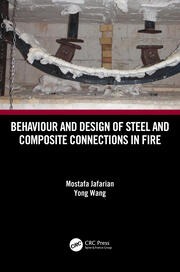
The only dedicated book on fire performance of connections in steel and composite structures. Recent experimental and numerical studies indicate that connections are among the most vulnerable and critical parts of these structures. This book synthesises these research findings and explains the essential features in one single source.
Based mainly on domestic and residential buildings—and filled with extensive illustrations throughout—this concise text is the ideal introduction to the subject of building construction. It provides the basic material that readers need in order to understand the construction process for the majority of low rise buildings. The book explains construction technology through the key functional and performance requirements for the main elements common to all buildings. With a strong focus on building efficiency and meeting the challenges posed by limiting the environmental impact of buildings, and new “at a glance” summaries allowing you to grasp the salient points of each chapter, readers will find the text fully up to date with the latest building regulations and construction technology. Deals with design, technology, site assembly, and environmental issues of domestic and residential buildings. Thoroughly updated, with particular attention paid to the concept of building efficiency and improved integration of the topics covered to match current student needs. New “at a glance” summaries at the beginning of each chapter.
Presents all aspects of automation in construction pertaining to the use of information technologies in design, engineering, construction technologies, and maintenance and management of constructed facilities. The broad scope encompasses all stages of the construction life cycle from initial planning and design, through the construction of the facility, its operation, and maintenance, to the eventual dismantling and recycling of buildings and engineering structures
Presents a methodology for the assessment of structural building details, taking into account the contemporary guidelines for earthquake-resistant and energy-efficient buildings. A review of structural details for energy-efficient buildings revealed that in some cases the structural system is interrupted, leading to solutions which are not suitable for earthquake-prone regions. Such typical examples would be the use of thermal insulation under the building foundation and reduction of the load-bearing elements’ dimensions – also at the potential locations of plastic hinges which are crucial for the dissipation of seismic energy.
This book introduces readers to a new methodology for assessing the risks to the marine environment following accidental oil spills. The methodology will soon be implemented on the Norwegian Continental Shelf and will be complemented by guidelines for its use in a regulatory framework.
Recent studies highlight the application of artificial intelligence, machine learning, and simulation techniques in engineering. This book covers the successful implementation of different intelligent techniques in various areas of engineering focusing on common areas between mechatronics and civil engineering. The power of artificial intelligence and machine learning techniques in solving some examples of real-life problems in engineering is highlighted in this book. The implementation process to design the optimum intelligent models is discussed in this book.
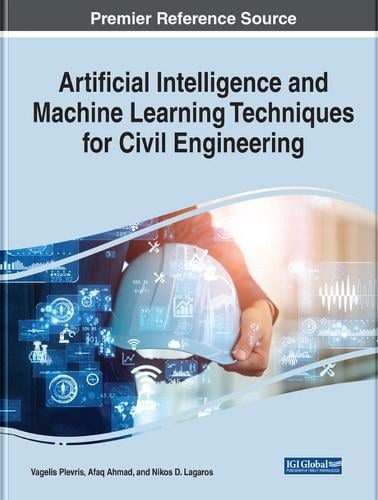
Offers state-of-the-art contributions in the area of AI and its applications in the field of civil engineering presenting methods and implementation of AI and machine learning in multiple facets of civil engineering
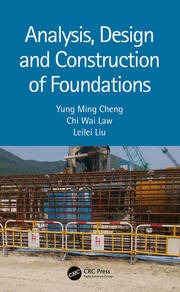
Outlines methods for analysis and design the construction of shallow and deep foundations with particular reference to case studies in Hong Kong and China, as well as a discussion of methods used in other countries. It introduces the main approaches used by geotechnical and structural engineers, and the precautions required for planning and designing foundation structures. Some computational methods and computer programs are reviewed to provide tools for performing more realistic analysis of foundation systems.
Offers a superb introduction to theoretical and practical soil mechanics. Special attention is given to the risks of failure in civil engineering, and themes covered include stresses in soils, groundwater flow, consolidation, testing of soils, and stability of slopes. The basic principles of applied mechanics, that are frequently used, are offered in the appendices. The author’s considerable experience of teaching soil mechanics is evident in the many features of the book: it is packed with supportive color illustrations, helpful examples and references.
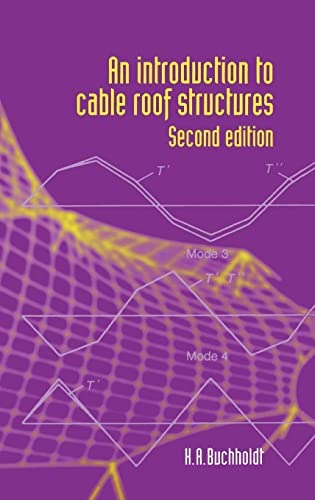
Provides structural engineers with a concise introduction to the architectural, structural and technological aspects of cable roofs, and supplies sufficient information for engineers to carry out their own designs. The improved methods for generating wind and earthquake histories have been included as the trend in modern design codes seem increasingly to require that dynamic response of other forms of non-linear structures such as guyed masts is considered at the design stage.
Focuses on the safety assessment of existing structures subjected to multi-hazard scenarios through advanced numerical methods. Whereas the focus is on concrete dams and nuclear containment structures, the presented methodologies can also be applied to other large-scale ones. This book is composed of seven sections: Fundamentals: theoretical coverage of solid mechnics, plasticity, fracture mechanics, creep, / seismology, dynamic analysis, probability and statistics / Damage: that can affect concrete structures, such as cracking of concrete, AAR, chloride ingress, and rebar corrosion, / Finite Element: formulation for both linear and nonlinear analysis including stress, heat and fracture mechanics, / Engineering Models: for soil/fluid-structure interaction, uncertainty quantification, probablilistic and random finite element analysis, machine learning, performance based earthquake engineering, ground motion intensity measures, seismic hazard analysis, capacity/fragility functions and damage indeces, / Applications to dams through potential failure mode analyses, risk-informed decision making, deterministic and probabilistic examples, / Applications to nuclear structures through modeling issues, aging management programs, critical review of some analyses, / Other applications and case studies: massive RC structures and bridges, detailed assessment of a nuclear containment structure evaluation for license renewal.
Presents the most recent advances on testing and experimentation in civil engineering, especially in the branches of materials, structures, and buildings, complementing the authors’ publication Advances on Testing and Experimentation in Civil Engineering - Geotechnics, Transportation, Hydraulics and Natural Resources. It includes advances in physical modelling, monitoring techniques, data acquisition and analysis, and provides an invaluable contribution to the installation of new civil engineering experimental facilities.
Deals with both mathematical modeling and experimental studies related to systems relevant for various civil engineering fields. The book addresses several key topics, including artificial intelligence applied to the control and monitoring of construction site personnel, finite element models for endplate beam-to-column connections under various load conditions, random functionally graded micropolar beams, and many others. The book explores the design and study of microstructures aimed at increasing the toughness and durability of novel materials in building and construction, based also on the re-utilization of residues and wastes of metallurgical industry produces.
Originates from an international workshop organized by Turkish Natural Catastrophe Insurance Pool (TCIP) in November 2019 that gathered renown researchers from academia, representatives of leading international reinsurance and modeling companies as well as government agencies responsible of insurance pricing in Turkey. The book includes chapters related to post-earthquake damage assessment, the state-of-art and novel earthquake loss modeling, their implementation and implication in insurance pricing at national, regional and global levels, and the role of earthquake insurance in building resilient societies and fire following earthquakes. The rich context encompassed in the book makes it a valuable tool not only for professionals and researchers dealing with earthquake loss modeling but also for practitioners in the insurance and reinsurance industry.
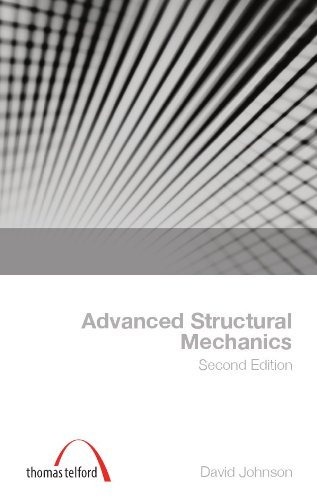
In recent years an increasing emphasis has been placed on numerically based methods of structural analysis. This has been reflected in the production of structural mechanics texts that are orientated towards particular numerical methodologies, especially the finite element method. Whilst this approach serves the needs of potential research' engineers, a concentration on the numerical analysis aspects of structural mechanics is of less relevance to professional' engineers, who are likely to be concerned with the use and interpretation of numerical analyses, but not in the development of the methodologies.
This book, building on research initiated by scholars from the Leiden-Delft-Erasmus Centre for Global Heritage and Development (CHGD) and ICOMOS Netherlands, presents multidisciplinary research that connects water to heritage.
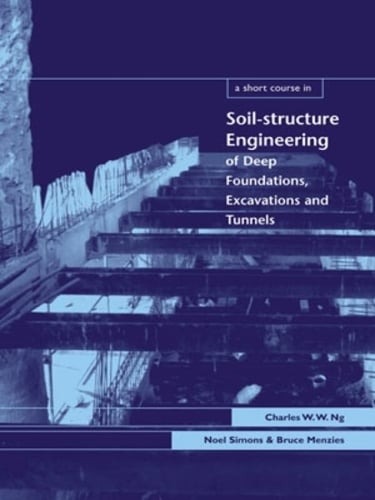
A Short Course in Soil-structure Engineering of Deep Foundations, Excavations and Tunnels, focuses on the three major geotechnical challenges of static soil-structure interaction problems. Deep foundations - piles, barrettes, Multi-propped deep excavations and Bored and open face tunnels beneath cities. This book gives both students and practising civil engineers an authoritative review of the state-of-the-art of designing deep foundations, excavations and tunnels. In addition, the case studies and numerical modelling presented will give valuable insights into the challenges of soil-structure engineering.
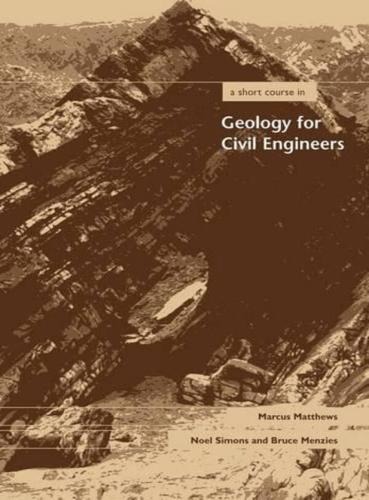
Explains the process of ground formation - what it is made of and how it behaves as an engineering material. This enables the civil engineer to work from a few first principles to determine if the ground is an asset or a hazard. It focuses on the tectonic plate mechanisms that give rise to the geology of our planet and describes the way these create hazards such as volcanic eruptions, earthquakes and tsunamis. The authors state that groundwater can be both a resource and a hazard and through this book they provide an overview of the origins of geomaterials.
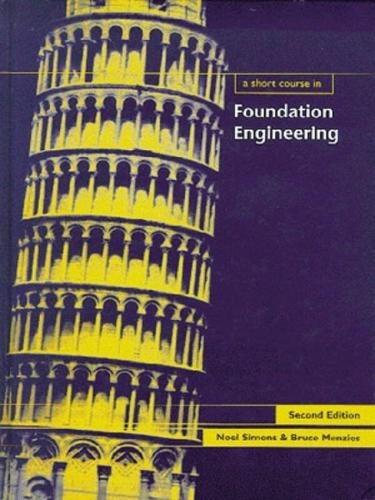
Although there are now a large number of computer programmes for solving all sorts of foundation design problems, the need to check these outputs by 'hand-calculation' has become vitally important. This book concentrates on getting the fundamentals right and then using them in practical applications. The book is illustrated with numerous worked examples and with quick-reference tables and charts.

سوريا - اتستراد درعا - غباغب
+963-15 2050 - 15 860 380 /1/2/3 - 11 662 3900