


تحسين النتائح
ترتيب حسب
من
الى


Book constitutes papers from the research workshops presented at XP 2022 and XP 2023, respectively the 23rd and 24th International Conferences on Agile Software Development, held on June 13-17, 2022 at the IT University of Copenhagen, Denmark and June 13-16, 2023 in Amsterdam, Netherlands.

The field of agent & multi-agent systems is experiencing tremendous growth. At the same time the field of formal methods is blossoming and has proven its importance in industrial and government applications. The FAABS (Formal Approaches to Agent-Based Systems) workshops, merging the concerns of the two fields, provided a timely and compelling platform on which the growing concerns and requirement of agent-based systems users that systems should be accompanied by behavioral assurances, could be discussed. This book has arisen from the overwhelming response to FAABS ’00, ’02 & ’04 and all chapters are updated or represent new research, and are designed to provide a more in-depth treatment of the topic. Examples of how others have applied formal methods to agent-based systems are included, plus formal method tools & techniques that readers can apply to their own systems.

Multi-agent systems are one of the most exciting research areas in Artificial Intelligence. This book reports on the results achieved in this area, discusses the benefits (and drawbacks) that agent-based systems may bring to medical domains and society.

AGENT INTELLIGENCE THROUGH DATA MINING offers a self-contained overview of a relatively young but important area of research: the intersection of agent technology and data mining. This intersection leads to considerable advancements in the area of information technologies, drawing the increasing attention of both research and industrial communities. It can take two forms: a) the more mundane use of intelligent agents for improved data mining and; b) the use of data mining for smarter, more efficient agents. The second approach is the main focus of this volume. this book presents a methodology for developing multi-agent systems, describes available open-source tools to support this process, and demonstrates the application of the methodology on three different cases. AGENT INTELLIGENCE THROUGH DATA MINING is designed for a professional audience composed of researchers and practitioners in industry.

Agent-based modeling and social simulation have emerged as both developments of and challenges to the social sciences. The developments include agent-based computational economics and investigations of theoretical sociological concepts using formal simulation techniques. Among the challenges are the development of qualitative modeling techniques, implementation of agent-based models to investigate phenomena for which conventional economic, social, and organizational models have no face validity, and the application of physical modeling techniques to social processes. Bringing together diverse approaches to social simulation and research agendas.

The Webisaliveenvironmentthatmanagesanddrivesawidespectrumofapp- cations in which a user may interact with a company, a governmental authority, a non-governmental organization or other non-pro?t institution or other users. User preferences and expectations, together with usage patterns, form the basis for personalized, user-friendly and business-optimal services. Key Web business metrics enabled by proper data capture and processing are essential to run an e?ective business or service. Enabling technologies include data mining, sc- able warehousing and preprocessing, sequence discovery, real time processing, document classi?cation, user modeling and quality evaluation models for them. Recipient technologies required for user pro?ling and usage patterns include recommendation systems, Web analytics applications, and application servers, coupled with content management systems and fraud detectors.
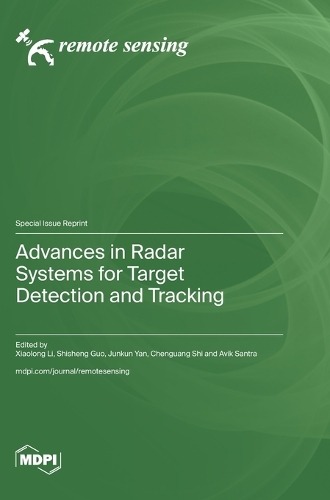
Radar systems can provide the all-weather and all-time detection and tracking of targets of interest, and they have been extensively applied by the remote sensing community, in applications such as geological exploration, disaster forecasting, traffic monitoring, urban planning, environmental sciences, hydrology, littoral zones, oceans, etc. This reprint contains the several advance research studies on radar systems for target detection and tracking. It includes multipath ghost suppression, maneuvering target tracking, target detection, and other topics.

This edited volume contains the selected papers presented at the scientific board meeting of the German Cluster of Excellence on “Integrative Production Technology for High-Wage Countries”, held in November 2014. The topical structure of the book is clustered in six sessions: Integrative Production Technology, Individualised Production, Virtual Production Systems, Integrated Technologies, Self-Optimising Production Systems and Human Factors in Production Technology. The Aachen perspective on a holistic theory of production is complemented by conference papers from external leading researchers in the fields of production, materials science and bordering disciplines.

"Pervasive Computing and Networking aim at providing ubiquitous, ever-present, adaptable, smart, enveloping and immersive environments in which computing components and humans can interact regardless of the location. The combination of an abundance of computational power of the processors and the communication bandwidth provided by the wireless and mobile networking everywhere and all the time makes such environments within the reach of current technology. Yet, to realize the full potential of such environments, many technical and economical challenges needs to be overcome. These challenges and the perspective on the seminal directions of the research in this area were the subject of the Workshop for Pervasive Computing and Networking at Rensselaer Polytechnic Institute, Troy, NY, USA.

The book gathers contributions related to the following topics: theoretical developments in metaheuristics; adaptation of discrete metaheuristics to continuous optimization; performance comparisons of metaheuristics; cooperative methods combining different approaches; parallel and distributed metaheuristics for multiobjective optimization; software implementations; and real-world applications.

This book contains a selection of the best papers given at the international Advanced Computer Systems Conference in October 2006 in Miedzyzdroje, Poland. Combining research areas from both Computer Science and Industrial Management.

Advances in Digital Forensics IV describes original research results and innovative applications in the emerging discipline of digital forensics. In addition, it highlights some of the major technical and legal issues related to digital evidence and electronic crime investigations.

This book is the second volume in the anual series produced by the International Federation for Information Processing (IFIP) Working Group 11.9 on Digital Forensics, an international community of scientists, engineers and practitioners dedicated to advancing the state of the art of research and practice in digital forensics. The book contains a selection of twenty-five edited papers from the First Annual IFIP WG 11.9 Conference on Digital Forensics, held at the National Center for Forensic Science, Orlando, Florida, USA in the spring of 2006.

Advances in Computer and Information Sciences and Engineering includes a set of rigorously reviewed world-class manuscripts addressing and detailing state-of-the-art research projects in the areas of Computer Science, Software Engineering, Computer Engineering, and Systems Engineering and Sciences.

A comprehensive overview of the most promising research directions in the area of bio-inspired computing. According to the broad spectrum addressed by the different book chapters, a rich variety of biological principles and their application to ICT systems are presented.

Provides a comprehensive and cutting-edge study on big data analytics, based on the research findings and applications developed by the author and his colleagues in related areas. It addresses the concepts of big data analytics and/or data science, multi-criteria optimization for learning, expert and rule-based data analysis, support vector machines for classification, feature selection, data stream analysis, learning analysis, sentiment analysis, link analysis, and evaluation analysis. The book also explores lessons learned in applying big data to business, engineering and healthcare. Lastly, it addresses the advanced topic of intelligence-quotient (IQ) tests for artificial intelligence.

This volume provides a complete survey of the state-of-the-art research that encompasses all areas of ad hoc and sensor networks. These chapters focus on the theoretical and experimental study of advanced research topics involving security and trust, broadcasting and multicasting, power control and energy efficiency, and QoS provisioning.

ADVANCED WIRED AND WIRELESS NETWORKS brings the reader a sample of recent research efforts representative of advances in the areas of recognized importance for the future Internet, In Part I, we bring ad-hoc networking closer to the reality of practical use. The focus is on more advanced scalable routing suitable for large networks, directed flooding useful in information dissemination networks, as well as self-configuration and security issues important in practical deployments. Part II illustrates the efforts towards development of advanced mobility support techniques (beyond traditional "mobile phone net") and Mobile IP technologies. The issues range from prediction based mobility support, through context transfer during Mobile IP handoff, to service provisioning platforms for heterogeneous networks. The focus of the final section concerns the performance of networks and protocols. Furthermore this section illustrates researchers’ interest in protocol enhancement requests for improved performance with advanced networks, reliable and efficient multicast methods in unreliable networks, and composite scheduling in programmable/active networks where computing resources equal network performance as transmission bandwidth.
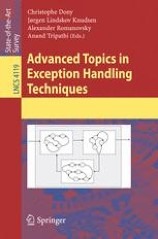
Modern software systems are becoming more complex in many ways and are having to cope with a growing number of abnormal situations which, in turn, are increasingly complex to handle.This book is composed of five parts; the first four deal with topics related to exception handling in the context of programming languages, concurrency and operating systems, pervasive computing systems, and requirements and specifications. The last part focuses on case studies, experimentation and qualitative comparisons. The 16 coherently written chapters by leading researchers competently address a wide range of issues in exception handling.
This explosion is a result of the growing use of electronic media. But what is data mining (DM)? A Web search using the Google search engine retrieves many (really many) definitions of data mining. We include here a few interesting ones. One of the simpler definitions is: “As the term suggests, data mining is the analysis of data to establish relationships and identify patterns” [1]. It focuses on identifying relations in data. Our next example is more elaborate: An information extraction activity whose goal is to discover hidden facts contained in databases. Using a combination of machine learning, statistical analysis, modeling techniques and database technology, data mining finds patterns and subtle relationships in data and infers rules that allow the prediction of future results. Typical applications include market segmentation, customer profiling, fraud detection, evaluation of retail promotions, and credit risk analysis .

سوريا - اتستراد درعا - غباغب
+963-15 2050 - 15 860 380 /1/2/3 - 11 662 3900