


تحسين النتائح
ترتيب حسب
من
الى


When information in the data warehouse is processed, it follows a definite pattern. An unexpected deviation in the data pattern from the usual behavior is called an anomaly. The anomaly in the data is also referred to as noise, outlier, spammer, deviations, novelties and exceptions. Identification of the rare items, events, observations, patterns which raise suspension by differing significantly from the majority of data is called anomaly detection. With progress in the technologies and the widespread use of data for the purpose for business the increase in the spams faced by the individuals and the companies are increasing day by day. This noisy data has boomed as a major problem in various areas such as Internet of Things, web service, Machine Learning, Artificial Intelligence, Deep learning, Image Processing, Cloud Computing, Audio processing, Video Processing, VoIP, Data Science, Wireless Sensor etc. Identifying the anomaly data and filtering them before processing is a major challenge for the data analyst. This anomaly is unavoidable in all areas of research. This book covers the techniques and algorithms for detecting the deviated data.

During the last 30 years, face recognition and related problems such as face detection/tracking and facial expression recognition have attracted researchers from both the engineering and psychology communities. In addition, extensive research has been carried out to study hand and body gestures. The understanding of how humans perceive these important cues has significant scientific value and extensive applications. this one-day workshop (AMFG 2005) provided a focused international forum to bring together well-known researchers and research groups to review the status of recognition, analysis and modeling of faces and gestures, to discuss the challenges that we are facing, and to explore future directions. Overall, 30 papers were selected from 90 submitted manuscripts. The topics of these papers range from feature representation, robust recognition, learning, and 3D modeling to psychology.

Manufacturing of products in urban production sites is connected to unique potentials, yet also to specific challenges. Urban factories can provide functional diversity and contribute positive impacts to a city. The concept of urban production receives rising attention in research and industry and it is recognized in its interdisciplinary nature. With a holistic approach from both the urban perspective and the factory perspective, negative impacts can be minimized, positive effects enabled and mutually beneficial, symbiotic combinations created. The presented framework and methods for the evaluation and implementation of sustainable urban production systems allow the assessment of impacts and provide the means to control and utilize the unique strengths of urban factories for cities and industry. This will allow a structured derivation of methods and measures from the concept of urban production for producing enterprises and the urban stakeholders.

Discusses existing conventional radio frequency (RF)-based wireless access technology and presents the challenges that can impact the requirements of the future wave of new wireless services in the context of artificial intelligence (AI) driven autonomous systems and machine-type communications. The relationship between visible light communications (VLC) and light fidelity (LiFi), is explored, and the major advantages of VLC and LiFi such as security and data density, and discuss existing research challenges are also introduced. Channel modeling techniques are provided for mobile multiuser scenarios, and will introduce key building blocks to achieve LiFi cellular networks achieving orders of magnitude improvements of area spectral efficiency compared to state-of-the-art. Challenges that arise from moving from a static point-to-point visible light link to a LiFi network that is capable of serving hundreds of mobile and fixed nodes are discussed. An overview of recent standardization activities and the commercialization challenges of this disruptive technology is also provided.

Written by two experts in the field, this book is ideal for advanced undergraduate students, graduate students, and researchers in all fields of science. It is self-contained: it contains the basic requirements from mathematics, probability theory, statistics, information theory, and computer science. Included are history, theory, new developments, a wide range of applications, numerous (new) problem sets, comments, source references, and hints to solutions of problems. This is the only comprehensive treatment of the central ideas of Kolmogorov complexity and their applications.

Provides a concise explanation of the fundamentals and background of the surround sound recording and playback technology Ambisonics. It equips readers with the psychoacoustical, signal processing, acoustical, and mathematical knowledge needed to understand the inner workings of modern processing utilities, special equipment for recording, manipulation, and reproduction in the higher-order Ambisonic format. The book comes with various practical examples based on free software tools and open scientific data for reproducible research. The book includes an extensive mathematical appendix. The book offers readers a deeper understanding of Ambisonic technologies, and will especially benefit scientists, audio-system and audio-recording engineers.

Medical imaging has been transformed over the past 30 years by the advent of computerized tomography (CT), magnetic resonance imaging (MRI), and various advances in x-ray and ultrasonic techniques. An enabling force behind this progress has been the (so far) exponentially increasing power of computers, which has made it practical to explore fundamentally new approaches. In particular, what our group terms "model-based" modalities-which produce tissue property images from data using nonlinear, iterative numerical modeling techniques-have become increasingly feasible. Alternative Breast Imaging: Four Model-Based Approaches explores our research on four such modalities, particularly with regard to imaging of the breast: (1) MR elastography (MRE), (2) electrical impedance spectroscopy (EIS), (3) microwave imaging spectroscopy (MIS), and (4) near infrared spectroscopic imaging (NIS).
The book of Sturmfels is both an easy-to-read textbook for invariant theory and a challenging research monograph that introduces a new approach to the algorithmic side of invariant theory. The Groebner bases method is the main tool by which the central problems in invariant theory become amenable to algorithmic solutions.
Thousands of mini computers (comparable to a stick of chewing gum in size), equipped with sensors, are deployed in some terrain or other. After activation the sensors form a self-organized network and provide data, for example about a forthcoming earthquake. The trend towards wireless communication increasingly affects electronic devices in almost every sphere of life. Conventional wireless networks rely on infrastructure such as base stations; mobile devices interact with these base stations in a client/server fashion. In contrast, current research is focusing on networks that are completely unstructured, but are nevertheless able to communicate (via several hops) with each other, despite the low coverage of their antennas. Such systems are called sensor or ad hoc networks, depending on the point of view and the application. Wireless ad hoc and sensor networks have gained an incredible research momentum. Computer scientists and engineers of all flavors are embracing the area. Sensor networks have been adopted by researchers in many fields: from hardware technology to operating systems, from antenna design to databases, from information theory to networking, from graph theory to computational geometry.
This book containing classical and well-known problems supplemented by clear and in-depth explanations. The material covered includes such topics as combinatorics, sorting, searching, queues, grammar and parsing, selected well-known algorithms and much more.
his book constitutes the revised papers of the Fourth International Workshop on Algorithms and Models for the Web-Graph, WAW 2006, held in Banff, Canada, November 30 - December 1, 2006.

This volume contains the 75 contributed papers and the abstracts of the threeinvited lectures presented at the 13th Annual European Symposium on Algo-rithms (ESA 2005), held in Spain, 2005. respectively.Papers were solicited in all areas of algorithmic research, including but notlimited to algorithmic aspects of networks, approximation and on-line algo-rithms, computational biology, computational geometry, computational financeand algorithmic game theory, data structures, database and information re-trieval, external memory algorithms, graph algorithms, graph drawing, machinelearning, mobile computing, pattern matching and data compression, quantumcomputing, and randomized algorithms. The algorithms could be sequential,distributed, or parallel. Submissions were especially encouraged in the area ofmathematical programming and operations research, including combinatorialoptimization, integer programming, polyhedral combinatorics, and semidefiniteprogramming.Each extended abstract was submitted to one of the two tracks.
Advances in bioinformatics and systems biology require improved computational methods for analyzing data, while progress in molecular biology is in turn influencing the development of computer science methods. This book introduces some key problems in bioinformatics, discusses the models used to formally describe these problems, and analyzes the algorithmic approaches used to solve them. After introducing the basics of molecular biology and algorithmics, Part I explains string algorithms and alignments; Part II details the field of physical mapping and DNA sequencing; and Part III examines the application of algorithmics to the analysis of biological data. Exciting application examples include predicting the spatial structure of proteins, and computing haplotypes from genotype data. This book describes topics in detail and presents formal models in a mathematically precise, yet intuitive manner, with many figures and chapter summaries, detailed derivations, and examples. It is well suited as an introduction into the field of bioinformatics, and will benefit students and lecturers in bioinformatics and algorithmics, while also offering practitioners an update on current research topics.
Le champ des algorithmes d'approximation est aujourd'hui l'un des domaines de recherche les plus actifs en informatique. Il allie la profondeur de la théorie mathématique aux promesses d'applications pratiques d'un intérêt considérable. La plupart des problèmes issus d'applications relevant de domaines aussi différents que la conception de circuits VLSI, la conception et la planification de réseaux, l'ordonnancement, la théorie des jeux, la biologie ou la théorie des nombres, sont des problèmes NP-difficiles. Leur résolution exacte demanderait des ressources informatiques inaccessibles et ne peut donc être envisagée. Pour faire face à cette situation, un grand nombre d'algorithmes proposant des solutions approchées à ces problèmes ont été développés.

The Belgian block cipher Rijndael was chosen in 2000 by the U.S. government’s National Institute of Standards and Technology (NIST) to be the successor to the Data Encryption Standard. Rijndael was subsequently standardized as the Advanced Encryption Standard (AES), which is potentially the world’s most important block cipher. In 2002, some new analytical techniques were suggested that may have a dramatic effect on the security of the AES. Existing analytical techniques for block ciphers depend heavily on a statistical approach, whereas these new techniques are algebraic in nature.
This Festschrift volume - published to honor Joseph Goguen on his 65th Birthday on June 28, 2006 - includes 32 refereed papers by leading researchers in the different areas spanned by Joseph Goguen's work. The papers address a broad variety of topics from meaning, meta-logic, specification and composition, behavior and formal languages, as well as models, deduction, and computation.The papers were presented at a Symposium in San Diego, California, USA in June 2006.

The book covers web search and RSS Feed with Ajax as well as form validation with Ajax frameworks for Java, JSP, JSF, and PHP. It discusses using Ajax in Oracle JDeveloper and is IDE based. JDeveloper has the following advantages over Eclipse IDE.
AI (artificial intelligence) is predicted to radically change teaching and learning in both schools and industry causing radical disruption of work. AI can support well-being initiatives and lifelong learning but educational institutions and companies need to take the changing technology into account. Moving towards AI supported by digital tools requires a dramatic shift in the concept of learning, expertise and the businesses built off of it. Based on the latest research on AI and how it is changing learning and education, this book will focus on the enormous opportunities to expand educational settings with AI for learning in and beyond the traditional classroom. This book also introduces ethical challenges related to learning and education, while connecting human learning and machine learning.
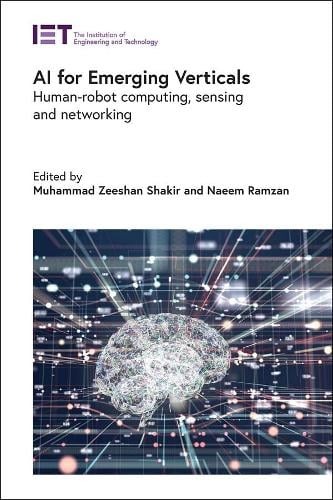
Artificial intelligence (AI) and machine learning (ML) will play a major role. By adopting AI software and services, businesses can create predictive strategies, enhance their capabilities, better interact with customers, and streamline their business processes. Explores novel concepts and cutting-edge research and developments towards designing these fully automated advanced digital systems. Fostered by technological advances in artificial intelligence and machine learning, such systems potentially have a wide range of applications in robotics, human computing, sensing and networking. The chapters focus on models and theoretical approaches to guarantee automation in large multi-scale implementations of AI and ML systems; protocol designs to ensure AI systems meet key requirements for future services such as latency; and optimisation algorithms to leverage the trusted distributed and efficient complex architectures.
Provides a valuable combination of relevant research works on developing smart city ecosystem from the artificial intelligence (AI) and Internet of things (IoT) perspective. The technical research works presented here are focused on a number of aspects of smart cities: smart mobility, smart living, smart environment, smart citizens, smart government, and smart waste management systems as well as related technologies and concepts. This edited book offers critical insight to the key underlying research themes within smart cities, highlighting the limitations of current developments and potential future directions.

سوريا - اتستراد درعا - غباغب
+963-15 2050 - 15 860 380 /1/2/3 - 11 662 3900