


تحسين النتائح
ترتيب حسب
من
الى

In the modern information era, managers must recognize the competitive opportunities represented by decision-support tools. Adaptive business intelligence systems combine prediction and optimization techniques to assist decision makers in complex, rapidly changing environments. These systems address the fundamental questions: What is likely to happen in the future? And what is the best decision right now? Adaptive Business Intelligence includes elements of data mining, predictive modeling, forecasting, optimization, and adaptability.
Establishes scientific foundations for adaptive autonomous cyber systems and ultimately brings about a more secure and reliable Internet. The recent advances in adaptive cyber defense (ACD) have developed a range of new ACD techniques and methodologies for reasoning in an adaptive environment.

This book nuds new things to do with an old idea. The proofs-as-programs paradigm constitutes a set of approaches to developing programs from proofs in constructive logic. there is increasingly active research in applying constructive techniques to industrial-scale, complex software engineering problems. Thismonographdetailsseveralimportantadvancesinthisdirectionofpr- tical proofs-as-programs. One of the central themes of the book is a general, abstract framework for developing new systems of program synthesis by adapting proofs-as-programs to new contexts. Framework-oriented approaches that facilitate analogous - proaches to building systems for solving particular problems have been popular and successful. Thesemethodsarehelpful asthey providea formal toolbox that enablesa“roll-your-own”approachtodevelopingsolutions.Itishopedthatour framework will have a similar impact. The framework is demonstrated by example. We will give two novel - plications of proofs-as-programs to large-scale, coarse-grain software engine- ing problems: contractual imperative program synthesis and structured p- gram synthesis.
An AKM solution is about exploiting the Web as a knowledge engineering medium, and developing knowledge-model-based families of platforms, model-configured workplaces and services.
This volume contains a collection of the papers presented during the 1st International ACM-L Workshop, which was held on November 8, 2006 during the 25th International Conference on Conceptual Modeling, ER 2006, held November 6–9,2006, in Tucson, Arizona, plus several invited papers.These papers plus the invited papers represent the current thinking in conceptual modeling research, The active model can only be realized through technology integration (e.g., AI, software engineering, information technology,cognitive science, art and sciences, philosophy, etc.)
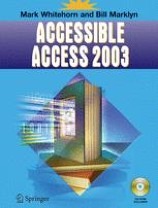
In that book we tried very hard not to simply list everything that we knew about the product. Instead we tried to act as intelligent filters, presenting only the essential information that you need to get started. Every screen shot has been retaken and every section has been re-checked to ensure, not only that it still works, but also that it is actually still relevant. We have re-written parts where the product has changed and also added some. For example, there is a new section on Object Dependencies and a whole new chapter about Data Access Pages - helping you to put your Access database onto an intranet.
Presents cybersecurity aspects of ubiquitous and growing IoT and Cyber Physical Systems. It also introduces a range of conceptual, theoretical, and foundational access control solutions. This was developed by the authors to provide an overall broader perspective and grounded approach to solve access control problems in IoT and CPS.
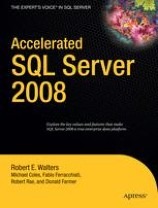
The expert tuition and approach to rapid learning in Accelerated SQL Server 2008, one of the first SQL Server 2008 books available, will enable SQL Server and other database professionals to make the leap to the 2008 release of Microsoft's flagship database management system quickly. Take full advantage of the features of SQL Server 2008, know what tools are available, and quickly realize the power and ease of use that SQL Server 2008 has to offer.
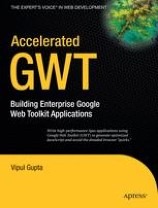
Ajax is a web development technique that takes advantage of JavaScript to display and interact dynamically with information embedded into a web page. Its emergence has made it possible to create web applications that closely resemble their desktop–based brethren. With this exciting new ability came several challenges; not only did developers have to learn JavaScript, but they were also forced to use inefficient development processes, not to mention deal with cross–platform and browser difficulties. But with the release of Google Web Toolkit (GWT), Java developers are able to continue using their favorite language to write powerful Ajax applications while using not only the Java language, but also the very same development tools they're already using on a daily basis!
Accelerated C# 2008 gives you everything you need to know about C# 2008 in a concentrated 500 pages of must-know information and best practices. C# 2008 offers powerful new features, and Accelerated C# 2008 is the fastest path to mastery, for both experienced C# programmers moving to C# 2008 and programmers moving to C# from another object-oriented language.
Distributed and communicating objects are becoming ubiquitous. In global, Grid and Peer-to-Peer computing environments, extensive use is made of objects interacting through method calls. So far, no general formalism has been proposed for the foundation of such systems. Caromel and Henrio are the first to define a calculus for distributed objects interacting using asynchronous method calls with generalized futures, i.e., wait-by-necessity -- a must in large-scale systems, providing both high structuring and low coupling, and thus scalability. The authors provide very generic results on expressiveness and determinism, and the potential of their approach is further demonstrated by its capacity to cope with advanced issues such as mobility, groups, and components.

Presents a ""practical theory"" of reactive systems, with formal foundations in Temporal Logic of Actions. This book emphasises theoretical understanding of reactive behaviors and using ""horizontal"" modularity to manage their complexity. It illustrates the incremental specification by a number of examples of varying size and complexity
The book proposes a new methodology for realizing platform-centric design of complex systems, and presents a detailed plan for its implementation. The proposed plan allows component vendors, system integrators and product developers to collaborate effectively and efficiently to create complex products within budget and schedule constraints.
This book gives a comprehensive account of Maude, a language and system based on rewriting logic. Many examples are used throughout the book to illustrate the main ideas and features of Maude, and its many possible uses. Maude modules are rewrite theories. Computation with such modules is - cient deduction by rewriting. Because of its logical basis and its initial model semantics,aMaude module defines a precise mathematical model.This means that Maude and its formal tool environment can be used in three, mutually reinforcing ways: • as a declarative programming language; • as an executable formal specification language; and • as a formal verification system. Maude’s rewriting logic is simple, yet very expressive. This gives Maude good representational capabilities as a semantic framework to formally represent a wide range of systems, including models of concurrency, distributed al- rithms, network protocols, semantics of programming languages, and models of cell biology. Rewriting logic is also an expressive universal logic,making Maude a fiexible logical framework in which many difierent logics and - ference systems can be represented and mechanized. This makes Maude a useful metatool to build many other tools, including those in its own formal tool environment. Thanks to the logic’s simplicity and the use of advanced semi-compilation techniques, Maude has a high-performance implementation, making it competitive with other declarative programming languages.
This monograph treats the application of numerous graph-theoretic algorithms to a comprehensive analysis of dynamic enterprise networks. Network dynamics analysis yields valuable information about network performance, efficiency, fault prediction, cost optimization, indicators and warnings.
Offers a modern and accessible introduction to Statistical Inference, the science of inferring key information from data. Aimed at beginning undergraduate students in mathematics, it presents the concepts underpinning frequentist statistical theory. Written in a conversational and informal style, this concise text concentrates on ideas and concepts, with key theorems stated and proved. Detailed worked examples are included and each chapter ends with a set of exercises, with full solutions given at the back of the book. Examples using R are provided throughout the book, with a brief guide to the software included. Topics covered in the book include: sampling distributions, properties of estimators, confidence intervals, hypothesis testing, ANOVA, and fitting a straight line to paired data.
This easy-to-follow text provides an accessible introduction to the key topics of formal languages and abstract machines within Computer Science.
Compressing data is an option naturally selected when faced with problems of high costs or restricted space. Written by a renowned expert in the field, this book offers readers a succinct, reader-friendly foundation to the chief approaches, methods and techniques currently employed in the field of data compression.

This advanced-level textbook covers conventional cryptographic primitives and cryptanalysis of these primitives; basic algebra and number theory for cryptologists; public key cryptography and cryptanalysis of these schemes; and other cryptographic protocols, e.g. secret sharing, zero-knowledge proofs and undeniable signature schemes.
This text provides a comprehensive introduction to the key topics in the history of computing, in an easy-to-follow and concise manner. It covers the significant areas and events in the field.

سوريا - اتستراد درعا - غباغب
+963-15 2050 - 15 860 380 /1/2/3 - 11 662 3900