


تحسين النتائح
ترتيب حسب
من
الى


Answers these questions and more in a comprehensive introduction to the design, application and techniques of lighting interior spaces. Using real examples of successful lighting schemes, experienced designer Admir Jukanovic explains the fundamentals of lamps and luminaires, and how to meet the requirements of a design brief. Topics include treatments and techniques for lighting designs; tips for understanding the deliverables and fulfilling brief; the five project phases, from concept to commission and the common pitfalls to avoid when using artificial lighting in architecture.
Essential guide to creating well-lit, visually appealing interior spaces. The book begins with an overview of light and color theory, lighting fundamentals, and design principles. It then covers artificial, natural, decorative, and professional lighting in interior design, as well as standards and regulations, controls and systems, sustainable lighting, energy efficiency, light pollution reduction, and the use of environmentally friendly materials. With a focus on practical applications and real-world examples, this book provides readers with the tools and knowledge necessary to achieve their design goals while considering the latest trends and techniques in the field. A valuable resource for professionals and students in architecture and lighting design, it will also appeal to anyone interested in creating visually stunning and functional interior spaces.
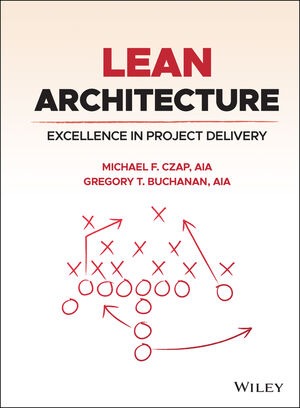
Shows readers a path to improve their project delivery via the application of lean concepts and process management. Authors Michael Czap and Gregory Buchanan challenge readers to reexamine their approach to architectural practice and projects by presenting a unique and compelling alternative. Readers will learn to: Maximize the use of their resources to deliver superior results in less time / Minimize waste, cost, and inefficiency in their firm’s operations / Move between radically different project scales while retaining efficient and effective processes
Presents recent advances in modelling, planning and evaluating city logistics for sustainable and liveable cities based on the application of ICT (Information and Communication Technology) and ITS (Intelligent Transport Systems). It highlights modelling the behaviour of stakeholders who are involved in city logistics as well as planning and managing policy measures of city logistics including cooperative freight transport systems in public-private partnerships. Case studies of implementing and evaluating city logistics measures in terms of economic, social and environmental benefits from major cities around the world are also given.
Presents recent advances in modelling, planning and evaluating city logistics for sustainable and liveable cities based on the application of ICT (Information and Communication Technology) and ITS (Intelligent Transport Systems). It highlights modelling the behaviour of stakeholders who are involved in city logistics as well as planning and managing policy measures of city logistics including cooperative freight transport systems in public-private partnerships. Case studies of implementing and evaluating city logistics measures in terms of economic, social and environmental benefits from major cities around the world are also given.
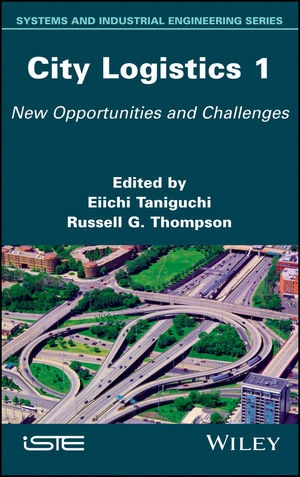
Presents recent advances in modelling, planning and evaluating city logistics for sustainable and liveable cities based on the application of ICT (Information and Communication Technology) and ITS (Intelligent Transport Systems). It highlights modelling the behaviour of stakeholders who are involved in city logistics as well as planning and managing policy measures of city logistics including cooperative freight transport systems in public-private partnerships. Case studies of implementing and evaluating city logistics measures in terms of economic, social and environmental benefits from major cities around the world are also given.
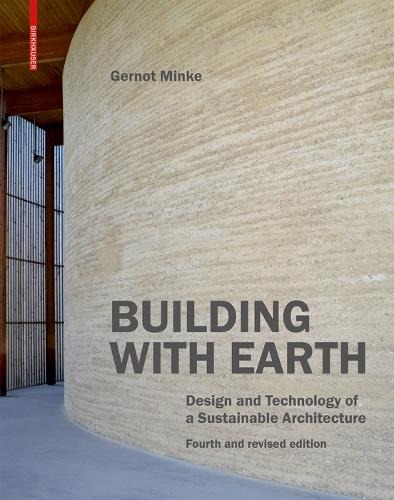
Offers a practical systematic overview of the many uses of earth and techniques for processing it. Its properties and physical characteristics are described in informed and knowledgeable detail. The presentation reflects the rich and varied experiences gained over thirty years of building earth structures all over the world. Numerous photographs of construction sites and drawings show the concrete execution of earth architecture. Documentation of 30 international earth buildings. The characteristics of the building material earth and its applications in modern architecture
Provides the readers with a timely guide to the application of biomimetic principles in architecture and engineering design. As a result of a combined effort by two internationally recognized authorities, the biologist Werner Nachtigall and the architect Göran Pohl, the book describes the principles which can be used to compare nature and technology, and at the same time it presents detailed explanations and examples showing how biology can be used as a source of inspiration and “translated” in building and architectural solutions (biomimicry). Even though nature cannot be directly copied, the living world can provide architects and engineers with a wealth of analogues and inspirations for their own creative designs. But how can analysis of natural entities give rise to advanced and sustainable design? By reporting on the latest bionic design methods and using extensive artwork, the book guides readers through the field of nature-inspired architecture, offering an extraordinary resource for professional architects, engineers, designers and urban planners, as well as for university teachers, researchers and students.
The book is structured into three sections (research, practice, and technologies), with the goal of creating a new framework useful for widespread awareness necessary to initiate technology transfer processes for the benefit of the public sector, universities, research centers, and innovative companies, and a new professional figure capable of controlling the entire process is essential. Thus, the book chapters arouse a series of relevant topics such as computational and parametric design, performance-based architecture, data-driven design strategies, parametric environmental design and analysis, computational and parametric structural design and analysis
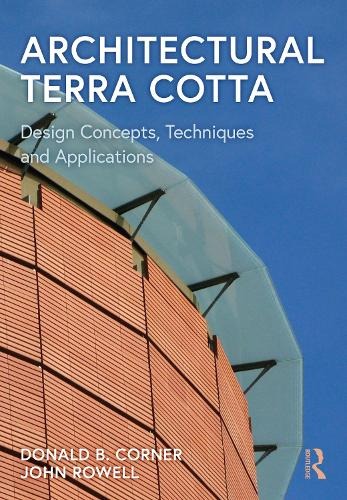
Examines the evolution of terra cotta and prepares architects and builders to make new, creative uses of the timeless material. Terra cotta is among the oldest of manufactured building products, yet it has once again become a material of choice in contemporary façade design. From the walls of Babylon to high performance rainscreens, terra cotta claddings have repeatedly proven to be technically superior and aesthetically triumphant. Understanding the evolution of terra cotta prepares architects to add new, creative chapters to a rich history.
Complex geometric forms generated using virtual media can be tested and validated only by means of physical models, which also make it possible to assess their practical application. The complexity of contemporary architectural design requires the mastery of new methods of producing scale models, which opens a new chapter in the field of modeling, and is the focus of this book. Along with the traditional methods that provide the basis for modeling, this book presents the principles of digital NURBS modeling, parametric modeling, digital modeling support, and model creation, complete with a number of tutorials, practical advice and examples found in architectural practice today.
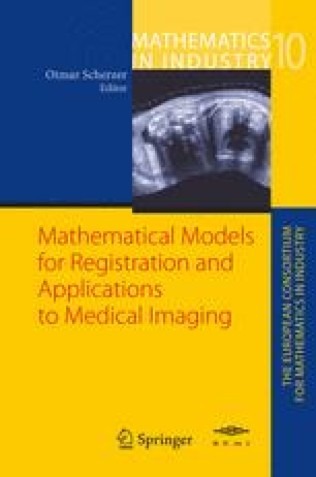
Image registration is an emerging topic in image processing with many applications in medical imaging, picture and movie processing. The classical problem of image registration is concerned with ?nding an appropriate transformation between two data sets. This fuzzy de?nition of registration requires a mathematical modeling and in particular a mathematical speci?cation of the terms appropriate transformations and correlation between data sets. Depending on the type of application, typically Euler, rigid, plastic, elastic deformations are considered. The variety of similarity p measures ranges from a simpleL distance between the pixel values of the data to mutual information or entropy distances. This goal of this book is to highlight by some experts in industry and medicine relevant and emerging image registration applications and to show new emerging mathematical technologies in these areas. Currently, many registration application are solved based on variational prin- ple requiring sophisticated analysis, such as calculus of variations and the theory of partial differential equations, to name but a few. Due to the numerical compl- ity of registration problems ef?cient numerical realization are required. Concepts like multi-level solver for partial differential equations, non-convex optimization, and so on play an important role. Mathematical and numerical issues in the area of registration are discussed by some of the experts in this volume.
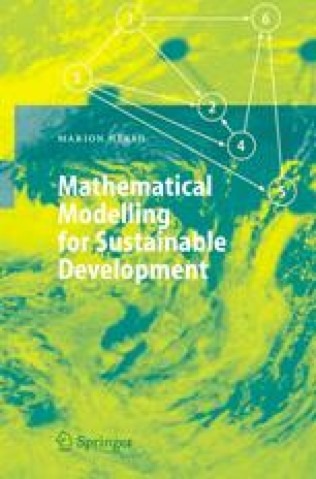
Mathematics needs Sustainable Development. When science was gradually reinvented in European medieval societies, it was legitimised as contributing to the disclosure of God’s divine creation. The conflicts that emerged became well known as a result of the clash between Galileo and the Church. Science found a new legitimacy through recognition that it was a powerful force against superstition. In the Enlightenment the argument was pushed forward by attributing Progress to the advancement of science: science could produce a better world by promoting rationality. In our modern society, science has become intimately linked to technology. Science for its own sake unfortunately rarely has positive outcomes in terms of research grant applications. Meanwhile, science and technology, and the progress they are supposed to produce, meet with wide scale scepticism. We all know of the current global problems: climate change, resource depletion, a thinning ozone layer, space debris, declining biodiversity, malnutrition, dying ecosystems, global inequity, and the risk of unprecedented nuclear wars
This two-volume, interdisciplinary work is a unified presentation of a broad range of state-of-the-art topics in the rapidly growing field of mathematical modeling in the biological sciences. Highlighted throughout both works are mathematical and computational approaches to examine central problems in the life sciences, ranging from the organizational principles of individual cells to the dynamics of large populations.
This book contains some of the contributions that have been carefully selected and peer-reviewed, which were presented at the International Symposium MME06 Mathematical Methods in Engineering, held in Cankaya University, Ankara, April 2006. The Symposium provided a setting for discussing recent developments in Fractional Mathematics, Neutrices and Generalized Functions, Boundary Value Problems, Applications of Wavelets, Dynamical Systems and Control Theory.
The underlying theory on which much modern robust and nonlinear control is based can often be dif?cult for the student to grasp. In particular, the mathematical - pects can be problematic for students from a standard engineering background. The EPSRC sponsored Summer School which was held in Leicester in September 2006 attempted to “?ll the gap” in students’ appreciation the theory relevant to several important areas of control. This book is a collection of lecture notes which were p- sented at that workshop and consists of, broadly, two parts. The ?rst nine chapters are devoted to the theory behind several areas of robust and nonlinear control and are aimed at introducing fundamental concepts to the reader. The last six chapters contain detailed case studies which aim to demonstrate the use and effectiveness of these modern techniques in real engineering applications. It is hoped that this book will provide a useful introduction to many of the more common robust and nonlinear control techniques and serve as a valuable reference for the more adept practitioner.

Based on lecture notes of two summer schools with a mixed audience from mathematical sciences, epidemiology and public health, this volume offers a comprehensive introduction to basic ideas and techniques in modeling infectious diseases, for the comparison of strategies to plan for an anticipated epidemic or pandemic, and to deal with a disease outbreak in real time. It covers detailed case studies for diseases including pandemic influenza, West Nile virus, and childhood diseases. Models for other diseases including Severe Acute Respiratory Syndrome, fox rabies, and sexually transmitted infections are included as applications. Its chapters are coherent and complementary independent units. In order to accustom students to look at the current literature and to experience different perspectives, no attempt has been made to achieve united writing style or unified notation.
This book highlights recent developments in mathematical control theory and its applications to finance. It presents a collection of original contributions by distinguished scholars, addressing a large spectrum of problems and techniques. Control theory provides a large set of theoretical and computational tools with applications in a wide range of fields, ranging from "pure" areas of mathematics up to applied sciences like finance. Stochastic optimal control is a well established and important tool of mathematical finance. Other branches of control theory have found comparatively less applications to financial problems, but the exchange of ideas and methods has intensified in recent years. This volume should contribute to establish bridges between these separate fields. The diversity of topics covered as well as the large array of techniques and ideas brought in to obtain the results make this volume a valuable resource for advanced students and researchers.
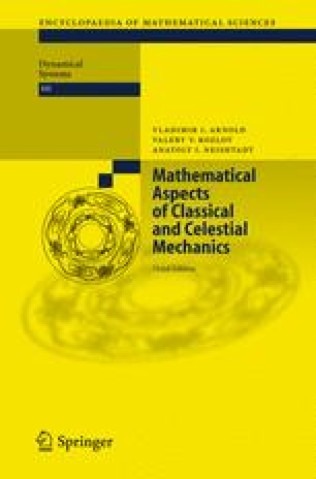
In this book we describe the basic principles, problems, and methods of clssical mechanics. Our main attention is devoted to the mathematical side of the subject. Although the physical background of the models considered here and the applied aspects of the phenomena studied in this book are explored to a considerably lesser extent, we have tried to set forth first and foremost the “working” apparatus of classical mechanics. This apparatus is contained mainly in Chapters 1, 3, 5, 6, and 8. Chapter 1 is devoted to the basic mathematical models of classical - chanics that are usually used for describing the motion of real mechanical systems. Special attention is given to the study of motion with constraints and to the problems of realization of constraints in dynamics. In Chapter 3 we discuss symmetry groups of mechanical systems and the corresponding conservation laws. We also expound various aspects of ord- reduction theory for systems with symmetries, which is often used in appli- tions. Chapter 4 is devoted to variational principles and methods of classical mechanics. They allow one, in particular, to obtain non-trivial results on the existence of periodic trajectories. Special attention is given to the case where the region of possible motion has a non-empty boundary. Applications of the variational methods to the theory of stability of motion are indicated.
The purpose of the volume is to provide a support for a first course in Mathematical Analysis, along the lines of the recent Programme Specifications for mathematical teaching in European universities. The contents are organised to appeal especially to Engineering, Physics and Computer Science students, all areas in which mathematical tools play a crucial role. Basic notions and methods of differential and integral calculus for functions of one real variable are presented in a manner that elicits critical reading and prompts a hands-on approach to concrete applications. The layout has a specifically-designed modular nature, allowing the instructor to make flexible didactical choices when planning an introductory lecture course. The book may in fact be employed at three levels of depth. At the elementary level the student is supposed to grasp the very essential ideas and familiarise with the corresponding key techniques.

سوريا - اتستراد درعا - غباغب
+963-15 2050 - 15 860 380 /1/2/3 - 11 662 3900