


تحسين النتائح
ترتيب حسب
من
الى


Gives an comprehensive account of magnetism, spanning the historical development, the physical foundations and the continuing research underlying the field, one of the oldest yet still vibrant field of physics. It covers both the classical and quantum mechanical aspects of magnetism and novel experimental techniques. Perhaps uniquely, it also discusses spin transport and magnetization dynamics phenomena associated with atomically and spin engineered nano-structures against the backdrop of spintronics and magnetic storage and memory applications.
Contains the edited lectures of the fourth Mittelwihr school on "Magnetism and Synchrotron Radiation". This series of events introduces graduate students and nonspecialists from related disciplines to the field of magnetism and magnetic materials with emphasis on synchrotron radiation as an experimental tool of investigation. These lecture notes present in particular the state of the art regarding the analysis of magnetic properties of new materials.
A team of outstanding scientists in the field of modern magnetic nanotechnologies illustrates the state of the art in several areas of advanced magneto-electronic devices, magnetic micro-electromechanical systems and high density information storage technologies.The physics and chemistry of nano-scale systems have made rapid advances and there are real prospects of translating exciting scientific findings into a new generation of processes and high technology products with a potential impact on several industrial sectors. In particular the development of nano-structured magnetic materials plays a leading role in the increasing miniaturization of devices with superior performances.

Addresses the exciting and rapidly developing topic of nanostructured magnetic materials. It combines modern topics in nanoscale magnetism with issues relating to the fabrication and characterization of magnetic nanostructures. The chapters describe a wide range of physical aspects, together with theoretical and experimental methods. "Magnetic Nanostructures" will be of interest to researchers and specialists both in academic and industrial research. Graduate students will also find in this book an accessible introduction to the essential issues.

This monograph addresses the field theoretical aspects of magnetic monopoles. Written for graduate students as well as researchers, the author demonstrates the interplay between mathematics and physics. He delves into details as necessary and develops many techniques that find applications in modern theoretical physics. This introduction to the basic ideas used for the description and construction of monopoles is also the first coherent presentation of the concept of magnetic monopoles. It arises in many different contexts in modern theoretical physics, from classical mechanics and electrodynamics to multidimensional branes. The book summarizes the present status of the theory and gives an extensive but carefully selected bibliography on the subject. The first part deals with the Dirac monopole, followed in part two by the monopole in non-abelian gauge theories. The third part is devoted to monopoles in supersymmetric Yang-Mills theories.

Contains a comprehensive collection of overview articles on novel microscopy methods for imaging magnetic structures on the nanoscale. Written by leading scientists in the field the book covers synchrotron based methods, spin polarized electron methods, and scanning probe techniques. It will be a valuable source of reference for graduate students and newcomers to the field.

Magnetic heterostructures constitute an important field in magnetism and nanotechnology, which has developed over the past fifteen years due to important advances in epitaxial- growth techniques and lithographic processes. Magnetic heterostructures combine different physical properties which do not exist in nature. Examples are semiconductors/ferromagnets, superconductors/ferromagnets, and ferromagnets/antiferromagnets. These combinations display rich and novel physical properties different from those that exit in any single one of them. Interlayer exchange coupling, exchange bias, proximity effects, giant magneto-resistance, tunneling magneto-resistance, spininjection and spintransport are examples of new physical phenomena that rely on the combination of different materials layers

Using the spin-Hamiltonian formalism the magnetic parameters are introduced through the components of the Lambda-tensor involving only the matrix elements of the angular momentum operator. The energy levels for a variety of spins are generated and the modeling of the magnetization, the magnetic susceptibility and the heat capacity is done. Theoretical formulae necessary in performing the energy level calculations for a multi-term system are prepared with the help of the irreducible tensor operator approach. The goal of the programming lies in the fact that the entire relevant matrix elements (electron repulsion, crystal field, spin-orbit interaction, orbital-Zeeman, and spin-Zeeman operators) are evaluated in the basis set of free-atom terms. The modeling of the zero-field splitting is done at three levels of sophistication. The spin-Hamiltonian formalism offers simple formulae for the magnetic parameters by evaluating the matrix elements of the angular momentum operator in the basis set of the crystal-field terms. The magnetic functions for dn complexes are modeled for a wide range of the crystal-field strengths.

The main topic of Magnetic Control of Tokamak Plasmas is the design of feedback control systems guaranteeing the stability of plasma equilibrium inside a tokamak and the regulation of the plasma position and shape during plasma pulses. Modelling and control details are presented, allowing the non-expert to understand the control problem. Starting from equations of magneto-hydro-dynamics, all the steps needed for the derivation of plasma state-space models are enumerated. The basics of electromagnetics are frequently recalled. The control problem is then described beginning with control of current and position – vertical and radial – and progressing to the more challenging shape control. The solutions proposed vary from simple PIDs to more sophisticated MIMO controllers.

The objective of Document Analysis and Recognition (DAR) is to recognize the text and graphicalcomponents of a document and to extract information. With ?rst papers dating back to the 1960’s, DAR is a mature but still gr- ing research?eld with consolidated and known techniques. Optical Character Recognition (OCR) engines are some of the most widely recognized pr- ucts of the research in this ?eld, while broader DAR techniques are nowadays studied and applied to other industrial and o?ce automation systems. In the machine learning community, one of the most widely known - search problems addressed in DAR is recognition of unconstrained handwr- ten characters which has been frequently used in the past as a benchmark for evaluating machine learning algorithms, especially supervised classi?ers.

In the Lunar and Planetary Webcam User’s Guide Martin Mobberley de-mystifies the jargon of webcams and computer processing, and provides detailed hints and tips for imaging the Sun, Moon and planets with a webcam. He looks at each observing target separately, describing and explaining all specialised techniques in context.

Provides extensive quotes from the astronauts who drove the LRV on the Moon from interviews conducted especially for the book. It also details new material from interviews of engineers and managers at the Jet Propulsion Laboratory covering the robotic rovers, Sojourner, Sprit and Opportunity. The Foreword is written by David R. Scott, Commander of Apollo 15. Chapter 1: From Concept to Reality; Chapter 2: Lunar Roving Vehicle Subsystems; Chapter 3: Training for the Moon; Chapter 4: To the Hadley Plains; Chapter 4: Mysterious and Unknown Descartes; Chapter 5: Destiny at Taurus-Littrow; Chapter Six: The Quest for Mars-Chapter Seven: The New Vision of Exploration.
Assimilating new research in the field of low-dimensional metals, this monograph provides a detailed overview of the current status of research on quasi-one- and two-dimensional molecular metals, describing normal-state properties, magnetic field effects, superconductivity, and the phenomena of interacting p and d electrons. It will be useful not only for frontier researchers with a broad interest in low-dimensional electronic and magnetic properties, but also for graduate students of solid-state physics and chemistry with some background knowledge of solid-state physics. It includes a number of fundamental and novel findings relating to the characteristics of these low-dimensional metals, which in future are likely to become standard material in textbooks on solid-state physics.
"Tools alone aren't enough to reduce dynamic and leakage power in complex chip designs - a well-planned methodology is needed. Following in the footsteps of the successful Reuse Methodology Manual (RMM), authors from ARM and Synopsys have written this Low Power Methodology Manual (LPMM) to describe [such] [a] low-power methodology with a practical, step-by-step approach." "Excellent compendium of low-power techniques and guidelines with balanced content spanning theory and practical implementation. The LPMM is a very welcome addition to the field of low power SoC implementation that has for many years operated in a largely ad-hoc fashion."

Chapter 1 presents the physical principles of the growth mechanism of fiber and fiber network with LMGs, as treated on the basis of the heterogeneous nucleation model. in Chaps. 2 and 3, respectively. These chapters are intended to outline useful synthetic guidelines for the generation of an ever-increasing variety of molecular architectures within these two families of gelators. Recent developments in the chemistry of nucleobase-containing LMGs are described in Chap. 4. Hydrogen-bonding within these molecular systems involves complementary base pair formation, a process relevant to DNA double-helix formation The self-assembly of chiral organo- or hydrogelators is the subject of Chap. 5. result from the orthogonal self-assembly of liquid crystals and LMGs are presented in Chap. 6. The volume concludes with Chap. 7, a review of the emerging field of dendritic gels.
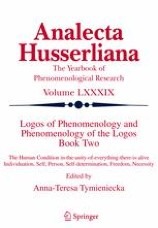
The Human Condition-in-the-unity-of-everything-there-is-alive, under whose aegis the present selection of essays falls, offers the urgently needed new approach to reinvestigating humanness. While recent advances in the neurosciences, genetics and bio-engineering challenge the traditional abstract conception of "human nature", indicating its transformability, thus putting in question the main tenets of traditional philosophical anthropology, in the new perspective of the Human Creative Condition the human individual is seen in its emergence and unfolding within the dynamic networks of the logos of life, and within the evolution of living types.

Prompted and ever diversified by the specifically human interrogative logos, scientific inquiries seek a common system of links in order to mutually confirm and rectify their results. Coming closer and closer to phenomenology, the sciences of life find the common ground of the reality in the ontopoiesis of life.Could it not be that the interrogative logos of science, participating in human creative inventiveness will bring together also the divergent scientific methods in a common network? A network which comprises natural processes, societal sharing-in-life, and existential communication.

Provides for the first time a general overview of research activities related to location and map-based services. These activities have emerged over the last years, especially around issues of positioning, spatial modelling, cartographic communication as well as in the fields of ubiquitious cartography, geo-pervasive services, user-centered modelling and geo-wiki activities. Topics cover an enormous range with heterogenous relationships to the main book issues. Whilst contemporary cartography aims at looking at new and efficient ways for communicating spatial information the development and availability of technologies like mobile networking, mobile devices or short-range sensors lead to interesting new possibilities for achieving this aim.

Some ferromagnetic materials with localized magnetic moments have become a hot topic in modern solid-state physics because of their potential applications, e.g. in spintronic devices. The magnetic systems of interest comprise diluted magnetic semiconductors and half-metallic ferromagnets. Like conventional concentrated local-moment systems, they are characterized by an exchange interaction between localized magnetic moments and quasi-free charge carriers. The current research on local-moment ferromagnetism is reviewed in a tutorial style by leading experts in this field. Experimentalists present the latest approaches to characterize the unique material properties, and theoreticians propose definitive ideas to explain the observed phenomena. Students and researches alike will benefit from this status report.

This book helps to understand in which ways local governing elites are important for the success or failure of national democratic development. Although we know a great deal about the general importance of civil society and social capital for the development of sustainable democracy, we still know little about what specific local governing qualities or political capital that interact with democratic development. The collected data covers time series of surveys from between 15 to 30 political and administrative leaders in over a hundred middle-sized European and Eurasian cities. The study takes us across the 1980s and 1990s, going from cities in Sweden and the Netherlands - through the Baltic cities - to the cities of Belarus and Russia.

سوريا - اتستراد درعا - غباغب
+963-15 2050 - 15 860 380 /1/2/3 - 11 662 3900