


تحسين النتائح
ترتيب حسب
من
الى


Advances in Digital Forensics IV describes original research results and innovative applications in the emerging discipline of digital forensics. In addition, it highlights some of the major technical and legal issues related to digital evidence and electronic crime investigations.

This book is the second volume in the anual series produced by the International Federation for Information Processing (IFIP) Working Group 11.9 on Digital Forensics, an international community of scientists, engineers and practitioners dedicated to advancing the state of the art of research and practice in digital forensics. The book contains a selection of twenty-five edited papers from the First Annual IFIP WG 11.9 Conference on Digital Forensics, held at the National Center for Forensic Science, Orlando, Florida, USA in the spring of 2006.
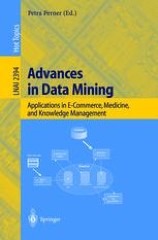
Presents papers describing selected projects on the topic of data mining in fields like e commerce, medicine, and knowledge management. The objective is to report on current results and at the same time to give a review on the present activities in this field in Germany. An effort has been made to include the latest scientific results, as well as lead the reader to the various fields of activity and the problems related to them. Knowledge discovery on the basis of web data is a wide and fast growing area. E commerce is the principal theme of motivation in this field, as companies invest large sums in the electronic market, in order to maximize their profits and minimize their risks. Other applications are telelearning, teleteaching, service support, and citizen information systems. Concerning these applications, there is a great need to understand and support the user by means of recommendation systems, adaptive information systems, as well as by personalization.

Advances in Computer and Information Sciences and Engineering includes a set of rigorously reviewed world-class manuscripts addressing and detailing state-of-the-art research projects in the areas of Computer Science, Software Engineering, Computer Engineering, and Systems Engineering and Sciences.

This book presents a comprehensive treatment of biometrics and offers coverage of the entire gamut of topics in the field, including data acquisition, pattern-matching algorithms, and issues that impact at the system level, such as standards, security, networks, and databases.

A comprehensive overview of the most promising research directions in the area of bio-inspired computing. According to the broad spectrum addressed by the different book chapters, a rich variety of biological principles and their application to ICT systems are presented.
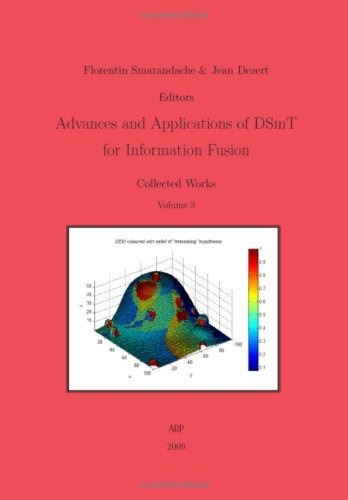
One of the most comprehensive and flexible fusion theory based on belief functions. It can work in all fusion spaces: power set, hyper-power set, and super-power set, and has various fusion and conditioning rules that can be applied depending on each application. Some new generalized rules are introduced in this volume with codes for implementing some of them. For the qualitative fusion, the DSm Field and Linear Algebra of Refined Labels (FLARL) is proposed which can convert any numerical fusion rule to a qualitative fusion rule. When one needs to work on a refined frame of discernment, the refinement is done using Smarandache s algebraic codification. New interpretations and implementations of the fusion rules based on sampling techniques and referee functions are proposed, including the probabilistic proportional conflict redistribution rule.
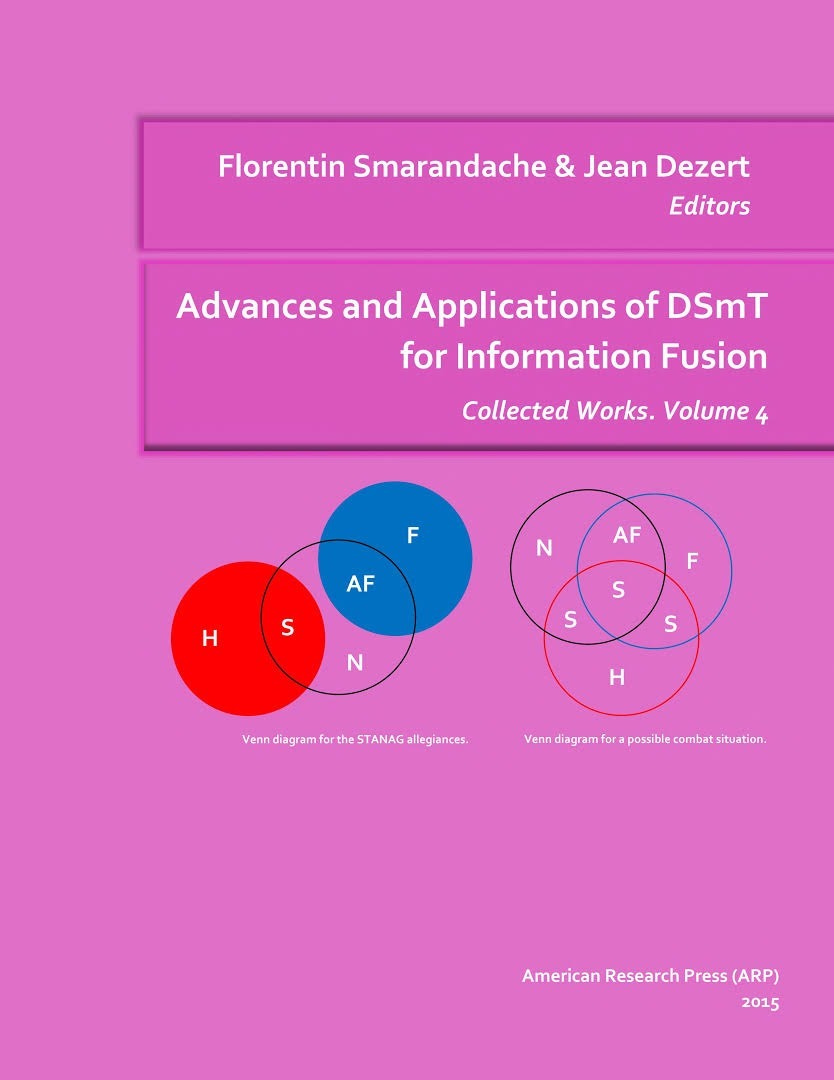
One of the most comprehensive and flexible fusion theory based on belief functions. It can work in all fusion spaces: power set, hyper-power set, and super-power set, and has various fusion and conditioning rules that can be applied depending on each application. Some new generalized rules are introduced in this volume with codes for implementing some of them. For the qualitative fusion, the DSm Field and Linear Algebra of Refined Labels (FLARL) is proposed which can convert any numerical fusion rule to a qualitative fusion rule. When one needs to work on a refined frame of discernment, the refinement is done using Smarandache s algebraic codification. New interpretations and implementations of the fusion rules based on sampling techniques and referee functions are proposed, including the probabilistic proportional conflict redistribution rule.

ADVANCED WIRED AND WIRELESS NETWORKS brings the reader a sample of recent research efforts representative of advances in the areas of recognized importance for the future Internet, In Part I, we bring ad-hoc networking closer to the reality of practical use. The focus is on more advanced scalable routing suitable for large networks, directed flooding useful in information dissemination networks, as well as self-configuration and security issues important in practical deployments. Part II illustrates the efforts towards development of advanced mobility support techniques (beyond traditional "mobile phone net") and Mobile IP technologies. The issues range from prediction based mobility support, through context transfer during Mobile IP handoff, to service provisioning platforms for heterogeneous networks. The focus of the final section concerns the performance of networks and protocols. Furthermore this section illustrates researchers’ interest in protocol enhancement requests for improved performance with advanced networks, reliable and efficient multicast methods in unreliable networks, and composite scheduling in programmable/active networks where computing resources equal network performance as transmission bandwidth.
This explosion is a result of the growing use of electronic media. But what is data mining (DM)? A Web search using the Google search engine retrieves many (really many) definitions of data mining. We include here a few interesting ones. One of the simpler definitions is: “As the term suggests, data mining is the analysis of data to establish relationships and identify patterns” [1]. It focuses on identifying relations in data. Our next example is more elaborate: An information extraction activity whose goal is to discover hidden facts contained in databases. Using a combination of machine learning, statistical analysis, modeling techniques and database technology, data mining finds patterns and subtle relationships in data and infers rules that allow the prediction of future results. Typical applications include market segmentation, customer profiling, fraud detection, evaluation of retail promotions, and credit risk analysis .

Optical fiber communication industry has gained unprecedented opportunities and achieved rapid progress in recent years. However, with the increase of data transmission volume and the enhancement of transmission demand, the optical communication field still needs to be upgraded to better meet the challenges in the future development. Artificial intelligence technology in optical communication and optical network is still in its infancy, but the existing achievements show great application potential. In the future, with the further development of artificial intelligence technology, AI algorithms combining channel characteristics and physical properties will shine in optical communication. This reprint introduces some recent advances in optical fiber communication and optical network, and provides alternative directions for the development of the next generation optical fiber communication technology.

This book presents a unified and systematic description of a wide class of miscellaneous problems of inconsistent knowledge management, analyzed by traditional mathematical methods using relational and logical representations.

The automotive industry has made steady progress in technological innovations under the names of Connected Autonomous-Shared-Electric (CASE) and Mobility as a Service (MaaS). Needless to say, mathematics and informatics are important to support such innovations. As the concept of cars and movement itself is diversifying, they are indispensable for grasping the essence of the future mobility society and building the foundation for the next generation. This book contains three main contents. 1. Mathematical models of flow 2. Mathematical methodsfor huge data and network analysis 3. Algorithm for mobility society The first one discusses mathematical models of pedestrian and traffic flow, as they are important for preventing accidents and achieving efficient transportation.

Provides research on how technologies such as artificial intelligence-based machine learning and deep learning can be applied to remote sensing. Through this, we can see the process of solving the existing problems of image and image signal processing for remote sensing. These techniques are computationally intensive and require the help of high-performance computing devices. With the development of devices such as GPUs, remote sensing technology, and aerial sensing technology, it is possible to monitor the Earth with high-resolution images and to obtain vast amounts of Earth observation data. The papers published in this reprint describe recent advances in big data processing and artificial intelligence-based technologies for remote sensing technology.

Many Flex books cover the basics—this book does something different, and goes far further. The authors, leading Flash platform developers at Almer/Blank, working with Adobe User Group communities, are the creators of the Rich Media Exchange (RMX), a social media network for Adobe developers. In covering just how the RMX was built, this book contains all the knowledge you need to build similar large-scale rich Internet applications with Adobe Flex. From the inception of the idea through to deployment, the authors show the techniques needed to plan and build advanced applications. You'll learn how to use forms, styles, validators, video, sound analysis, and framework caching, ensuring you make the most of the features introduced in Flex 3.

Divided into three parts. The first part discusses the architectural and design aspects of Flex 3 application development. It explains the internals of a Flex 3 application and advocates a few best practices to fine-tune your application to ensure maximum performance. It includes tutorials on creating custom components, data binding, and creating AIR-powered desktop applications. The second part concentrates on effectively integrating Flex 3 with server- and client-side technologies. Techniques for integration with Java and PHP are covered in detail, and content covering interaction with client-side technologies is also included. After reading the chapter on JavaScript integration, you will be ready to create applications that can use Ajax and Flex 3 together. The third and final part of the book is a unique and eclectic mix of some advanced topics like mash-ups, collaborative applications, 3D rendering, highly interactive visualization, and audio and video streaming.

Flash allows users to create some amazing interactive interfaces to interact with rich Internet applications, e-learning systems, and simple web sites. In this book, two of the most talented Flash designers in the world will show you how to use them effectively to create breathtaking visuals for your Flash web sites. You'll also learn how to take advantage of Flash's powerful built-in vector-based drawing tools.
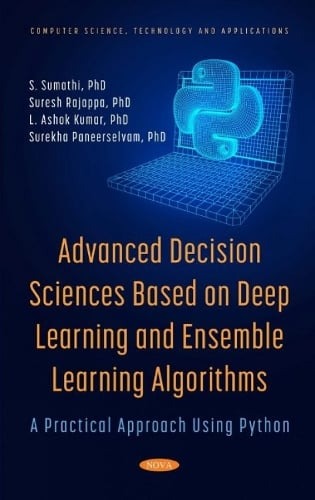
Describes the deep learning models and ensemble approaches applied to decision-making problems. The authors have addressed the concepts of deep learning, convolutional neural networks, recurrent neural networks, and ensemble learning in a practical sense providing complete code and implementation for several real-world examples. The authors of this book teach the concepts of machine learning for undergraduate and graduate-level classes and have worked with Fortune 500 clients to formulate data analytics strategies and operationalise these strategies.

This book serves as an introduction to the state of the art on data warehouse design, with many references to more detailed sources. Providing a clear and a concise presentation of the major concepts and results of data warehouse design, it can also be used as the basis of a graduate or advanced undergraduate course.
This book provides theoretical and practical knowledge for develop ment of algorithms that infer linear and nonlinear models. It offers a methodology for inductive learning of polynomial neural network mod els from data. The design of such tools contributes to better statistical data modelling when addressing tasks from various areas like system identification, chaotic time-series prediction, financial forecasting and data mining. The main claim is that the model identification process involves several equally important steps: finding the model structure, estimating the model weight parameters, and tuning these weights with respect to the adopted assumptions about the underlying data distrib ution. When the learning process is organized according to these steps, performed together one after the other or separately, one may expect to discover models that generalize well.

سوريا - اتستراد درعا - غباغب
+963-15 2050 - 15 860 380 /1/2/3 - 11 662 3900