


تحسين النتائح
ترتيب حسب
من
الى

Linear systems theory plays a broad and fundamental role in electrical, mechanical, chemical and aerospace engineering, communications, and signal processing. A thorough introduction to systems theory with emphasis on control is presented in this self-contained textbook. The book examines the fundamental properties that govern the behavior of systems by developing their mathematical descriptions. Linear time-invariant, time-varying, continuous-time, and discrete-time systems are covered. Rigorous development of classic and contemporary topics in linear systems, as well as extensive coverage of stability and polynomial matrix/fractional representation, provide the necessary foundation for further study of systems and control.
Linear programming attracted the interest of mathematicians during and after World War II when the first computers were constructed and methods for solving large linear programming problems were sought in connection with specific practical problems—for example, providing logistical support for the U.S. Armed Forces or modeling national economies. Early attempts to apply linear programming methods to solve practical problems failed to satisfy expectations. There were various reasons for the failure. One of them, which is the central topic of this book, was the inexactness of the data used to create the models. This phenomenon, inherent in most pratical problems, has been dealt with in several ways. At first, linear programming models used "average” values of inherently vague coefficients, but the optimal solutions of these models were not always optimal for the original problem itself. Later researchers developed the stochastic linear programming approach, but this too has its limitations. Recently, interest has been given to linear programming problems with data given as intervals, convex sets and/or fuzzy sets. The individual results of these studies have been promising, but the literature has not presented a unified theory. Linear Optimization Problems with Inexact Data attempts to present a comprehensive treatment of linear optimization with inexact data, summarizing existing results and presenting new ones within a unifying framework.
Focuses on the foundations of linear estimation theory which is essential for effective signal processing. In its first part, it gives a comprehensive overview of several key methods like reduced-rank signal processing and Krylov subspace methods of numerical mathematics. Based on the derivation of the multistage Wiener filter in its most general form, the relationship between statistical signal processing and numerical mathematics is presented. In the second part, the theory is applied to iterative multiuser detection receivers (Turbo equalization) which are typically desired in wireless communication systems.
Contains the lecture series originally delivered at the "Advanced Course on Limit Cycles of Differential Equations" in the Centre de Recerca Matemàtica Barcelona in 2006.The topics covered are the center-focus problem for polynomial vector fields, and the application of abelian integrals to limit cycle bifurcations. Both topics are related to Hilbert's sixteenth problem. In particular, the book will be of interest to students and researchers working in the qualitative theory of dynamical systems.

Ddevoted to modern knowledge and milestones in both experimental and theoretical techniques related to light scattering and radiative transport problems. It will consist of 3 parts comprising 11 contributions written by world leading experts in their respective fields. The general focus of the book will be on remote sensing of geophysical media. The first part will be devoted exclusively to studies of single light scattering by particles of different shapes and chemical compositions. The first chapter will review in situ measurements of cloud optical characteristics like cloud extinction and phase function, with the emphasis on ice clouds. Chapter 2 will cover opitcally soft particles common in marine environments and bio-suspensions while Chapter 3 will describe numerical techniques applicable not only to isotropic but also to chiral and anisotropic mdia. The final chapter in this part will deal with spatial symmetries in light scattering problems.

Reviews recent developments concerning mainly semiconductor nanostructures and inelastic x-ray scattering, including both coherent time-domain and spontaneous scattering studies.

Light Scattering by Systems of Particles comprehensively develops the theory of the null-field method, while covering almost all aspects and current applications. The "Null-field Method with Discrete Sources" is an extension of the Null-field Method (also called T-Matrix Method) to compute light scattering by arbitrarily shaped dielectric particles. This book incorporates FORTRAN programs and exemplary simulation results that demonstrate all aspects of the latest developments of the method. Worked examples of the application of the FORTRAN programs show readers how to adapt or modify the programs for their specific application.

Energy, chemistry, solvents, and habitats -- the basic elements of living systems - define the opportunities and limitations for life on other worlds. This class-tested text examines each of these parameters in crucial depth and makes the argument that life forms we would recognize may be more common in our solar system than many assume. It also considers, however, exotic forms of life that would not have to rely on carbon as basic chemical element, solar energy as a main energy source, or water as primary solvent. Finally the question of detecting bio- and geosignature of such life forms is discussed, ranging from Earth environments to deep space. While speculative considerations in this emerging field of science cannot be avoided, the authors have tried to present their study with the breadth and seriousness that a scientific approach to this issue requires. They seek an operational definition of life and investigate the realm of possibilities that nature offers to realize this very special state of matter and avoid scientific jargon wherever possible to make this intrinsically interdisciplinary subject understandable to a broad range of readers.

What is life? Has molecular biology given us a satisfactory answer to this question? And if not, why, and how to carry on from there? This book examines life not from the reductionist point of view, but rather asks the question: what are the universal properties of living systems and how can one construct from there a phenomenological theory of life that leads naturally to complex processes such as reproductive cellular systems, evolution and differentiation? The presentation has been deliberately kept fairly non-technical so as to address a broad spectrum of students and researchers from the natural sciences and informatics.

Van den Ban’s introductory chapter explains the basic setup of a reductive symmetric space along with a careful study of the structure theory, particularly for the ring of invariant differential operators for the relevant class of parabolic subgroups. Advanced topics for the formulation and understanding of the proof are covered, including Eisenstein integrals, regularity theorems, Maass–Selberg relations, and residue calculus for root systems. Schlichtkrull provides a cogent account of the basic ingredients in the harmonic analysis on a symmetric space through the explanation and definition of the Paley–Wiener theorem. Approaching the Plancherel theorem through an alternative viewpoint, the Schwartz space, Delorme bases his discussion and proof on asymptotic expansions of eigenfunctions and the theory of intertwining integrals.

This book, designed for advanced graduate students and post-graduate researchers, provides an introduction to Lie algebras and some of their applications to the spectroscopy of molecules, atoms, nuclei and hadrons. In the first part, a concise exposition is given of the basic concepts of Lie algebras, their representations and their invariants. The second part contains a description of how Lie algebras are used in practice in the treatment of bosonic and fermionic systems. Physical applications considered include rotations and vibrations of molecules (vibron model), collective modes in nuclei (interacting boson model), the atomic shell model, the nuclear shell model, and the quark model of hadrons. One of the key concepts in the application of Lie algebraic methods in physics, that of spectrum generating algebras and their associated dynamic symmetries, is also discussed. The book contains many examples that help to elucidate the abstract algebraic definitions. It provides a summary of many formulas of practical interest, such as the eigenvalues of Casimir operators and the dimensions of the representations of all classical Lie algebras.
Just over thirty years after Holland first presented the outline for Learning Classifier System paradigm, the ability of LCS to solve complex real-world problems is becoming clear. In particular, their capability for rule induction in data mining has sparked renewed interest in LCS. This book brings together work by a number of individuals who are demonstrating their good performance in a variety of domains.
A mathematically consistent formulation of relativistic quantum electrodynamics (QED) has still to be found. Nevertheless, there are several simplified effective models that successfully describe many body quantum systems and the interaction of radiation with matter. Large Coulomb Systems explores a selection of mathematical topics inspired by QED. It comprises selected, expanded and edited lectures given by international experts at a topical summer school and is intended as a high-level introduction for graduate students, postdocs and nonspecialists from related fields.
This book presents a collection and synthesis of many of these perspectives — perhaps it could only be produced in a land urb- ised in the tiniest of pockets, and yet so daunting with respect to the way non-populated landscapes dwarf its cities. Many travel to Australia to its cities and never see the landscapes — but it is these that give the country its power and imagery. It is the landscapes that so impress on us the need to consider how our intervention, through activities ranging from resource exploitation and settled agriculture to climate change, poses one of the greatest crises facing the modern world. In this sense, Australia and its landscape provide a mirror through which we can glimpse the extent to which our intervention in the world threatens its very existence.

Land use and land-cover change research over the past decade has focused mainly on contemporary primary land-cover conversions in the tropics and sub-tropics, with considerable resources dedicated to the explanation and prediction of tropical deforestation and often ignoring the dynamism in the world’s agro-pastoral landscapes. This collection integrates cutting-edge research in the social, biogeophysical, and geographical information sciences to understand the human and environmental dynamics that change the type, magnitude and location of land uses and land covers in the changing countryside.This book describes the monitoring of land-cover changes, explains the processes through which land is altered, and describes the development of spatially-explicit models to predict land change. This book illustrates how practitioners have integrated knowledge from the three scientific realms - social, biophysical, and GIScience - that underpin land-change science.
This book provides an accessible introduction to a new set of methods for the analysis of Lagrangian motion in geophysical flows. These methods were originally developed in the abstract mathematical setting of dynamical systems theory, through a geometric approach to differential equations. Despite the recent developments in this field and the existence of a substantial body of work on geophysical fluid problems in the dynamical systems and geophysical literature, this is the first introductory text that presents these methods in the context of geophysical fluid flow. The book is organized into seven chapters; the first introduces the geophysical context and the mathematical models of geophysical fluid flow that are explored in subsequent chapters. The second and third cover the simplest case of steady flow, develop basic mathematical concepts and definitions, and touch on some important topics from the classical theory of Hamiltonian systems. The fundamental elements and methods of Lagrangian transport analysis in time-dependent flows that are the main subject of the book are described in the fourth, fifth, and sixth chapters. The seventh chapter gives a brief survey of some of the rapidly evolving research in geophysical fluid dynamics that makes use of this new approach. Related supplementary material, including a glossary and an introduction to numerical methods, is given in the appendices.

A Differential-Geometric Approach for Bernstein’s Degrees-of-Freedom Problem.- Nonsmooth Riemannian Optimization with Applications to Sphere Packing and Grasping.- Synchronization of Networked Lagrangian Systems.- An Algorithm to Discretize One-Dimensional Distributed Port Hamiltonian Systems.- Virtual Lagrangian Construction Method for Infinitedimensional Systems with Homotopy Operators.- Direct Discrete-Time Design for Sampled-Data Hamiltonian Control Systems.- Kinematic Compensation in Port-Hamiltonian Telemanipulation.- Interconnection and Damping Assignment Passivity-Based Control of a Four-Tank System.- Towards Power-based Control Strategies for a Class of Nonlinear Mechanical Systems.- Power Shaping Control of Nonlinear Systems: A Benchmark Example.- Total Energy Shaping Control of Mechanical Systems: Simplifying the Matching Equations via Coordinate Changes.- Simultaneous Interconnection and Damping Assignment Passivity–Based Control: Two Practical Examples.
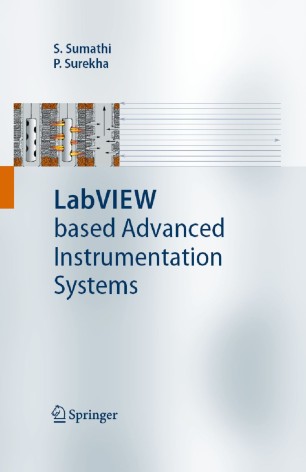
Information is a valuable resource to an organization. User-friendly, computer-controlled instrumentation and data analysis techniques are revolutionizing the way measurements are being made, allowing nearly instantaneous comparison between theoretical predictions, simulations, and actual experimental results. This book provides comprehensive coverage of fundamentals of advanced instrumentation systems based on LabVIEW concepts. This book is for those who wish a better understanding of virtual instrumentation concepts, its purpose, its nature, and the applications developed using the National Instrument’s LabVIEW software.

A.N. Kolmogorov (b. Tambov 1903, d. Moscow 1987) was one of the most brilliant mathematicians that the world has ever known. Incredibly deep and creative, he was able to approach each subject with a completely new point of view: in a few magnificent pages, which are models of shrewdness and imagination, and which astounded his contemporaries, he changed drastically the landscape of the subject.Most mathematicians prove what they can, Kolmogorov was of those who prove what they want. For this book several world experts were asked to present one part of the mathematical heritage left to us by Kolmogorov.
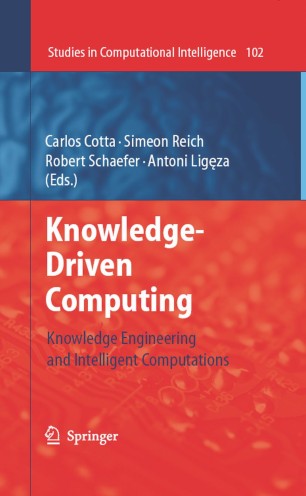
Knowledge-Driven Computing constitutes an emerging area of intensive research located at the intersection of Computational Intelligence and Knowledge Engineering with strong mathematical foundations. It embraces methods and approaches coming from diverse computational paradigms, such as evolutionary computation and nature-inspired algorithms, logic programming and constraint programming, rule-based systems, fuzzy sets and many others. The use of various knowledge representation formalisms and knowledge processing and computing paradigms is oriented towards the efficient resolution of computationally complex and difficult problems.

سوريا - اتستراد درعا - غباغب
+963-15 2050 - 15 860 380 /1/2/3 - 11 662 3900