


تحسين النتائح
ترتيب حسب
من
الى


Cosmic microwave background radiation is the residue of the great heat following the Big Bang. A tenuous sign, over 13 billion years old, in which the answers to many of the questions about the nature of our Universe are hidden. Discovered by chance in 1964, in the last forty years this fossil trace of the origins of the Cosmos has been explored with every available means. Two Nobel Prizes in physics have already been awarded for research involving it, the last in 2006 for the results of the COBE satellite. Much of the information encoded in the cosmic background radiation was impressed by the superimposition of acoustic waves present in the early Universe: a "music" of the Big Bang, which cosmologists have tried for years to reconstruct, using techniques similar to those that allow to distinguish the sound of different musical instruments. Only recently have the first notes of this extraordinary cosmic symphony finally been revealed, but the investigation is not over yet. This book illustrates, with a language suitable even for non-specialists, the theories, observations and discoveries that have brought cosmology into a new era.
Cosmic microwave background radiation is the residue of the great heat following the Big Bang. A tenuous sign, over 13 billion years old, in which the answers to many of the questions about the nature of our Universe are hidden. Discovered by chance in 1964, in the last forty years this fossil trace of the origins of the Cosmos has been explored with every available means. Two Nobel Prizes in physics have already been awarded for research involving it, the last in 2006 for the results of the COBE satellite. Much of the information encoded in the cosmic background radiation was impressed by the superimposition of acoustic waves present in the early Universe: a "music" of the Big Bang, which cosmologists have tried for years to reconstruct, using techniques similar to those that allow to distinguish the sound of different musical instruments. Only recently have the first notes of this extraordinary cosmic symphony finally been revealed, but the investigation is not over yet. This book illustrates, with a language suitable even for non-specialists, the theories, observations and discoveries that have brought cosmology into a new era.

The observation of variable stars is one of the main contributions that amateur astronomers can offer to science and this book provides all the information necessary to pursue it profitably. In the first part the different classes of variables are presented in detail, with examples, light curves and physical descriptions. The second section, on the other hand, covers all the practical aspects of observation: from preparation and planning, to observation techniques, up to the management and processing of data.
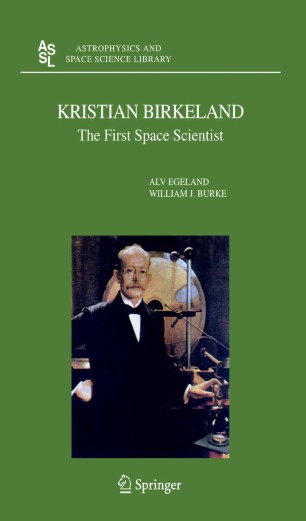
PREFACEThisscientific biography of Kristian Birkeland (1867–1917) was written to bring the story ofa Norwegian national hero to the attention ofthe English-speaking world. Birkeland’sheroic stature was established not on a field of military battle,but in the bitter cold of the Artic wilderness ashe sought to answer basic questions abouthow the Sun controlled northern lights andmag-netic storms. He was also afather of Norsk Hydro one ofNorway’s largest industries. Birkel and died before reaching the age of 50.Because Birkel and never kept adiary, documented information about his family and private life is sparse. Before he died, Olaf Devik, the last of Birke-ffland’s close friends, gave along interview and graciously transferred his personal archive to A.E. Birkeland’s 82 scientific papers and three book-length publications map the progress of his investigations. addressed this book questions that had vexed European scientists for centuries. Why do the northern lights appear overhead when the Earth’s magnetic field is disturbed? How are magnetic storms connected to disturbances on the Sun? To answer these questions Birkeland interpreted his advance laboratory simulations and daring campaigns in the Arctic wilderness in the light of Maxwell’s newly discovered laws of electricity and magnetism. Birkeland’s ideas were dismissed for decades, only to be vindicated when satellites could fly above the Earth’s atmosphere.

Describes data mining , techniques as they apply to law. Law students, legal academics and applied information technology specialists are guided thorough all phases of the knowledge discovery from databases process with clear explanations of numerous data mining algorithms including rule induction, neural networks and association rules. Throughout the text, assumptions that make data mining in law quite different to mining other data are made explicit. Issues such as the selection of commonplace cases, the use of discretion as a form of open texture, transformation using argumentation concepts and evaluation and deployment approaches are discussed at length.

Knowing Art collects ten original essays written by leading philosophers who distill and build upon recent work at the intersection of aesthetics and epistemology. Specific topics addressed include the objectivity of critical knowledge, the quality of critical testimony, the roles of principles and perception in critical reasoning, phenomenal knowledge of what a work of art is like, the acquisition of factual information and psychological understanding from fictions, and the limits of images as sources of historical evidence. In addressing these topics, the volume also explores the challenges that art poses for theories of knowledge as well as the challenges that artistic knowledge poses to traditional views about art.

This book examines the role of kinship and the family’s influence on the health outcomes of their children, their children’s selection of marriage partners, couples having higher order births or reduced fertility, individual migration and origins of populations. Mortality patterns are examined to determine the influence of fertility patterns on parents’ mortality, the contribution of parents’ longevity to their children’s lifespan, and the whether a family history of disease affects the risk of dying from that same disease.This volume emphasizes the importance of studies that include and compare other factors related to social organization with information on multi-generational families. The authors elucidate previous explanations and provide provocative new results. Such intergenerational research is crucial in understanding long term demographic trends and processes.

This textbook contains all the information needed for graduate students or industrial researchers to design kinetic experiments involving heterogeneous catalysts, to characterize these catalysts, to acquire valid rate data, to verify the absence of mass (and heat) transfer limitations, to propose reaction models, to derive rate expressions based on these models and, finally, to assess the consistency of these rate equations.The most recent technique to calculate heats of adsorption and activation barriers on metal surfaces, the BOC-MP approach, is discussed in detail. Methods to measure metal surface areas and crystallite sizes using x-ray diffraction, transmission electron microscopy and various chemisorption techniques are discussed. Different experimental techniques to determine the influence of mass transfer limitations, especially within the pores of a catalyst, are reviewed in detail, with a particular emphasis on liquid-phase reactions.
This textbook contains all the information needed for graduate students or industrial researchers to design kinetic experiments involving heterogeneous catalysts, to characterize these catalysts, to acquire valid rate data, to verify the absence of mass (and heat) transfer limitations, to propose reaction models, to derive rate expressions based on these models and, finally, to assess the consistency of these rate equations.Many illustrations of these and other topics are provided along with numerous problems and a Solutions Manual for instructors. This book will be applicable to any graduate course in chemical engineering, chemistry or materials science that involves kinetics of catalytic reactions, including those catalyzed by enzymes.
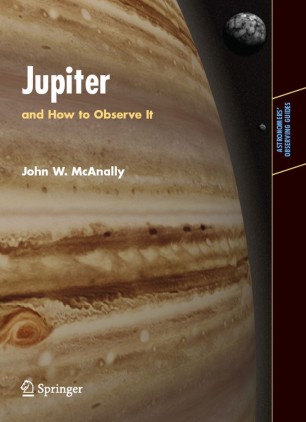
Jupiter is one of the most spectacular observing targets for amateur astronomers. There are various books about observing the planets, and several about Jupiter itself, but this is the only book to deal with the giant planet - its formation, structure, and incredible physics - as well as with the practical aspects of observation of the planet and its moons.

This collection ot ten tutorial reviews by leading researchers in the field introduces and renews recent advances on irreversible deformation phenomena in solid state and soft condensed matter physics. The focus in applications is on amorphous materials, crystalline solids under stress and more generally, elastic manifolds driven by external processes. This book addresses in particular nonspecialists and graduate students wishing to enter the field.
Composite decisions consist of interconnected parts or subdecisions and correspond to a composite (composable, modular, decomposable) system. Composite Systems Decisions describes an educational approach that is based on systems engineering and considered modular design of composite decisions. Divided into four parts, this book contains descriptions of basic systems approaches and examines basic ‘technological’ problems for composite systems, including: modular hierarchical design; multistage design; multistage planning; redesign/improvement/adaptation; evaluation; and, combinatorial evolution/development.
This book is the first monograph ever on complex-valued neural networks, which lends itself to graduate and undergraduate courses in electrical engineering, informatics, control engineering, mechanics, robotics, bioengineering, and other relevant fields. It is useful for those beginning their studies, for instance, adaptive signal processing for highly functional sensing and imaging, control in unknown and changing environment, brainlike information processing, robotics inspired by human neural systems, and interdisciplinary studies to realize comfortable society. It is also helpful to those who carry out research and development regarding new products and services at companies.

This book presents a systematic study on the inherent complexity in fuzzy systems, resulting from the large number and the poor transparency of the fuzzy rules. The study uses a novel approach for complexity management, aimed at compressing the fuzzy rule base by removing the redundancy while preserving the solution. The compression is based on formal methods for presentation, manipulation, transformation and simplification of fuzzy rule bases, which are illustrated by algorithms as well as results from numerous examples and two case studies. The results are directly applicable or easily extendable to a wide class of fuzzy systems and detailed benchmarks for expanding these systems to new areas such as fuzzy networks and fuzzy multi-agent systems are introduced. The intended readers are people from both academia and industry, who would be interested in building and implementing advanced fuzzy systems.
This book, written by an international team of experts, introduces the reader to various aspects of complexity theory and its applications. It illustrates the latest trends in science to go beyond the mechanistic Newtonian view of the world by shifting the focus to self-organization, adaptation, and emergent phenomena. The authors discuss these properties of complex systems in biology, ecology and chemistry along with the structure and interconnectedness of the "layers" of complexity. The qualitative description is complemented by a discussion of methods for complexity quantification. Networks are covered in detail as a universal language of the complex world.

Complex numbers can be viewed in several ways: as an element in a field, as a point in the plane, and as a two-dimensional vector. Examined properly, each perspective provides crucial insight into the interrelations between the complex number system and its parent, the real number system. It explore these relationships by adopting both generalization and specialization methods to move from real variables to complex variables, and vice versa, while simultaneously examining their analytic and geometric characteristics, using geometry to illustrate analytic concepts and employing analysis to unravel geometric notions. The engaging exposition is replete with discussions, remarks, questions, and exercises, motivating not only understanding on the part of the reader, but also developing the tools needed to think critically about mathematical problems. This focus involves a careful examination of the methods and assumptions underlying various alternative routes that lead to the same destination.
Concurrent engineering is well-established as an approach to engineer product parts. However, the concept has much broader application. Complex Systems Concurrent Engineering: Collaboration, Technology Innovation and Sustainability demonstrates how concurrent engineering can be used to benefit the development of complex systems, to produce results that sustain balanced stakeholder satisfaction over time. Gathered from the 14th ISPE International Conference on Concurrent Engineering, the collected papers cover all aspects of the sustainable and integrated development of complex systems, such as airplanes, satellites, space vehicles, automobiles and ships.
In the twenty-first century, applications in medicine and engineering must acquire greater safety and flexibility if they are to yield better products at higher efficiency. To this end, complex science and technology must be integrated in medicine and engineering. Complex medical engineering (CME) is a new field that merges medical science and technology, and includes biomedical robotics and biomechatronics, complex virtual technology in medicine, information and communication technology in medicine, complex technology in rehabilitation, cognitive neuroscience and technology, and complex bioinformatics. Experts from academia, industry, and government research laboratories who have pioneered CME ideas and technologies describe its concept and research approach and discuss related hardware and software, science and technology, and medicine and engineering. This book will be invaluable to scientists, researchers, and graduates in the emerging field of CME.

One the key aspects of this volume is to cut across the traditional taxonomy of disciplines in the study of alloys. Hence there has been a deliberate attempt to integrate the different approaches taken towards alloys as a class of materials in different fields, ranging from geology to metallurgical engineering. The emphasis of this book is to highlight commonalities between different fields with respect to how alloys are studied. The topics in this book fall into several themes, which suggest a number of different classification schemes. We have chosen a scheme that classifies the papers in the volume into the categories Microstructural Considerations, Ordering, Kinetics and Diffusion, Magnetic Considerations and Elastic Considerations. The book has juxtaposed apparently disparate approaches to similar physical processes, in the hope of revealing a more dynamic character of the processes under consideration. This monograph will invigorate new kinds of discussion and reveal challenges and new avenues to the description and prediction of properties of materials in the solid state and the conditions that produce them
This volume examines the difficulties that arise in creating highly complex engineered systems and new approaches that are being adopted. Topics addressed range from the formal representation and classification of distributed networked systems to revolutionary engineering practices inspired by biological evolution. By bringing together the latest research in Complex Engineered Systems, this book sheds light on the current state and future course of this emerging field.

سوريا - اتستراد درعا - غباغب
+963-15 2050 - 15 860 380 /1/2/3 - 11 662 3900