


تحسين النتائح
ترتيب حسب
من
الى

The book is structured into three sections (research, practice, and technologies), with the goal of creating a new framework useful for widespread awareness necessary to initiate technology transfer processes for the benefit of the public sector, universities, research centers, and innovative companies, and a new professional figure capable of controlling the entire process is essential. Thus, the book chapters arouse a series of relevant topics such as computational and parametric design, performance-based architecture, data-driven design strategies, parametric environmental design and analysis, computational and parametric structural design and analysis
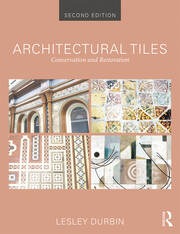
It not only contains new and up to date information on materials, practical methods, and historical research but also reflects changes in the attitudes, outlook and perceptions within the wider conservation, architectural heritage and construction communities which give a new dimension to the conservation and restoration. The growing interest in the preservation of post war ceramic tile murals and the subsequent demand for information pertaining specifically to this era is a welcome and useful addition.
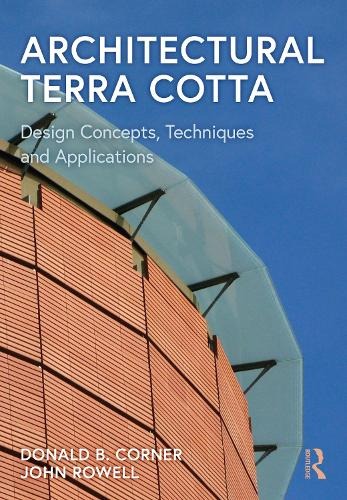
Examines the evolution of terra cotta and prepares architects and builders to make new, creative uses of the timeless material. Terra cotta is among the oldest of manufactured building products, yet it has once again become a material of choice in contemporary façade design. From the walls of Babylon to high performance rainscreens, terra cotta claddings have repeatedly proven to be technically superior and aesthetically triumphant. Understanding the evolution of terra cotta prepares architects to add new, creative chapters to a rich history.
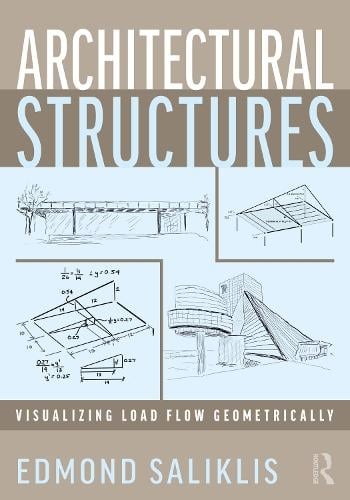
Presents an alternative approach to understanding structural engineering load flow using a visually engaging and three-dimensional format. This book presents a ground-breaking new way of establishing equilibrium in architectural structures using the Modern Müller-Breslau method. Includes approachable coverage of parametric modeling of two-dimensional and three-dimensional structures, as well as more advanced topics such as indeterminate structural analysis and plastic analysis. Hundreds of detailed drawings created by the author are included throughout to aid understanding. Architecture and structural engineering students can employ this novel method by hand sketching, or by programming in parametric design software.
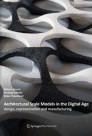
Complex geometric forms generated using virtual media can be tested and validated only by means of physical models, which also make it possible to assess their practical application. The complexity of contemporary architectural design requires the mastery of new methods of producing scale models, which opens a new chapter in the field of modeling, and is the focus of this book. Along with the traditional methods that provide the basis for modeling, this book presents the principles of digital NURBS modeling, parametric modeling, digital modeling support, and model creation, complete with a number of tutorials, practical advice and examples found in architectural practice today.
Reports on several advances in architectural graphics, with a special emphasis on education, training and research. It gathers a selection of contributions to the 19th International Conference on Graphic Design in Architecture, EGA 2022, held on June 2–4, 2022, in Cartagena, Spain, with the motto: "Beyond drawings. The use of architectural graphics".
Reports on several advances in architectural graphics, with a special emphasis on education, training, and research. It gathers a selection of contributions to the 19th International Conference on Graphic Design in Architecture, EGA 2022, held on June 2–4, 2022, in Cartagena, Spain, with the motto: "Beyond drawings. The use of architectural graphics".
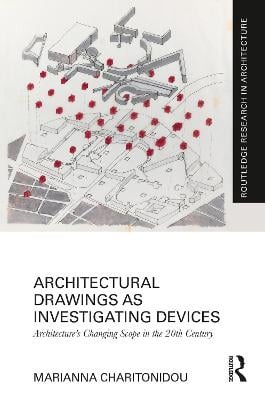
Explores how the changing modes of representation in architecture and urbanism relate to the transformation of how the addressees of architecture and urbanism are conceived. Diagnoses the dominant epistemological debates in architecture and urbanism during the 20th and 21st centuries. It traces their transformations, paying special attention to Le Corbusier and Ludwig Mies van der Rohe’s preference for perspective representation, to the diagrams of Team 10 architects, to the critiques of functionalism, and the upgrade of the artefactual value of architectural drawings in Aldo Rossi, John Hejduk, Peter Eisenman, and Oswald Mathias Ungers, and, finally, to the reinvention of architectural programme through the event in Bernard Tschumi and the Office for Metropolitan Architecture (OMA). Particular emphasis is placed on the spirit of truth and clarity in modernist architecture, the relationship between the individual and the community in post-war era architecture, the decodification of design process as syntactic analogy and the paradigm of autonomy in the 1970s and 1980s architecture, the concern about the dynamic character of urban conditions and the potentialities hidden in architectural programme in the post-autonomy era.
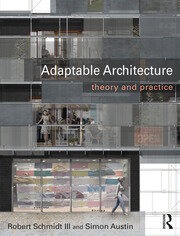
provides thought-provoking and inquisitive insights into how we can prolong the useful life of buildings by designing them to be more adaptable, and hence create a more sustainable built environment. The book provides a theoretical foundation counterpointed by the experiences and ideas of those involved in the design and use of buildings. It explains many approaches to designing for change, with lessons from history, and case studies including The Cedar Rapids Public Library, Kentish Town Health Centre and Folkestone Performing Arts Centre, which stretch our thinking beyond the conventional notions of adaptability. The authors reveal the many conditions that make it a complex design phenomenon, by considering the purpose, design and business case of buildings as well as the physical product. Full of summaries, diagrams, reference charts, tables, and photos of exemplar solutions for use as conversational tools or working aids, this book is for any professional or student who wants to research, question, imagine, illustrate - and ultimately design for - adaptation.
In this volume, 253 archetypal patterns consisting of problem statements, discussions, illustrations, and solutions provide lay persons with a framework for engaging in architectural design.
Provides an index of ideas, theories, projects, and definitions that string into a methodology for evaluating the contemporary language of architecture described as “contemporism” through a review of topology (form) and typology (system and elements). Trying to answer the postmodern question of how to move beyond modernism through a thread of architectural styles that tried to respond to deficiencies from the modern promise and contextual changes. Yet, the question remains, should this ongoing struggle to move beyond modernism be a stylistic battle? Has the present architectural practice ever left the modernist tendencies, and is there a structure for a contemporary language in architecture? Presents a collection of highly illustrated projects that have worked under these parameters to break away from modernism in order to present a holistic integration of topology and typology as a language for “contemporism.” The index is illustrated with individual spreads, which can be read sequentially or independently, and encourages the reader to make their own connections. It also includes interviews and contributions from Toyo Ito, Anthony Vidler, Ben van Berkel, Christian Kerez, and Greg Lynn.
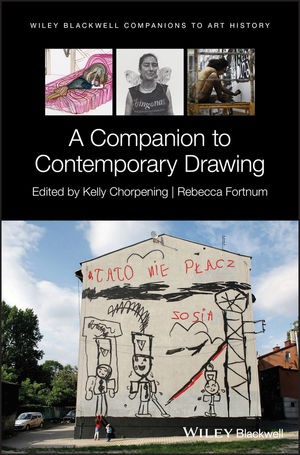
Textbook on the power, condition, and expanse of contemporary fine art drawing. his textbook: Demonstrates ways contemporary issues and concerns are addressed through drawing Reveals how drawing is used to make powerful social and political statements Situates works by contemporary practitioners within the context of their historical moment Explores how contemporary art practices utilize drawing as both process and finished artifact Shows how concepts of observation, representation, and audience have changed dramatically in the digital era Establishes drawing as a mode of thought
This book describes the evolution of several socio-biological systems using mathematical kinetic theory. Specifically, it deals with modeling and simulations of biological systems—comprised of large populations of interacting cells—whose dynamics follow the rules of mechanics as well as rules governed by their own ability to organize movement and biological functions. The authors propose a new biological model for the analysis of competition between cells of an aggressive host and cells of a corresponding immune system.Because the microscopic description of a biological system is far more complex than that of a physical system of inert matter, a higher level of analysis is needed to deal with such complexity. Mathematical models using kinetic theory may represent a way to deal with such complexity, allowing for an understanding of phenomena of nonequilibrium statistical mechanics not described by the traditional macroscopic approach. The proposed models are related to the generalized Boltzmann equation and describe the population dynamics of several interacting elements (kinetic population models).The particular models proposed by the authors are based on a framework related to a system of integro-differential equations, defining the evolution of the distribution function over the microscopic state of each element in a given system. Macroscopic information on the behavior of the system is obtained from suitable moments of the distribution function over the microscopic states of the elements involved. The book follows a classical research approach applied to modeling real systems, linking the observation of biological phenomena, collection of experimental data, modeling, and computational simulations to validate the proposed models. Qualitative analysis techniques are used to identify the prediction ability of specific models.
This two-volume, interdisciplinary work is a unified presentation of a broad range of state-of-the-art topics in the rapidly growing field of mathematical modeling in the biological sciences. Highlighted throughout both works are mathematical and computational approaches to examine central problems in the life sciences, ranging from the organizational principles of individual cells to the dynamics of large populations.
Proposing a wide range of mathematical models that are currently used in life sciences may be regarded as a challenge, and that is precisely the challenge that this book takes up. Of course this panoramic study does not claim to offer a detailed and exhaustive view of the many interactions between mathematical models and life sciences. This textbook provides a general overview of realistic mathematical models in life sciences, considering both deterministic and stochastic models and covering dynamical systems, game theory, stochastic processes and statistical methods. Each mathematical model is explained and illustrated individually with an appropriate biological example. Finally three appendices on ordinary differential equations, evolution equations, and probability are added to make it possible to read this book independently of other literature.
Linear stochastic systems are successfully used to provide mathematical models for real processes in fields such as aerospace engineering, communications, manufacturing, finance and economy. This monograph presents a useful methodology for the control of such stochastic systems with a focus on robust stabilization in the mean square, linear quadratic control, the disturbance attenuation problem, and robust stabilization with respect to dynamic and parametric uncertainty.

Mathematical Control Theory: An Introduction presents, in a mathematically precise manner, a unified introduction to deterministic control theory. With the exception of a few more advanced concepts required for the final part of the book, the presentation requires only a knowledge of basic facts from linear algebra, differential equations, and calculus. In addition to classical concepts and ideas, the author covers the stabilization of nonlinear systems using topological methods, realization theory for nonlinear systems, impulsive control and positive systems, the control of rigid bodies, the stabilization of infinite dimensional systems, and the solution of minimum energy problems.
This book presents rigorous treatments of issues related to congestion pricing. The chapters describe recent advances in areas such as mathematical and computational models for predicting traffic congestion, determining when, where, and how much to levy tolls, and analyzing the impact of tolls on transporation systems. The analyses and methodologies developed in this book provide Mechanisms that aid in determining and comparing congestion pricing schemes; Methodologies for evaluating the efficiency of existing and proposed congestion pricing schemes; A means to predict the impact of pricing on urban transporation systems; and Information essential to the financial and political success of congestion pricing programs.
The purpose of the volume is to provide a support for a first course in Mathematical Analysis, along the lines of the recent Programme Specifications for mathematical teaching in European universities. The contents are organised to appeal especially to Engineering, Physics and Computer Science students, all areas in which mathematical tools play a crucial role. Basic notions and methods of differential and integral calculus for functions of one real variable are presented in a manner that elicits critical reading and prompts a hands-on approach to concrete applications. The layout has a specifically-designed modular nature, allowing the instructor to make flexible didactical choices when planning an introductory lecture course. The book may in fact be employed at three levels of depth. At the elementary level the student is supposed to grasp the very essential ideas and familiarise with the corresponding key techniques.

This book presents materials fundamentals of novel gate dielectrics that are being introduced into semiconductor manufacturing to ensure the continuous scalling of the CMOS devices. This is a very fast evolving field of research so we choose to focus on the basic understanding of the structure, thermodunamics, and electronic properties of these materials that determine their performance in device applications. Most of these materials are transition metal oxides. Ironically, the d-orbitals responsible for the high dielectric constant cause sever integration difficulties thus intrinsically limiting high-k dielectrics. Though new in the electronics industry many of these materials are wel known in the field of ceramics, and we describe this unique connection. The complexity of the structure-property relations in TM oxides makes the use of the state of the art first-principles calculations necessary. Several chapters give a detailed description of the modern theory of polarization, and heterojunction band discontinuity within the framework of the density functional theory. Experimental methods include oxide melt solution calorimetry and differential scanning calorimetry, Raman scattering and other optical characterization techniques, transmission electron microscopy, and x-ray photoelectron spectroscopy.

سوريا - اتستراد درعا - غباغب
+963-15 2050 - 15 860 380 /1/2/3 - 11 662 3900