


تحسين النتائح
ترتيب حسب
من
الى

Combines energy economics and big data modeling analysis in energy conversion and management and comprehensively introduces the relevant theories, key technologies, and application examples of the smart energy economy. With the help of time series big data modeling results, energy economy managers develop reasonable and feasible pricing mechanisms of electricity price and improve the absorption capacity of the power grid. In addition, they also carry out scientific power equipment scheduling and cost–benefit analysis according to the results of data mining, so as to avoid the loss caused by accidental damage of equipment. Energy users adjust their power consumption behavior through the modeling results provided and achieve the effect of energy saving and emission reduction while reasonably reducing the electricity expenditure.
In this book Claudia Lemke develops a comprehensive Multi-Level Sustainable Development Index (MLSDI) that is applicable to micro, meso, and macro objects by conducting methodological and empirical research.

Essential guide to creating well-lit, visually appealing interior spaces. The book begins with an overview of light and color theory, lighting fundamentals, and design principles. It then covers artificial, natural, decorative, and professional lighting in interior design, as well as standards and regulations, controls and systems, sustainable lighting, energy efficiency, light pollution reduction, and the use of environmentally friendly materials. With a focus on practical applications and real-world examples, this book provides readers with the tools and knowledge necessary to achieve their design goals while considering the latest trends and techniques in the field. A valuable resource for professionals and students in architecture and lighting design, it will also appeal to anyone interested in creating visually stunning and functional interior spaces.

Discusses and analyzes this concept in detail, presenting trueto- scale floor plans, cross-sections, architectural views, and other information. The Monospace concept - which is based on a process of creative reduction down to essentials, i.e. "simplexity" - is adaptive rather than normative or prescriptive, and based on probabilities rather than determinism. It respects energy, even when it sometimes uses it. It takes the individual's experience into account, and starts from the position of the subject. It also permits changing perspectives. This design concept should attract attention far beyond the borders of France.

The underlying theory on which much modern robust and nonlinear control is based can often be dif?cult for the student to grasp. In particular, the mathematical - pects can be problematic for students from a standard engineering background. The EPSRC sponsored Summer School which was held in Leicester in September 2006 attempted to “?ll the gap” in students’ appreciation the theory relevant to several important areas of control. This book is a collection of lecture notes which were p- sented at that workshop and consists of, broadly, two parts. The ?rst nine chapters are devoted to the theory behind several areas of robust and nonlinear control and are aimed at introducing fundamental concepts to the reader. The last six chapters contain detailed case studies which aim to demonstrate the use and effectiveness of these modern techniques in real engineering applications. It is hoped that this book will provide a useful introduction to many of the more common robust and nonlinear control techniques and serve as a valuable reference for the more adept practitioner.

In this book we describe the basic principles, problems, and methods of clssical mechanics. Our main attention is devoted to the mathematical side of the subject. Although the physical background of the models considered here and the applied aspects of the phenomena studied in this book are explored to a considerably lesser extent, we have tried to set forth first and foremost the “working” apparatus of classical mechanics. This apparatus is contained mainly in Chapters 1, 3, 5, 6, and 8. Chapter 1 is devoted to the basic mathematical models of classical - chanics that are usually used for describing the motion of real mechanical systems. Special attention is given to the study of motion with constraints and to the problems of realization of constraints in dynamics. In Chapter 3 we discuss symmetry groups of mechanical systems and the corresponding conservation laws. We also expound various aspects of ord- reduction theory for systems with symmetries, which is often used in appli- tions. Chapter 4 is devoted to variational principles and methods of classical mechanics. They allow one, in particular, to obtain non-trivial results on the existence of periodic trajectories. Special attention is given to the case where the region of possible motion has a non-empty boundary. Applications of the variational methods to the theory of stability of motion are indicated.

Macro-engineering involves the large-scale modification and manipulation of natural systems for the benefit of mankind. The primary goals of some Earth-based macroprojects described in this book are power production, land reclamation, food production, climate change, environment, water, transport and coastal protection. Other Earth or space projects considered here have a more futuristic ring, but our present-day technical skill makes their realization possible. Earth-based macroprojects usually combine different aspects and aims. They have a major impact on the ecology of a region and the inhabitants' means of living (like tourism, fishing, shipping). Its effects may be felt worldwide, like the rise in global sea level after the damming and evaporation of large ocean gulfs for power production, or the change in climate following the regional reduction of solar insolation.

Once again KAM theory is committed in the context of nearly integrable Hamiltonian systems. While elliptic and hyperbolic tori determine the distribution of maximal invariant tori, they themselves form n-parameter families. Hence, without the need for untypical conditions or external parameters, torus bifurcations of high co-dimension may be found in a single given Hamiltonian system. The text moves gradually from the integrable case, in which symmetries allow for reduction to bifurcating equilibria, to non-integrability, where smooth parametrisations have to be replaced by Cantor sets. Planar singularities and their versal unfoldings are an important ingredient that helps to explain the underlying dynamics in a transparent way.
What is life? Has molecular biology given us a satisfactory answer to this question? And if not, why, and how to carry on from there? This book examines life not from the reductionist point of view, but rather asks the question: what are the universal properties of living systems and how can one construct from there a phenomenological theory of life that leads naturally to complex processes such as reproductive cellular systems, evolution and differentiation? The presentation has been deliberately kept fairly non-technical so as to address a broad spectrum of students and researchers from the natural sciences and informatics.

Provides a fast introduction to symplectic geometry for graduate students with some knowledge of differential geometry, de Rham theory and classical Lie groups. This text addresses symplectomorphisms, local forms, contact manifolds, compatible almost complex structures, Kaehler manifolds, hamiltonian mechanics, moment maps, symplectic reduction and symplectic toric manifolds. It contains guided problems, called homework, designed to complement the exposition or extend the reader's understanding.

Recently, there has been, and continues to be, a tremendous interest on Lake Victoria and its environs, both locally and internationally. A casual browsing on the Internet indicates that the entries on the Lake have been rising phenomenally. At the same time, the issues discussed are as diverse as they are varied in their treatment of the subject, both in terms of depth and comprehensiveness. The information on Lake Victoria and its environ is scattered, isolated, and sometimes confusing even though documentation on the subject are available. Despite this situation, the fact remains that various people (e. g. , secondary and universitystudents,researchers,practitioners,etc. ,)wouldliketoaccess and know more about the Lake and its environs. Aware of the existing information gap about this world’s second largest fresh water Lake, this book is intended to provide readers with up-to-date information pertaining the Lake. The book gives an in-depth coverage of environmental issues, - source endowment, poverty amidst plenty, development opportunities, challenges and other related issues facing the Lake and its environs. It aims at providing information on the above variables, which hopefully will address the needs of various users.
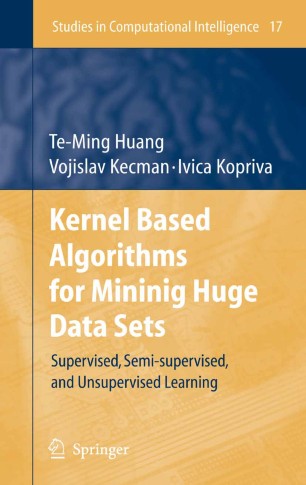
"Kernel Based Algorithms for Mining Huge Data Sets" is the first book treating the fields of supervised, semi-supervised and unsupervised machine learning collectively. The book presents both the theory and the algorithms for mining huge data sets by using support vector machines (SVMs) in an iterative way. It demonstrates how kernel based SVMs can be used for dimensionality reduction (feature elimination) and shows the similarities and differences between the two most popular unsupervised techniques, the principal component analysis (PCA) and the independent component analysis (ICA).

This book introduces the harmless handling/recycling of magnesium slag , the process of magnesium silicothermic reduction (Pidgeon process)which the slag was produced, and . the magnesium resources, layout of the industry of the world. Examples and experimental data in this book are from the author group’s research programs, as well as the rencent researches in China. The book could provide precious reference to scientists and engineers in the field of recycling and environment friendly use of the industrial solid wastes. It could also be used for researchers and students who are interested in relevant field.

This book presents a systematic study on the inherent complexity in fuzzy systems, resulting from the large number and the poor transparency of the fuzzy rules. The study uses a novel approach for complexity management, aimed at compressing the fuzzy rule base by removing the redundancy while preserving the solution. The compression is based on formal methods for presentation, manipulation, transformation and simplification of fuzzy rule bases, which are illustrated by algorithms as well as results from numerous examples and two case studies. The results are directly applicable or easily extendable to a wide class of fuzzy systems and detailed benchmarks for expanding these systems to new areas such as fuzzy networks and fuzzy multi-agent systems are introduced. The intended readers are people from both academia and industry, who would be interested in building and implementing advanced fuzzy systems.

The present book is a collection of essays exploring some classical dimensions of mind both from the perspective of an empirically-informed philosophy and from the point of view of a philosophically-informed psychology. In the last three decades, the level of interaction between philosophy and psychology has increased dramatically. As a contribution to this trend, this book explores some areas in which this interaction has been very productive – or, at least, highly provocative.

Basic Algebra and Advanced Algebra systematically develop concepts and tools in algebra that are vital to every mathematician, whether pure or applied, aspiring or established. Together, the two books give the reader a global view of algebra and its role in mathematics as a whole.Basic Algebra presents the subject matter in a forward-looking way that takes into account its historical development. It is suitable as a text in a two-semester advanced undergraduate or first-year graduate sequence in algebra, possibly supplemented by some material from Advanced Algebra at the graduate level. It requires of the reader only familiarity with matrix algebra, an understanding of the geometry and reduction of linear equations, and an acquaintance with proofs.
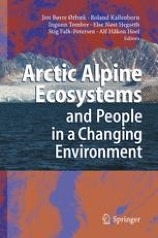
This book addresses the significant environmental changes experienced by high latitude and high altitude ecosystems at the beginning of the 21st c- tury. Increased temperatures and precipitation, reduction in sea ice and glacier ice, the increased levels of UV-radiation and the long-range tra- ported contaminants in arctic and alpine regions are stress factors that challenge terrestrial and aquatic ecosystems. The large natural variation in the physical parameters of these extreme environments is a key factor in structuring the biodiversity and biotic productivity, and the effect of the new stress factors can be critical for the population structures and the - teraction between species. These changes may also have socio-economic effects if the changes affect the bio-production, which form the basis for the marine and terrestrial food chains. The book is uniquely multidisciplinary and provides examples of va- ous aspects of contemporary environmental change in arctic and alpine - gions. The 21 chapters of the book are organised under the fields of •Climate change and ecosystem response, •Long range transport of poll- ants and ecological impacts, and •UV radiation and biological effects, each also including aspects of the •Socio-economic effects of environmental change. The introductory chapter presents and explains the internal c- nection and integration of all chapters.
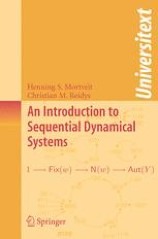
This text is the first to provide a comprehensive introduction to SDS. Driven by numerous examples and thought-provoking problems, the presentation offers good foundational material on finite discrete dynamical systems which leads systematically to an introduction of SDS. Techniques from combinatorics, algebra and graph theory are used to study a broad range of topics, including reversibility, the structure of fixed points and periodic orbits, equivalence, morphisms and reduction. Unlike other books that concentrate on determining the structure of various networks, this book investigates the dynamics over these networks by focusing on how the underlying graph structure influences the properties of the associated dynamical system.

This book treats the Mathematics of many important areas in digital information processing.It covers, in a unified presentation, five topics: Data Compression, Cryptography, Sampling (Signal Theory), Error Control Codes, Data Reduction. The thematic choices are practice-oriented. So, the important final part of the book deals with the Discrete Cosine Transform and the Discrete Wavelet Transform, acting in image compression. The presentation is dense, the examples and numerous exercises are concrete. The pedagogic architecture follows increasing mathematical complexity.

This book reports on the results of an extended survey conducted across Europe within the framework of the APPRAISAL FP7 project to determine the extent to which an integrated assessment approach to air quality is being adopted, on the one hand, by regional and local authorities to develop air quality plans and, on the other, by researchers. Following a detailed analysis of the role and structure of the components of an integrated assessment study, the results of the survey are considered from a variety of perspectives.

سوريا - اتستراد درعا - غباغب
+963-15 2050 - 15 860 380 /1/2/3 - 11 662 3900