


تحسين النتائح
ترتيب حسب
من
الى


Strong emphasis is placed on things that happen before, around, and after the project itself. So, while the basic disciplines like engaging with stakeholders, managing scope, schedules, costs, risks, issues, changes, and communication, are thoroughly explained, other important aspects are covered. These include: governance of a project and of a portfolio of projects, project selection with its financial and non-financial aspects, effective use of the business case through to benefits realization, procurement, outsourcing and partnership, and also the agile mindset that is valuable beyond Agile projects.
Natural disasters cause considerable economic damage. While developed countries usually are able to cope with the impacts of natural hazards, developing countries are faced with severe consequences for their resources. In order to prevent long-term macroeconomic repercussions, governments need a comprehensive disaster risk management strategy.Budgetary resources are allocated to pre-disaster risk management strategies to reduce the probability of financing gaps. The framework and model approach allows cross country comparisons as well as the assessment of financial vulnerability, macroeconomic risk, and risk management strategies.
Discusses the essential principles that guide macroeconomic policy formulation and implementation to stimulate strong economic growth for sustainable development, especially for emerging economies. it includes twelve chapters over three sections: "macroeconomics of economic growth", "labour market and employment", and "the financial system and macroeconomic performance". key conclusions illustrate that the efficacy of regulatory frameworks to create enabling conditions for nurturing and bolstering robust value-adding production structures anchored on appropriate macroeconomic management are the fundamental building blocks of strong economic growth.

Fundamental Approximation Methods. Machine Learning -- Deep Neural Nets -- Chebyshev Tensors -- The toolkit - plugging in approximation methods. Introduction: why is a toolkit needed -- Composition techniques -- Tensors in TT format and Tensor Extension Algorithms -- Sliding Technique -- The Jacobian projection technique -- Hybrid solutions - approximation methods and the toolkit.
When applying the statistical theory of long range dependent (LRD) processes to economics, the strong complexity of macroeconomic and financial variables, compared to standard LRD processes, becomes apparent. In order to get a better understanding of the behaviour of some economic variables, the book assembles three different strands of long memory analysis: statistical literature on the properties of, and tests for, LRD processes; mathematical literature on the stochastic processes involved; models from economic theory providing plausible micro foundations for the occurence of long memory in economics. Each chapter of the book will give a comprehensive survey of the state of the art and the directions that future developments are likely to take. Taken as a whole the book provides an overview of LRD processes which is accessible to economists, econometricians and statisticians.

It has two new sections, a new appendix, and more than half a dozen new figures. A few references have also been added, Much of the new material is based on work , The financial support of the National Science Foundation and the Volvo Foundations Center of Excellence for the Future of Urban Transportation at U. C. Berkeley is also acknowledged. The new appendix presents the logic behind the traveling salesman and vehicle routing results used in Sec. 4. 2 to describe the transportation ope- tion; Chapter 4 is more self-contained as a result. New section 5. 6 int- duces and evaluates a general method that automatically translates the c- tinuum approximation recipes of Chapters 4 and 5 into discrete system designs. This closes a gap in previous editions. Other additions include an explanation of how to develop system designs that can efficiently acc- modate real-time control strategies to manage uncertainty (new section 4. 6. 3), and extensions of the many-to-many design ideas of Chap. 6

This book addresses four standard business school subjects: microeconomics, macroeconomics, finance and information systems as they relate to trading, liquidity, and market structure. It provides a detailed examination of the impact of trading costs and other impediments of trading that the authors call “frictions”. It also presents an interactive simulation model of equity market trading, TraderEx, that enables students to implement trading decisions in different market scenarios and structures. Addressing these topics shines a bright light on how a real-world financial market operates, and the simulation provides students with an experiential learning opportunity that is informative and fun.

Florian Zainhofer uses the theory of life cycle investing, i.e. how we should optimally choose our savings rate and risky asset share throughout our lives, as a framework to study the implications of a potential BVG individualization. Following an introduction on the Swiss system of old-age provision, the author reviews recent life cycle models of portfolio choice and covers their numerical solution algorithms in depth. He presents an empirical analysis of Swiss workers’ earnings dynamics since these are important determinants of life cycle investment behavior. To further investigate the implications of a flexible contribution rate and risky asset share in the mandatory BVG, the author proposes a model adapted to Swiss conditions and parameterized with the estimated earnings dynamics.

Life-Centered Financial Planning: How to Deliver Value That Will Never Be Undervalued shows financial planners and advisors how to radically improve the service they provide to their clients by tying their decisions and strategies to their clients’ life events, stages, and goals.
Recently economists have more and more focussed on scenarios in which agents' views of the world may be erroneous. These notes introduce the concept of perfect forecasting rules which provide best least-squares predictions along the evolution of an economic system.
Do small developing economies, or SDEs, need a specific competition policy to create competitive markets? Against the backdrop of globalization, protectionist policies that promote state ownership and heavy regulation of key industries are proving increasingly ineffective for driving growth. Countries around the world are instituting reforms to promote competition and business creation, yet the economic and political concentration of power, feeble judicial systems, and the scarcity of human and financial resources pose special challenges to SDEs. Competition Policies in Emerging Economies features an in-depth analysis of two strategic industries — telecommunications and banking — in several Central American nations which sheds light on the dynamics of the transition to deregulation and trade liberalization. Examining the lessons learned from these experiences and presenting discussion of political, legal, economic, financial, cultural, and organizational issues, the book provides unique perspectives on competition policy and economic development.
In his book, Jan Brinckmann develops a comprehensive competence concept for new technology-based firms. It is grounded in competence-related literature combining insights from entrepreneurship and management research. The competence concept comprises three domains: general entrepreneurial competencies, social competencies, and functional competencies in technology, marketing, and financial management. A measurement model is developed to specify the contents of each sub-domain and to facilitate self-assessment of these competencies. In an empirical study, 212 executives of German NTBFs assessed their team’s competencies. This data is analyzed using structural equation modelling to identify the most relevant competencies for new venture success.
This book explores one of the most fiercely debated issues in China: if and how China will surpass the middle income trap that has plagued many developing countries for years. This book gives readers a clear picture of China today and acts as a reference for other developing countries.

In this book, a set of internationally renowned economists from both sides of the Atlantic analyse the challenges that lie in front of the EU as it used to be, the hurdles that have to be cleared by possible candidates, and the impact of these developments on important economic sectors like the financial markets, etc. The scientists are supported by Central Bankers from current and future Euro-zone members who give their views on the problems and chances of Euro-accession. The book is thus providing an overall view of the major developments regarding the Euro in the years to come.

This book reveals, next to monetary policy and financial crisis, less well known topics such as insolvency, collective action clauses, international mediation and management of central banks.

Catastrophe Modeling: A New Approach to Managing Risk is the first book that systematically analyzes how catastrophe models can be used for assessing and managing risks of extreme events. It focuses on natural disaster risk, but also discusses the management of terrorism risk. A unique feature of this book is the involvement of three leading catastrophe modeling firms, AIR Worldwide, EQECAT, and Risk Management Solutions, who examine the role of catastrophe modeling in rate setting, portfolio management and risk financing. Given the uncertainties associated with terrorism the book points out the opportunities for utilizing catastrophe models to set insurance rates and to examine public-private partnerships for providing financial assistance in the event of a terrorist attack. This book is strongly recommended for individuals who must make decisions regarding the management of impacts of catastrophe risks including those in both the public and private sector.

Describes the strategic challenge of adding real economic value, properly and rigorously defined. The author explains how this is accomplished through the capital budgeting process; discusses the importance of free cash flow and finally, capital projects, as financial options, are discussed, as a way to manage risk while enhancing the likelihood of project approval.
The progression of globalization is having profound effects on the capital markets and economic development. The major issues addressed in the book are: · The Basel II capital accord · Bank safety nets · Corruption · Credit ratings and credit spread · International stock exchanges and bond markets · Microfinance · Project finance
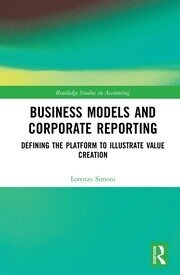
This book discusses the role of business models in corporate reporting. It illustrates the evolution of non-financial reporting, the importance of business model reporting, and the main conceptualisations of business models. It also offers a methodological contribution to the assessment of business model reporting. Finally, it discusses the main implication of business model reporting for different categories of subjects and some challenges related to this kind of disclosure
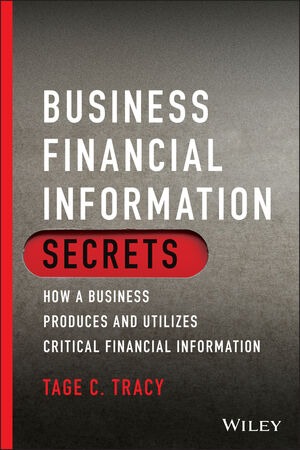
Business Financial Information Secrets shows you how to produce, understand, and utilize financial information to the greatest effect for your business and the economy at large. This book guides you through the surprisingly clean and simple process of proper accounting and reporting, regardless of your organization’s size or structure. Cash flow and business capital management are covered extensively throughout the book as without a thorough understanding of these all-important concepts, you could be lacking critical information about the lifeline of your business.

سوريا - اتستراد درعا - غباغب
+963-15 2050 - 15 860 380 /1/2/3 - 11 662 3900