


تحسين النتائح
ترتيب حسب
من
الى


Investigates the possible changes needed for industrial organizations to adapt to and remain competitive in their ever evolving environment. (R)Evolution’s main area of contribution to these very complex issues is embedded in the work’s ambitious attempt to borrow from evolutionary biology and genetics not only metaphors but also concepts and models to be adapted to the management of business organizations. The work provides us with a comprehensive vision of adaptation and variation in the business community, integrating various intellectual inputs which are based on an evolutionary vision of economic behavior. Using an extensive study of the literature in management science, and applying new models and methodologies in numerous case studies, Dekkers draws many insightful conclusions including the claim that companies often evolve slower than generally expected. Furthermore the research calls into question the effectiveness of the common practice of corporate reorganization. Embracing and merging most major contemporary developments in the theories of change into a comprehensive integrated approach, (R)Evolution is an invaluable resource for researchers specializing in the management of technological change.
provides thought-provoking and inquisitive insights into how we can prolong the useful life of buildings by designing them to be more adaptable, and hence create a more sustainable built environment. The book provides a theoretical foundation counterpointed by the experiences and ideas of those involved in the design and use of buildings. It explains many approaches to designing for change, with lessons from history, and case studies including The Cedar Rapids Public Library, Kentish Town Health Centre and Folkestone Performing Arts Centre, which stretch our thinking beyond the conventional notions of adaptability. The authors reveal the many conditions that make it a complex design phenomenon, by considering the purpose, design and business case of buildings as well as the physical product. Full of summaries, diagrams, reference charts, tables, and photos of exemplar solutions for use as conversational tools or working aids, this book is for any professional or student who wants to research, question, imagine, illustrate - and ultimately design for - adaptation.
Addresses the need for sharing knowledge and experience in the field of biodiversity conservation and climate change. There is an urgent need to build capacity in protected areas to monitor, assess, manage and report the effects of climate change and their interaction with other pressures. The contributors identify barriers to the adaptation of conservation management, such as the mismatch between planning reality and the decision context at site level. Short and vivid descriptions of case studies, drawn from investigation areas all over Central and Eastern Europe, illustrate both the local impacts of climate change and their consequences for future management.
Takes an in-depth look at Louisiana as a state which is ahead of the curve in terms of extreme weather events, both in frequency and magnitude, and in its responses to these challenges including recovery and enhancement of resiliency.
Provides an authoritative insight on the Loss and Damage discourse by highlighting state-of-the-art research and policy linked to this discourse and articulating its multiple concepts, principles and methods. Written by leading researchers and practitioners, it identifies practical and evidence-based policy options to inform the discourse and climate negotiations. With climate-related risks on the rise and impacts being felt around the globe has come the recognition that climate mitigation and adaptation may not be enough to manage the effects from anthropogenic climate change.

Energy, chemistry, solvents, and habitats -- the basic elements of living systems - define the opportunities and limitations for life on other worlds. This class-tested text examines each of these parameters in crucial depth and makes the argument that life forms we would recognize may be more common in our solar system than many assume. It also considers, however, exotic forms of life that would not have to rely on carbon as basic chemical element, solar energy as a main energy source, or water as primary solvent. Finally the question of detecting bio- and geosignature of such life forms is discussed, ranging from Earth environments to deep space. While speculative considerations in this emerging field of science cannot be avoided, the authors have tried to present their study with the breadth and seriousness that a scientific approach to this issue requires. They seek an operational definition of life and investigate the realm of possibilities that nature offers to realize this very special state of matter and avoid scientific jargon wherever possible to make this intrinsically interdisciplinary subject understandable to a broad range of readers.
Composite decisions consist of interconnected parts or subdecisions and correspond to a composite (composable, modular, decomposable) system. Composite Systems Decisions describes an educational approach that is based on systems engineering and considered modular design of composite decisions. Divided into four parts, this book contains descriptions of basic systems approaches and examines basic ‘technological’ problems for composite systems, including: modular hierarchical design; multistage design; multistage planning; redesign/improvement/adaptation; evaluation; and, combinatorial evolution/development.
This book, written by an international team of experts, introduces the reader to various aspects of complexity theory and its applications. It illustrates the latest trends in science to go beyond the mechanistic Newtonian view of the world by shifting the focus to self-organization, adaptation, and emergent phenomena. The authors discuss these properties of complex systems in biology, ecology and chemistry along with the structure and interconnectedness of the "layers" of complexity. The qualitative description is complemented by a discussion of methods for complexity quantification. Networks are covered in detail as a universal language of the complex world.
This book highlights the complexities around making adaptation decisions and building resilience in the face of climate risk. It is based on experiences in sub-Saharan Africa through the Future Climate For Africa (FCFA) applied research programme. It begins by dealing with underlying principles and structures designed to facilitate effective engagement about climate risk, including the robustness of information and the construction of knowledge through co-production
Improved adaptation of food production, particularly in areas where climate variability is large, holds the key to improving food security for human populations. Increasing climate knowledge and improved prediction capabilities facilitate the development of relevant climate information and prediction products for applications in agriculture to reduce the negative impacts due to climate variations and to enhance planning activities based on the developing capacity of climate science. This book, based on an International Workshop held in Geneva in 2005, reviews the advances made so far in seasonal climate predictions and their applications for management and decision-making in agriculture and identifies the challenges to be addressed in the next 5 to 10 years to further enhance operational applications of climate predictions in agriculture, especially in the developing countries.
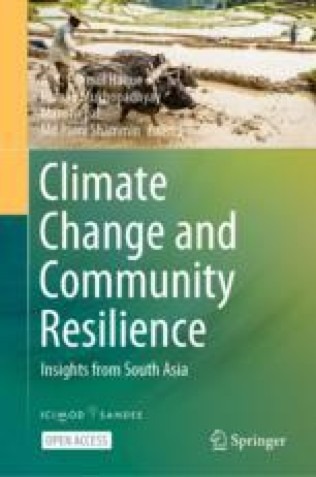
Documents myriads of ways community-based climate change adaptation and resilience programs are being implemented in South Asian countries. The narrative style of writing in this volume makes it accessible to a diverse audience from academics and researchers to practitioners in various governmental, non-governmental and international agencies. At a time when climate change presents humanity with a gloomy future, the stories of innovation, creativity, grassroots engagement and locally applicable solutions highlighted in this book provides insights into hopeful ways of approaching climate solutions.
This book focuses on an issue only marginally tackled by this literature: the still existing gap between adaptation science and modelling and the possibility to effectively access and exploit the information produced by policy making at different levels, international, national and local.

Biology and Mechanics of Blood Flows presents the basic knowledge and state-of-the-art techniques necessary to carry out investigations of the cardiovascular system using modeling and simulation. Part I of this two-volume sequence, Biology, addresses the nanoscopic and microscopic scales. The nanoscale corresponds to the scale of biochemical reaction cascades involved in cell adaptation to mechanical stresses among other stimuli. The microscale is the scale of stress-induced tissue remodeling associated with acute or chronic loadings. The cardiovascular system, like any physiological system, has a complicated three-dimensional structure and composition. Its time dependent behavior is regulated, and this complex system has many components.

This book integrates a wide variety of data analysis methods into a single and flexible interface: the R language. This open source language is available for a wide range of computer systems and has been adopted as a computational environment by many authors of statistical software. Adopting R as a main tool for phylogenetic analyses will ease the workflow in biologists' data analyses, ensure greater scientific repeatability, and enhance the exchange of ideas and methodological developments.

Realizing the growing importance of semantic adaptation and personalization of media, the editors of this book brought together leading researchers and practitioners of the field to discuss the state-of-the-art, and explore emerging exciting developments. This volume comprises extended versions of selected papers presented at the 1st International Workshop on Semantic Media Adaptation and Personalization (SMAP 2006).
Adaptive Techniques for Mixed Signal Sytem on Chip discusses the concept of adaptation in the context of analog and mixed signal design along with different adaptive architectures used to control any system parameter. The first part of the book gives an overview of the different elements that are normally used in adaptive designs including tunable elements as well as voltage, current, and time references with an emphasis on the circuit design of specific blocks such as voltage-controlled transconductors, offset comparators, and a novel technique for accurate implementation of on chip resistors. While the first part of the book addresses adaptive techniques at the circuit and block levels, the second part discusses adaptive equalization architectures employed to minimize the impact of ISI (Intersymbol Interference) on the quality of received data in high-speed wire line transceivers. It presents the implementation of a 125Mbps transceiver operating over a variable length of Category 5 (CAT-5) Ethernet cable as an example of adaptive equalizers.
The book presents basic concepts of adaptive signal processing and filtering in a concise and straightforward manner. It concentrates on on-line algorithms whose adaptation occurs whenever a new sample of each environment signal is available. The material also illustrates block algorithms using a sub-band filtering framework whose adaptation occurs when a new block of data is available.
This is an overview of the development of adaptive techniques for atmospheric modeling. Written in an educational style, it functions as a starting point for readers interested in adaptive modeling, in atmospheric sciences and beyond. Coverage includes paradigms of adaptive techniques, such as error estimation and adaptation criteria. Mesh generation methods are presented for triangular/tetrahedral and quadrilateral/hexahedral meshes, with a special section on initial meshes for the sphere.
This volume presents recent advances in the area of adaptativeness in metaheuristic optimization, including up-to-date reviews of hyperheuristics and self-adaptation in evolutionary algorithms, as well as cutting edge works on adaptive, self-adaptive and multilevel metaheuristics, with application to both combinatorial and continuous optimization.
The phenomenon of non-random spatial concentrations of firms in one or few related sectors (clusters) is intensively debated in economic theory and policy. The euphoria about successful clusters however neglects that historically, many thriving clusters did deteriorate into old industrial areas. This book studies the determinants of cluster survival by analyzing their adaptability to change in the economic environment. Linking theoretic knowledge with empirical observations, a simulation model (based in the N/K method) is developed, which explains when and why the cluster's architecture assists or hampers adaptability. It is found that architectures with intermediate degrees of division of labour and more collective governance forms foster adaptability. Cluster development is thus path dependent as architectures having evolved over time impact on the likelihood of future survival.

سوريا - اتستراد درعا - غباغب
+963-15 2050 - 15 860 380 /1/2/3 - 11 662 3900