


تحسين النتائح
ترتيب حسب
من
الى


The third volume of the Collected Works of Claude Chevalley assembles his work on semi-simple algebraic groups contained, for the most part, in the notes of the famous "Sminaire Chevalley" held at the Ecole Normale Suprieure in Paris between 1956 and 1958 and written up by participants of the seminar namely, P. Cartier, A. Grothendieck, R. Lazard and J.L. Verdier. These texts have been entirely reset in TeX for this edition, and edited and annotated by Pierre Cartier. Almost 50 years after the original writing, these texts still constitute a choice reference from which to enter

Nucleation is the initial step of every first-order phase transition, and most phase transitions encountered both in everyday life and industrial processes are of the first-order. Using an elegant classical theory based on thermodynamics and kinetics, this book provides a fully detailed picture of multi-component nucleation. As many of the issues concerning multi-component nucleation theory have been solved during the last 10-15 years, it also thoroughly integrates both fundamental theory with recent advances presented in the literature. It covered are: the basic relevant thermodynamics and statistical physics; modelling a molecular cluster as a spherical liquid droplet; predicting the size and composition of the nucleating critical clusters; kinetic models for cluster growth and decay; calculating nucleation rates; and a full derivation and application of nucleation theorems that can be used to extract microscopic cluster properties from nucleation rate measurements.
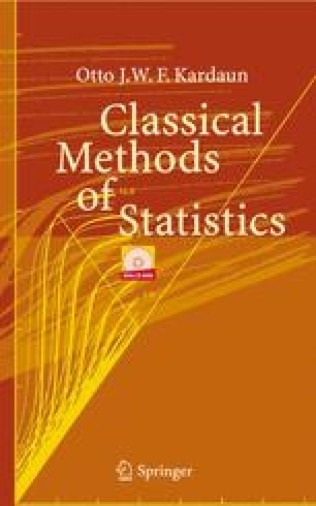
Classical Methods of Statistics is a blend of theory and practical statistical methods written for graduate students and researchers interested in applications to plasma physics and its experimental aspects. It can also fruitfully be used by students majoring in probability theory and statistics. In the first part, the mathematical framework and some of the history of the subject are described. Many exercises help readers to understand the underlying concepts. In the second part, two case studies are presented exemplifying discriminant analysis and multivariate profile analysis. The introductions of these case studies outline contextual magnetic plasma fusion research. In the third part, an overview of statistical software is given and, in particular, SAS and S-PLUS are discussed. In the last chapter, several datasets with guided exercises, predominantly from the ASDEX Upgrade tokamak, are included and their physical background is concisely described. The book concludes with a list of essential keyword translations.

This book stresses the unity of electromagnetic theory with electric and magnetic fields developed in parallel. SI units are used throughout and considerable use is made of tensor notation and the Levi-Cevita symbol. To more closely display the parallelism, extensive use is made of the scalar magnetic potential particularly in dealing with the Laplace and Poisson equation. 85 worked problems illustrate the theory. Conformal mappings are dealt with in some detail. Relevant mathematical material is provided in appendices.

This book brings together a collection of classic research papers on the Dempster-Shafer theory of belief functions. By bridging fuzzy logic and probabilistic reasoning, the theory of belief functions has become a primary tool for knowledge representation and uncertainty reasoning in expert systems.

Many group theorists all over the world have been trying in the last twenty-five years to extend and adapt the magnificent methods of the Theory of Finite Soluble Groups to the more ambitious universe of all finite groups. This is a natural progression after the classification of finite simple groups but the achievements in this area are scattered in various papers.Our objectives in this book were to gather, order and examine all this material, including the latest advances made, give a new approach to some classic topics, shed light on some fundamental facts that still remain unpublished and present some new subjects of research in the theory of classes of finite, not necessarily solvable, groups.

Circuit and Interconnect Design for RF and High Bit-rate Applications covers each of these topics from theory to practice, with sufficient detail to help you produce circuits that are ‘first-time right’. A thorough analysis of the interplay between on-chip circuits and interconnects is presented.

In this book, film scholar Rasmus Greiner develops a theoretical model for the concept of the histosphere to refer to the “sphere” of a cinematically modelled, physically experienceable historical world.

This concise research monograph introduces and reviews the concept of chiral soliton models for baryons. In these models, baryons emerge as (topological) defects of the chiral field. The many applications shed light on a number of bayron properties, ranging from static properties via nucleon resonances and deep inelastic scattering to even heavy ion collisions. As far as possible, the theoretical investigations are confronted with experiment. Conceived to bridge the gap between advanced graduate textbooks and the research literature, this volume also features a number of appendices to help nonspecialist readers to follow in more detail some of the calculations in the main text.

Chemoinformatics: Theory, Practice & Products covers theory, commercially available packages and applications of Chemoinformatics. Chemoinformatics is broadly defined as the use of information technology to assist in the acquisition, analysis and management of data and information relating to chemical compounds and their properties.The book also provides a summary of currently available, state-of-the-art, commercial Chemoinformatics products, with a specific focus on databases, toolkits, and modelling technologies designed for drug discovery.

This book examines the appearance of matter in its most primitive form, from the vacuum and the diversity that results from the fusion of elementary units in the genesis of atomic matter; considers the empirical rules of chemical affinity that regulate the synthesis and properties of molecular matter; analyzes the compatibility of the theories of chemistry with the quantum and relativity theories of physics; formulates a consistent theory, based on clear physical pictures and manageable mathematics, to account for chemical concepts such as the structure and stability of atoms and molecules, the periodicity of nuclides and elements, valence states, activation and chemical reactivity, electronegativity and general covalency, the exclusion principle, electronic energy, orbital angular momentum and spin in relation to molecular shape, torsional rigidity, chirality and molecular modeling; explains the self-similarity between space-time, nuclear structure, covalent assembly, biological growth, planetary systems and galactic conformation.

Chemical Kinetics and Reaction Dynamics brings together the major facts and theories relating to the rates with which chemical reactions occur from both the macroscopic and microscopic point of view. This book helps the reader achieve a thorough understanding of the principles of chemical kinetics and includes: *Detailed stereochemical discussions of reaction steps *Classical theory based calculations of state-to-state rate constants *A collection of matters on kinetics of various special reactions such as micellar catalysis, phase transfer catalysis, inhibition processes, oscillatory reactions, solid-state reactions, and polymerization reactions at a single source. The growth of the chemical industry greatly depends on the application of chemical kinetics, catalysts and catalytic processes.

Up to now, we do not have a generally accepted theory about the origin of life and about the process of development of life, we only have a great number of - to some extent even contradictory – hypotheses. Meanwhile there came up some scientific findings beyond thought only a few years ago.Horst Rauchfuss is comparing the different theories from the view of the latest results and is giving an exciting and easy understandable insight into the present state of research.

This book is on evidence for character judgments, This book answers the question using a model of abductive reasoning, commonly called inference to the best explanation. The methodology of the book derives from recent work on models of reasoning in argumentation theory and artificial intelligence. The aim is not just to show how character judgments are made, but to show how they should be properly be made based on sound reasoning, in order to avoid errors and superficial judgments of a kind that are common.

This carefully edited book presents a focused debate on the mathematics and physics of chaos, nonlinearity and complexity in nature. It explores the role of non-extensive statistical mechanics in non-equilibrium thermodynamics, and presents an overview of the strong nonlinearity of chaos and complexity in natural systems that draws on the relevant mathematics from topology, measure-theory, inverse and ill-posed problems, set-valued analysis, and nonlinear functional analysis. It presents a self-contained scientific theory of complexity and complex systems as the steady state of non-equilibrium systems, denoting a homeostatic dynamic equilibrium between stabilizing order and destabilizing disorder.

This volume introduces and reviews novel theoretical approaches to modeling strongly nonlinear behaviour of either individual or interacting structural mechanical units such as beams, plates and shells or composite systems thereof.

This new edition strives yet again to provide readers with a working knowledge of chaos theory and dynamical systems through parallel introductory explanations in the book and interaction with carefully-selected programs supplied on the accompanying diskette. The programs enable readers, especially advanced-undergraduate students in physics, engineering, and math, to tackle relevant physical systems quickly on their PCs, without distraction from algorithmic details. For the third edition of Chaos: A Program Collection for the PC, each of the previous twelve programs is polished and rewritten in C++ (both Windows and Linux versions are included). A new program treats kicked systems, an important class of two-dimensional problems, which is introduced in Chapter 13. Each chapter follows the structure: theoretical background; numerical techniques; interaction with the program; computer experiments; real experiments and empirical evidence; reference.

This second edition of Chance Rules again recounts the story of chance through history and the various ways it impacts on our lives. Here you can read about the earliest gamblers who thought that the fall of the dice was controlled by the gods, as well as the modern geneticist and quantum theory researcher trying to integrate aspects of probability into their chosen speciality. Example included in the first addition such as the infamous Monty Hall problem, tossing coins, coincidences, horse racing, birthdays and babies remain, often with an expanded discussion, in this edition. Additional material in the second edition includes, a probabilistic explanation of why things were better when you were younger, consideration of whether you can use probability to prove the existence of God, how long you may have to wait to win the lottery, some court room dramas, predicting the future, and how evolution scores over creationism. Chance Rules lets you learn about probability without complex mathematics.

With its many easy-to-follow mathematical examples, this book takes the reader on an almost chronological trip through the fascinating and amazing laws of chance, omnipresent in the natural world and in our daily lives. Along the route many fascinating topics are discussed, such as: challenging probability paradoxes; "paranormal" coincidences; game odds; causes and effects; interpretation of opinion polls; winning chances as a game proceeds; the nature of randomness; entropy and randomness; randomness in life; algorithmic complexity and the undecidability of randomness; possibilities and limitations of learning the laws of a Universe immersed in chance events. This charming book will inform and entertain the scientist and non-scientist alike.
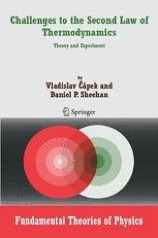
The second law of thermodynamics is considered one of the central laws of science, engineering and technology. For over a century it has been assumed to be inviolable by the scientific community. Over the last 10-20 years, however, more than two dozen challenges to it have appeared in the physical literature - more than during any other period in its 150-year history. The number and variety of these represent a cogent threat to its absolute status. This is the first book to document and critique these modern challenges. Written by two leading exponents of this rapidly emerging field, it covers the theoretical and experimental aspects of principal challenges. In addition, unresolved foundational issues concerning entropy and the second law are explored. This book should be of interest to anyone whose work or research is touched by the second law.

سوريا - اتستراد درعا - غباغب
+963-15 2050 - 15 860 380 /1/2/3 - 11 662 3900