


تحسين النتائح
ترتيب حسب
من
الى

Applies deductive reasoning, logic and mathematics to RC. Laying out, deductively, the principles of RC, it encourages researchers to re-imagine and innovate using a solid conceptual framework. Sections consider the reasoning behind key theories, as well as problems that remain unsolved.
Space frames provide a lightweight solution to the problem of creating large span enclosures free from obstructions. They are employed in many major constrcution projects across the world, as documented in this authoritatively written volume.This is the first in-depth book to present all instances and applications of space frames in various engineering schemes. It uses case studies and numerous illustrations to examine steel space frames from their design to their structural engineering performance.
Outlines methods for analysis and design the construction of shallow and deep foundations with particular reference to case studies in Hong Kong and China, as well as a discussion of methods used in other countries. It introduces the main approaches used by geotechnical and structural engineers, and the precautions required for planning and designing foundation structures. Some computational methods and computer programs are reviewed to provide tools for performing more realistic analysis of foundation systems.

Deals with the analysis of engineering structures made of skeletal members and covers the type of structures that are commonly used in practice. It builds up on the subject matter dealing with matrix algebra, analysis of bar elements, special forms of members, stability and vibration of structures, and pin-connected, rigid-plane, and 3D frames. It treats the important step of formulating the overall stiffness matrix of a structure in a systematic and straightforward manner and uses simple mathematical approaches wherever possible.
Focuses on the safety assessment of existing structures subjected to multi-hazard scenarios through advanced numerical methods. Whereas the focus is on concrete dams and nuclear containment structures, the presented methodologies can also be applied to other large-scale ones. This book is composed of seven sections: Fundamentals: theoretical coverage of solid mechnics, plasticity, fracture mechanics, creep, / seismology, dynamic analysis, probability and statistics / Damage: that can affect concrete structures, such as cracking of concrete, AAR, chloride ingress, and rebar corrosion, / Finite Element: formulation for both linear and nonlinear analysis including stress, heat and fracture mechanics, / Engineering Models: for soil/fluid-structure interaction, uncertainty quantification, probablilistic and random finite element analysis, machine learning, performance based earthquake engineering, ground motion intensity measures, seismic hazard analysis, capacity/fragility functions and damage indeces, / Applications to dams through potential failure mode analyses, risk-informed decision making, deterministic and probabilistic examples, / Applications to nuclear structures through modeling issues, aging management programs, critical review of some analyses, / Other applications and case studies: massive RC structures and bridges, detailed assessment of a nuclear containment structure evaluation for license renewal.
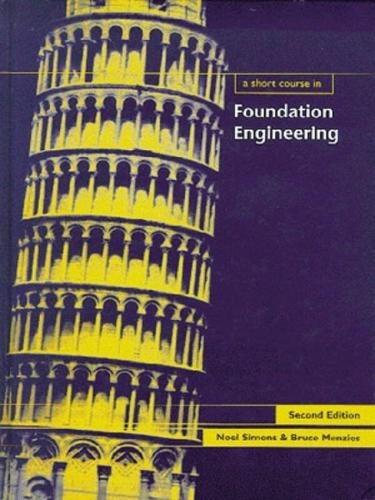
Although there are now a large number of computer programmes for solving all sorts of foundation design problems, the need to check these outputs by 'hand-calculation' has become vitally important. This book concentrates on getting the fundamentals right and then using them in practical applications. The book is illustrated with numerous worked examples and with quick-reference tables and charts.

Includes recording and analysis of maritime archaeology through emerging technologies, including both practical and theoretical contributions. Topics include photogrammetric recording, laser scanning, marine geophysical 3D survey techniques, virtual reality, 3D modelling and reconstruction, data integration and Geographic Information Systems. This convergence of digital technologies such as underwater photography and photogrammetry, 3D sonar, 3D virtual reality, and 3D printing has highlighted a pressing need for these new methodologies to be considered together, both in terms of defining the state-of-the-art and for consideration of future directions.
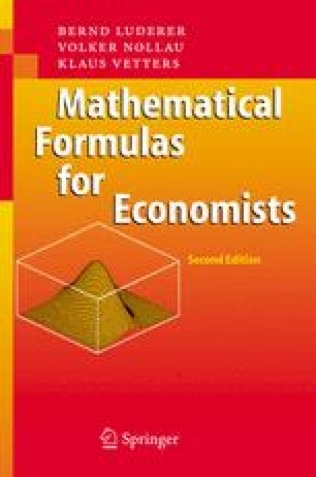
This collection of formulas constitutes a compendium of mathematics for eco nomics and business. It contains the most important formulas, statements and algorithms in this significant subfield of modern mathematics and addresses primarily students of economics or business at universities, colleges and trade schools. But people dealing with practical or applied problems will also find this collection to be an efiicient and easy-to-use work of reference. First the book treats mathematical symbols and constants, sets and state ments, number systems and their arithmetic as well as fundamentals of com binatorics. The chapter on sequences and series is followed by mathematics of finance, the representation of functions of one and several independent vari ables, their differential and integral calculus and by differential and difference equations. In each case special emphasis is placed on applications and models in economics. The chapter on linear algebra deals with matrices, vectors, determinants and systems of linear equations. This is followed by the representation of struc tures and algorithms of linear programming. Finally, the reader finds formu las on descriptive statistics (data analysis, ratios, inventory and time series analysis), on probability theory (events, probabilities, random variables and distributions) and on inductive statistics (point and interval estimates, tests). Some important tables complete the work.
The interaction between mathematicians and statisticians reveals to be an effective approach to the analysis of insurance and financial problems, in particular in an operative perspective. The Maf2006 conference, held at the University of Salerno in 2006, had precisely this purpose and the collection here published gathers some of the papers presented at the conference and successively worked out to this aim. They cover a wide variety of subjects in insurance and financial fields, all treated in light of the successful cooperation between the two quantitative methods.

Mass Customization: Challenges and Solutions defines the parameters of the emerging business strategy, mass customization. The book will cover the main categories of the area with a systematic examination of the following themes: manufacturing systems and mass customization, supply chain management and mass customization, and information systems and mass customization.

Explains the greatest problem facing marketers today how to integrate three major movements that are changing global markets and customer behavior: Dramatic advances in technology such as AI, Sensors, and the Internet of Things, which are enabling extreme forms of customer targeting and personalization; Dramatic shifts in customer behavior, such as Whatever-Whenever-Wherever (WWW) and the differences between Generations X, Y, Z, and Alpha; And dramatic shifts in business models such as Everything as a Service, Physical/Digital business models.

This book provides a broad range of insights on market engineering and information management. It covers topics like auctions, stock markets, electricity markets, the sharing economy, information and emotions in markets, smart decision-making in cities and other systems, and methodological approaches to conceptual modeling and taxonomy development.

Despite the social, nutritional, economical and environmental importance of Tanzanian coastal areas, yet they are vulnerable to both over-exploitation and degradation of their habitats. Using the data from two coastal villages and econometric methods as well as Stochastic Production Frontier techniques, the book demonstrates the extent which various socio-economic dimensions of rural coastal households influence livelihood pathways, production efficiency and attitudes towards conservation initiatives. Thus, attention to differential patterns of rural coastal households presents more viable possibilities for coastal villages to have conservation-development policies/programs that lead to poverty reduction.
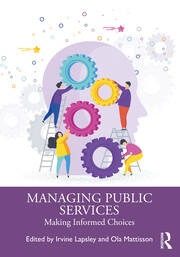
Chapters provide a valuable frame of reference for the 21st-century manager of public services by assessing the renewal of existing practices such as strategic costing, performance management, digitization and procurement and innovations in management practices, including branding, Lean Management, resilience and risk management. The book suggests that, as the management of public services is imbued with financial, social, economic and political uncertainties, management needs to be flexible and responsive to new ideas and practices to fulfil its purpose. This book ultimately supports the reflective manager, those who think about their job and are open to new ideas on how their job can be done better, by revisiting existing practices and examining innovations in public management.
In the book : How to choose a leadership style that suits your personality, the people you work with, and your organizationHow to engage in the co-creation of leadership through generative leadership practice, including the development of an organizational philosophy, practice, and structureHow to manage employee performance and engagement and how to choose successful management systems to leverage success
Analyses and integrates existing approaches to managing and coordinating a digital transformation in order to identify relevant success factors of a digital transformation, serving as a basis for the development of a systematic framework for a management model of digital transformation. The analysis reveals ten success-critical focus areas of a digital transformation, which comprise numerous success factors: ‘Vision, goals, and strategies’, ‘Leadership’, ‘Communication’, ‘Digital culture and mindset’, ‘Digital platform’, ‘Partnership network’, ‘Capabilities, talents, and skills’, ‘Organization, coordination, and roles’, ‘Management methodologies’, and ‘Governance’.
One of the central dynamics shaping organizations is a contradiction managers face between ensuring workforce discipline and harnessing worker creativity. In this rich study of American manufacturing, Matt Vidal offers a theory of 'organizational political economy', integrating concepts from organization theory into a classical Marxist framework
Natural disasters cause considerable economic damage. While developed countries usually are able to cope with the impacts of natural hazards, developing countries are faced with severe consequences for their resources. In order to prevent long-term macroeconomic repercussions, governments need a comprehensive disaster risk management strategy.Budgetary resources are allocated to pre-disaster risk management strategies to reduce the probability of financing gaps. The framework and model approach allows cross country comparisons as well as the assessment of financial vulnerability, macroeconomic risk, and risk management strategies.
Discusses the essential principles that guide macroeconomic policy formulation and implementation to stimulate strong economic growth for sustainable development, especially for emerging economies. it includes twelve chapters over three sections: "macroeconomics of economic growth", "labour market and employment", and "the financial system and macroeconomic performance". key conclusions illustrate that the efficacy of regulatory frameworks to create enabling conditions for nurturing and bolstering robust value-adding production structures anchored on appropriate macroeconomic management are the fundamental building blocks of strong economic growth.
In a context of global competition, the optimization of logistics systems is inescapable. LOGISTICS SYSTEMS: Design and Optimization falls within this perspective and presents twelve chapters that well illustrate the variety and the complexity of logistics activities. Each chapter is written by recognized researchers who have been commissioned to survey a specific topic or emerging area of logistics. The first chapter, by Riopel, Langevin, and Campbell, develops a framework for the entire book. It classifies logistics decisions and highlights the relevant linkages to logistics decisions. The intricacy of these linkages demonstrates how thoroughly the decisions are interrelated and underscores the complexity of managing logistics activities. Each of the following chapters focus on quantitative methods for the design and optimization of logistics systems.

سوريا - اتستراد درعا - غباغب
+963-15 2050 - 15 860 380 /1/2/3 - 11 662 3900