


تحسين النتائح
ترتيب حسب
من
الى

The idea for this book was born during the symposium on biologics organized by ZAFES (Center for Drug Research, Development and Safety at the University of Frankfurt am Main) in September 2005. Highly distinguished researchers special- ing in the field of biologics had gathered together to exchange information on this relatively new subject. Realizing that this symposium was one of the few sources of condensed information on biologics, it became obvious that we had to create a means of informing an interested wider circle of scientists and especially general c- nicians. Therefore, the editors of this book suggested to the researchers at the symposium andalsotoprominent scientists andcliniciansinvolvedinthe developmentand application of biologics as their major field of interest the idea of assembling this compendium. We received an overwhelmingly positive response – thankfully also from the publisher – most being more than willing to support this innovative project with highly relevant chapters on the latest state of the art.

Covers aspects of fundamental and applied nitrogen-fixation research, from biochemistry and chemistry through genetics, regulation and physiology to agricultural practice and environmental impact. This work describes progress on studies of potential catalysts for nitrogen fixation; how the N2-fixing process is regulated in living cells; and more.
he most conspicuous biological invasions in terrestrial ecosystems have been by exotic plants, insects and vertebrates. Less conspicuous but possibly of equal importance are invasions by soil invertebrates, which are occurring literally beneath our feet. Familiar examples include the South American fire ant (Solenopsis invicta) which has invaded North America and Australia, and the New Zealand flatworm (Arthurdendyus triangulatus) which has become wide-spread in the United Kingdom; both have caused considerable ecological and economic damage. There is now evidence that exotic earthworm invasions are increasing world-wide and may be having significant impacts on soil processes and plant communities in some regions. Much remains to be learned about these ‘cryptic’ biological invasions. The papers in this book are based on efforts by an international group of soil ecologists to assess the biological and ecological mechanisms of earthworm invasions, their geographic extent and impacts on terrestrial ecosystems, and possible means by which earthworm invasions might be mitigated.
The book examines the identity, distribution, and impact of freshwater non-indigenous species and the dynamics of their invasion. Rather than providing a broad and comprehensive review of the issue, Biological invaders in inland waters focuses on old and new invaders and also raises questions and opens perspectives that provide a starting point for further research. The ultimate purpose of this book is to help define a more general framework for our knowledge of invasions in fresh waters. Such a framework will be indispensable to the planning of a science-based management program.
This book follows a precursor volume devoted to biological calci?cation, - sued by the CRC Press, Boca Raton (Florida) in 1992. Several basic aspects of the calci?cation process were analyzed in it by outstanding authors who had unquestioned competence in their respective research areas. Its main aim was that of giving readers access to a series of papers which, even though they discussed divergent aspects of biological calci?cations drawn from the study of systems as different as vertebrate skeletons and mollusks, in vitro cultures and unicellular organisms, ectopic calci?cation and urinary stones, provided elements permitting a coherent approach to a comprehensive view of the calci?cation process in biological tissues.
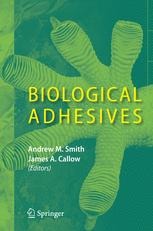
Many plants, animals, and microbes use adhesive polymers and structures to attach to inert substrates, to each other, or to other organisms. This is the first major review that brings together research on many of the well-known biological adhesives. Emphasizing the diversity of biological adhesives and associated adhesion processes, it deals with bacteria, fungi, algae, and marine and terrestrial animals. It bridges a variety of disciplines including biochemistry, molecular biology, biomechanics, bioengineering, microbiology, organism structure and function, and ultrastructure. As we learn more about the molecular and mechanical properties of these adhesives, we begin to understand why they adhere so well and how they develop cohesive strength. With this understanding comes the prospect of developing synthetic or semi-synthetic adhesives with broad applications in areas such as medicine, dentistry, and biotechnology. The book is suitable for both industrial and academic researchers.
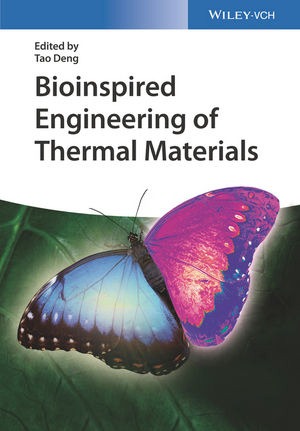
A comprehensive overview and summary of recent achievements and the latest trends in bioinspired thermal materials. Following an introduction to different thermal materials and their effective heat transfer to other materials, the text discusses heat detection materials that are inspired by biological systems, such as fire beetles and butterflies. There then follow descriptions of materials with thermal management functionality, including those for evaporation and condensation, heat transfer and thermal insulation materials, as modeled on snake skins, polar bears and fire-resistant trees.
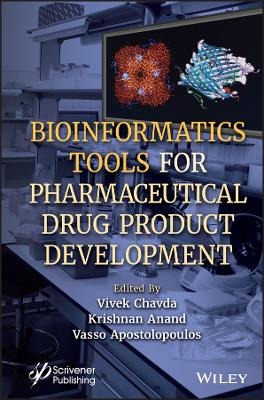
Presents the latest information on bioinformatics tools, artificial intelligence, machine learning, computational methods, protein interactions, peptide-based drug design, and omics technologies. And include bioinformatics tools for the pharmaceutical sector and the healthcare sector. Bioinformatics brings a new era in research to accelerate drug target and vaccine design development, improving validation approaches as well as facilitating and identifying side effects and predicting drug resistance. As such, this will aid in more successful drug candidates from discovery to clinical trials to the market, and most importantly make it a more cost-effective process overall.
The conference was organized by the Laboratory of Theoretical Genetics, Institute of Cytology and Genetics, Siberian Branch of the Russian Academy of Sciences, Novosibirsk, Russia. The material covers the most recent topics in bioinformatics, including (i) regulatory genomic sequences: databases, knowledge bases, computer analysis, modeling, and recognition; (ii) large-scale genome analysis and functional annotation; (iii) gene structure detection and prediction; (iv) comparative and evolutionary genomics; (v) computer analysis of genome polymorphism and evolution; computer analysis and modeling of transcription, splicing, and translation; structural computational biology: structure- function organization of genomic DNA, RNA, and proteins; (vi) gene networks, signal transduction pathways, and genetically controlled metabolic pathways: databases, knowledge bases, computer analysis, and modeling; principles of organization, operation, and evolution; (vii) data warehousing, knowledge discovery and data mining; and (viii) analysis of basic patterns of genome operation, organization, and evolution.
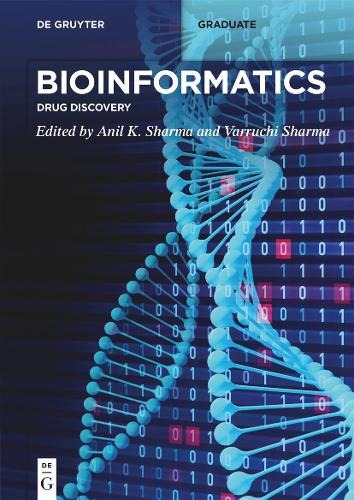
Quantitative tools are becoming increasingly important in order to understand complex cascade of signal transduction events, pathways or biochemical reactions. The book showcases how computational techniques and algorithms are applied to biological data analysis, interpretation, and modelling. It covers applications in drug design and discovery, immune systems, phylogenetic analysis and protein structures.
"Xuhua Xia’s Bioinformatics and the Cell is a welcome addition to the bourgeoning field of bioinformatics text books. Xia stakes out a too-often neglected middle ground in bioinformatics by presenting a work that emphasizes methods’ biological utility without eschewing algorithmic formalism. Readers will find a well-rounded presentation of bioinformatics techniques employed in genomics, transcriptomics and proteomics – unified throughout by the common theme of molecular evolution."
offers both the physician and researcher a critical survey of the best new technologies for studying neurodegeneration, as well as describing their optimal use in the diagnosis and treatment of specific neurodegenerative diseases
This book provides students and researchers in the life sciences with essential practical information on how to quantitatively analyze data images. It refrains from focusing on theory, and instead uses practical examples and step-by step protocols to familiarize readers with the most commonly used image processing and analysis platforms such as ImageJ, MatLab and Python.

Biogeography considers the distribution of biological units over a wide range of scales. The units range from genotypes, populations and species to families and higher taxa. Processes can be local, such as the isolation on islands due to sea-level fluctuations, or large-scale tectonic processes that separates continents and creates oceans. In all processes time is an important factor and by combining data on recent patterns with paleontological data the understanding of the distribution of extant taxa can be improved. This volume focuses on speciation due to isolation in island-like settings, and the evolution of large-scale diversity as the result of origination, maintenance and extinction.
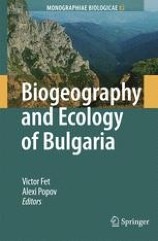
The book includes 22 chapters by 28 authors united by the single theme: biogeography and ecology of Bulgaria. From the single-celled organisms in the Black Sea sand to the endemic cave crustaceans, from the mountain glacial relict insects to the most diverse bird fauna in Europe, the unique fauna of Bulgaria has been a subject of study of mostly Bulgarian zoologists for more than a century. This is the first monograph in English broadly addressing all vertebrate and many key invertebrate groups of Bulgaria, their faunistics, origin, geographical and ecological distribution, and conservation issues are addressed by the experts on each group.
This open access book presents a comprehensive analysis of biofuel use strategies from an interdisciplinary perspective using sustainability science. This interdisciplinary perspective (social science-natural science) means that the strategies and policy options proposed will have significant impacts on the economy and society alike. Biofuels are expected to contribute to reducing greenhouse gas emissions, revitalizing economies in agricultural communities and alleviating poverty. However, despite these anticipated benefits, international organizations such as the FAO, OECD and UN have published reports expressing concerns that biofuel promotion may lead to deforestation, water pollution and water shortages. The impacts of biofuel use are extensive, cross-sectoral and complex, and as such, comprehensive analyses are required in order to assess the extent to which biofuels can contribute to sustainable societies.

The idea for Bioethics in Law began more than a decade ago, while I was studying social science and law. I was parti- larly interested in the collaborations that comprised social s- ence in law. Economic and social data in the pioneering Brandeis brief had been used to defend an early 20th-century labor law; surveys of consumer confusion had helped resolve trademark - fringement cases; psychologists’ predictions of future violence had informed capital sentencing decisions. Additionally, Kenneth Clark’s “doll studies,” cited by the Supreme Court in Brown v. Board of Education, had helped change the course of American 1 history.
This book offers a framework for understanding how the Holocaust has shaped and continues to shape medical ethics, health policy, and questions related to human rights around the world. The field of bioethics continues to face questions of social and medical controversy that have their roots in the lessons of the Holocaust, such as debates over beginning-of-life and medical genetics, end-of-life matters such as medical aid in dying, the development of ethical codes and regulations to guide human subject research, and human rights abuses in vulnerable populations. As the only example of medically sanctioned genocide in history, and one that used medicine and science to fundamentally undermine human dignity and the moral foundation of society, the Holocaust provides an invaluable framework for exploring current issues in bioethics and society today. This book, therefore, is of great value to all current and future ethicists, medical practitioners and policymakers – as well as laypeople.

This book addresses a variety of issues relating to bioethics, in order to initiate cross-cultural dialogue. Beginning with the history, it introduces various views on bioethics, based on specific experiences from Japan. It describes how Japan has been confronted with Western bioethics and the ethical issues new to this modern age, and how it has found its foothold as it decides where it stands on these issues. In the last chapter, the author proposes discarding the overarching term ‘Global Bioethics’ in favor of the new term, ‘Bioethics Across the Globe (BAG)’, which carries a more universal connotation.

The present book addresses fundamental questions of biological energy transformation and conservation, with a focus on those processes which can now be understood on a structural basis.Current knowledge of selected examples of the biological energy conservation machinery such as cellular oxygen respiration, light-driven energy converters, and fermentation is reviewed. The machinery is highly variable, particularly that within microorganisms, but all of these devices universally rely on one unique underlying physico-chemical principle. The book is a rich source for specialists interested in recent developments in bioenergetics research and novices in the field alike.

سوريا - اتستراد درعا - غباغب
+963-15 2050 - 15 860 380 /1/2/3 - 11 662 3900