


تحسين النتائح
ترتيب حسب
من
الى


This text focuses on the essential elements, providing readers with the basic skills and introductory knowledge required to execute a software project successfully.

This easy-to-follow text provides an accessible introduction to the key topics of formal languages and abstract machines within Computer Science.
This text provides a comprehensive introduction to the key topics in the history of computing, in an easy-to-follow and concise manner. It covers the significant areas and events in the field.
Images contain information about the spatial properties of the scene they depict. When coupled with suitable assumptions, images can be used to infer three-dimensional information. This useful volume concentrates on motion blur and defocus, which can be exploited to infer the 3-D structure of a scene—as well as its radiance properties—and which in turn can be used to generate novel images with better quality. 3-D Shape Estimation and Image Restoration presents a coherent framework for the analysis and design of algorithms to estimate 3-D shape from defocused and motion blurred images, and to eliminate defocus and motion blur to yield "restored" images. It provides a collection of algorithms that are optimal with respect to the chosen model and estimation criterion.
Focusses specifically on topics that are important in three-dimensional modelling, surface design and real-time character animation. It provides an in-depth coverage of data structures and popular methods used in geometry processing, keyframe and inverse kinematics animations and shader based processing of mesh objects. It also introduces two powerful and versatile libraries, OpenMesh and Assimp, and demonstrates their usefulness through implementations of a wide range of algorithms in mesh processing and character animation respectively. This Textbook is written for students at an advanced undergraduate or postgraduate level who are interested in the study and development of graphics algorithms for three-dimensional mesh modeling and analysis, and animations of rigged character models.
Model checking technology is among the foremost applications of logic to computer science and computer engineering. The model checking community has achieved many breakthroughs, bridging the gap between theoretical computer science and hardware and software engineering, and it is reaching out to new challenging areas such as system biology and hybrid systems. Model checking is extensively used in the hardware industry and has also been applied to the verification of many types of software. Model checking has been introduced into computer science and electrical engineering curricula at universities worldwide and has become a universal tool for the analysis of systems.

Contains contributions from leading researchers, worldwide, who have thought deeply about the nature and consequences of this interplay. The articles take a long-range view of the subject and distill the most important advances in broad terms, making them easily accessible to non-specialists. The first part is devoted to a summary of how relativity theories were born (J Stachel). The second part discusses the most dramatic ramifications of general relativity, such as black holes (P Chrusciel and R Price), space-time singularities (H Nicolai and A Rendall), gravitational waves (P Laguna and P Saulson), the large scale structure of the cosmos (T Padmanabhan); experimental status of this theory (C Will) as well as its practical application to the GPS system (N Ashby). The last part looks beyond Einstein and provides glimpses into what is in store for us in the 21st century.

If you develop, test, or manage .NET software, you will find .NET Test Automation Recipes: A Problem-Solution Approach very useful. The book presents practical techniques for writing lightweight software test automation in a .NET environment and covers API testing thoroughly. It also discusses lightweight, custom Windows application user interface automation and teaches you low-level web application user interface automation. Additional material covers SQL stored procedure testing techniques.
.NET represents a new and improved way of developing software for the Windows platform. Given the chance, you'd probably rewrite all of your existing code in the newer managed code environment that .NET provides. But it is difficult or impossible to throw out all existing legacy code and start over when a new technology arrives. Instead, you need to find a way to move forward with new .NET development while reusing existing pieces of tested, working code. You need a way to interoperate with the existing code until you have a chance to finally rewrite all of it in .NET.
.NET 2.0 for Delphi Programmers explores .NET from a Delphi programmers viewpoint, and it is ideal for Delphi programmers moving to .NET. It presents the core concepts of the .NET world in terms you are familiar with. This book will help you with Delphi for .NET as well as C#. Apress publishes migration books for both Visual Basic 6 and C++ programmers moving to .NET. Consider this the Delphi installment of Apress migration books! There is ample coverage of C# as well as Delphi for .NET inside this edition.
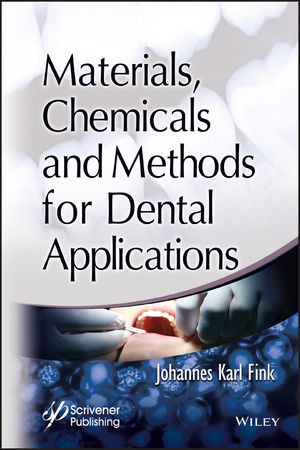
Focuses on the materials used for dental applications looking at the fundamental issues and the developments that have taken place the past decade. While it provides a broad overview of dental materials, the chemicals that are used for the preparation and fabrication of dental materials are explained as well. Also, the desired properties of these materials are discussed and the relevance of the chemical, physical, and mechanical properties is elucidated. Methods for the characterization and classification, as well as clinical studies are reviewed here. In particular, materials for dental crowns, implants, toothpaste compositions, mouth rinses, as well as materials for toothbrushes and dental floss are discussed. For example, in toothpaste compositions, several classes of materials an chemcials are incorporated, such as abrasives, detergents, humectants, thickeners, sweeteners, coloring agents, bad breath reduction agents, flavoring agents, tartar control agents, and others. These chemicals, together with their structures, are detailed in the text.
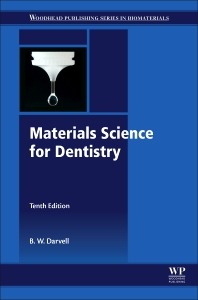
A standard resource for undergraduate and postgraduate courses in dentistry. It provides fundamental coverage of the materials on which dentistry depends, covering the structure and chemistry that govern the behavior and performance of materials. Particular classes of materials include gypsum, polymers, acrylic, cements, waxes, ceramics and metals. Other chapters review surfaces, corrosion, mixing, casting, cutting and bonding, and mechanical testing. This updated edition, which includes substantial chapters on chemistry, has been extensively revised with new material on temporary restoration resins, hydraulic silicate cements and the practical aspects of wetting surfaces. Mindfully written to provide explanations for behavior, formulation, clinical and laboratory instructions and procedures, there is no comparable resource for researchers, students, teachers and practitioners in the field of dentistry.
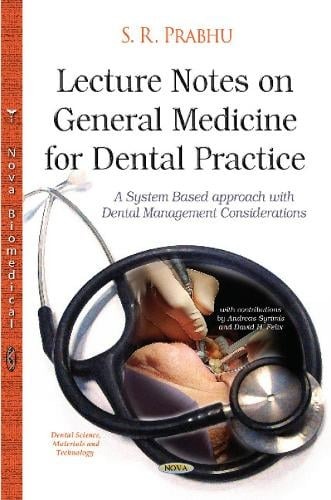
Offers a system based approach covering a broad range of topics in general medicine for dental practice. The book includes chapters on history taking and patient interview, general physical examination, system specific examination, common health related complaints, systemic infections, and diseases of the gastrointestinal, cardiovascular, respiratory, neurological, immunological, renal, endocrinal, dermatological and musculoskeletal systems. Nutritional disorders, psychiatric disorders, the female patient with menstrual, menopause and pregnancy related disorders, dental management of patients taking medications for systemic conditions and medical emergencies in dental practice have also been discussed in some detail.
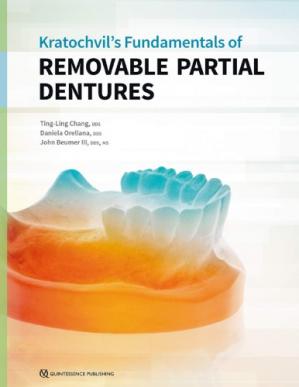
Provides an overview of the RPD design philosophy developed by Prof F. J. Kratochvil. His'RPI system'—a clasp assembly consisting of a rest, a proximal plate, and an I-bar retainer—changed how clinicians approach partial denture design. Topics in this book include RPD components and functions, design sequences for maxillary and mandibular RPDs, and techniques for surveying and determining the most advantageous treatment position. The authors provide illustrations of clinical cases throughout the book as well as an illustrated glossary of prosthodontic terminology. This book will prepare students and general practitioners to design and fabricate a biomechanically sound RPD framework for just about any dental configuration they encounter.
All the questions are answered as per the type of question (long | short) and with “to the point” answers to make it more interesting. Answers are selected authentically from standard textbooks commonly referred to by the students to avoid confusion during examinations. Each answer is explained in heading and subheadings to break the continuous text. Written in a simple, well structured and point-wise format with a comprehensive examination-oriented description along with the diagrammatic representation. An indispensable book for the ‘last minute’ revision while preparing for the examinations and for quick reference throughout the course duration.
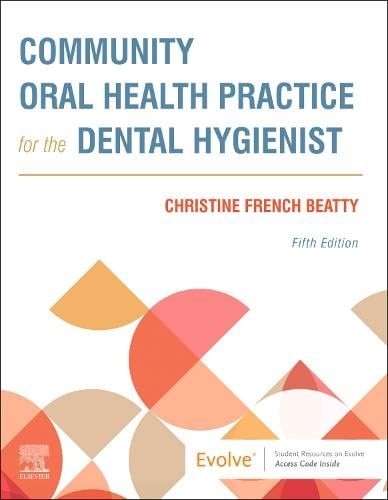
Describes the role of the public health professional in improving the oral health care of people throughout the community. It discusses key topics such as access to care, the assessment needed for program planning, social responsibility and government policy, cultural diversity, and career options in public health. Written by respected dental educator Christine French Beatty, this book helps you prepare for the National Board Dental Hygiene Examination (NBDHE) and to develop the core competencies needed in the practice setting.
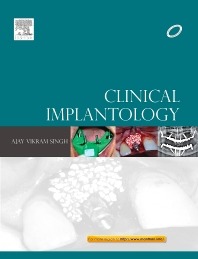
Provides all the new and relevant information of basic to advanced implantology for the undergraduate as well as postgraduate dental students. Current concepts of implantology are beautifully presented with illustrations and clinical cases making this book a complete literature for the dentists to learn the basic science and various advanced techniques of implantology like sinus grafting, nasal floor grafting, block grafting, ridge splitting, distraction osteogenesis, soft tissue grafting, ‘all-on-4’/‘all-on-6’ techniques and many more.
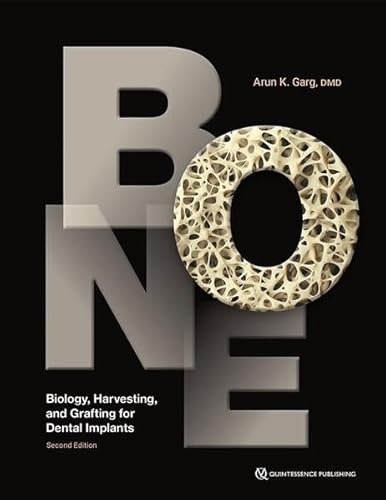
Dental implant placement often requires bone grafting to ensure sufficient bony support for the implants being placed. Depending on the biologic conditions of the patient, including the level of bone atrophy and the status of the remaining teeth in the mouth, more adjunctive procedures like bone harvesting or sinus grafting may be required. This book covers it all, from the biology of bone and how dental implants work within that framework to the many procedures for harvesting bone and using it to augment sites for implant placement. The different types of bone grafts and membranes are discussed as well as procedures to preserve the alveolar ridge following tooth extraction.
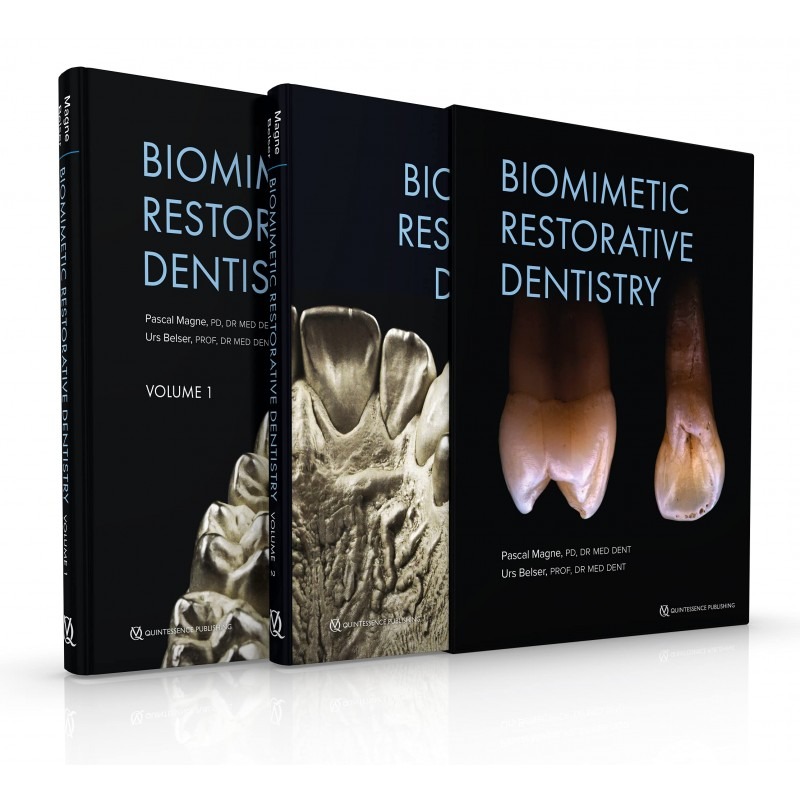
Takes the science of esthetic dental reconstruction to a new level both clinically and academically, and it offers all that a clinician could wish for in terms of indications and the classic clinical steps for tooth preparation, laboratory and CAD/CAM procedures, adhesive luting procedures, and maintenance. But above all, what makes this book so unique is the biomimetic principle—as such, restoring or mimicking the biomechanical, structural, and esthetic integrity of teeth is paramount. The core of this book centers on the application of the biomimetic principle in the form of bonded restorations using composite resins and ceramics, covering indications, treatment planning, diagnosis, tooth preparation and impression, laboratory and CAD/CAM procedures, final delivery, follow-up, maintenance, and repair. Written by a true master and artist, this book will undoubtedly inspire excellence in anyone who picks it up.
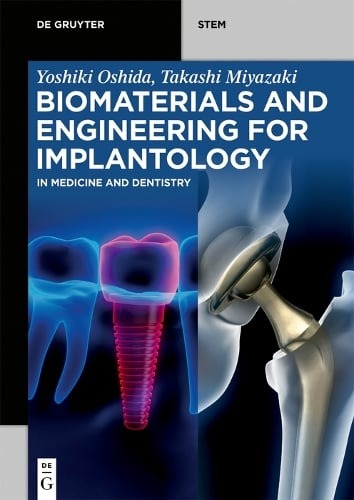
Biomaterials are composed of metallic materials, ceramics, polymers, composites and hybrid materials. Biomaterials used in human beings require safety regulations, toxicity, allergic reaction, etc. When used as implantable materials their biological compatibility, biomechanical compatibility, and morphological compatibility must be acessed. This book explores the design and requirements of biomaterials for the use in implantology.

سوريا - اتستراد درعا - غباغب
+963-15 2050 - 15 860 380 /1/2/3 - 11 662 3900