


تحسين النتائح
ترتيب حسب
من
الى

A comprehensive overview of the most promising research directions in the area of bio-inspired computing. According to the broad spectrum addressed by the different book chapters, a rich variety of biological principles and their application to ICT systems are presented.

Contains all the articles accepted and published in the Special Issue “Advances in Artificial Intelligence: Models, Optimization, and Machine Learning” of the MDPI Mathematics journal, which covers a wide range of topics connected to the theory and applications of artificial intelligence and its subfields. These topics include, among others, deep learning and classic machine learning algorithms, neural modelling, architectures and learning algorithms, biologically inspired optimization algorithms, algorithms for autonomous driving, probabilistic models and Bayesian reasoning, intelligent agents and multiagent systems.
This book presents a unified and systematic description of a wide class of miscellaneous problems of inconsistent knowledge management, analyzed by traditional mathematical methods using relational and logical representations.
The automotive industry has made steady progress in technological innovations under the names of Connected Autonomous-Shared-Electric (CASE) and Mobility as a Service (MaaS). Needless to say, mathematics and informatics are important to support such innovations. As the concept of cars and movement itself is diversifying, they are indispensable for grasping the essence of the future mobility society and building the foundation for the next generation. This book contains three main contents. 1. Mathematical models of flow 2. Mathematical methodsfor huge data and network analysis 3. Algorithm for mobility society The first one discusses mathematical models of pedestrian and traffic flow, as they are important for preventing accidents and achieving efficient transportation.

Apparently, the ability of animals and robots to adapt in a real world cannot be explained or realized by one single function in a control system and mechanism. That is, adaptation in motion is induced at every level from the central nervous system to the musculoskeletal system.Thus,weorganized the International Symposium on Adaptive Motion in Animals and Machines (AMAM) forscientist sandengineersconcerned with adaptation on various level stobebrought together todiscussprinciplesateachleveland to investigate principles governing total systems.

This book nuds new things to do with an old idea. The proofs-as-programs paradigm constitutes a set of approaches to developing programs from proofs in constructive logic. there is increasingly active research in applying constructive techniques to industrial-scale, complex software engineering problems. Thismonographdetailsseveralimportantadvancesinthisdirectionofpr- tical proofs-as-programs. One of the central themes of the book is a general, abstract framework for developing new systems of program synthesis by adapting proofs-as-programs to new contexts. Framework-oriented approaches that facilitate analogous - proaches to building systems for solving particular problems have been popular and successful. Thesemethodsarehelpful asthey providea formal toolbox that enablesa“roll-your-own”approachtodevelopingsolutions.Itishopedthatour framework will have a similar impact. The framework is demonstrated by example. We will give two novel - plications of proofs-as-programs to large-scale, coarse-grain software engine- ing problems: contractual imperative program synthesis and structured p- gram synthesis.
Probabilistic techniques are increasingly being employed in computer programs and systems because they can increase efficiency in sequential algorithms, enable otherwise nonfunctional distribution applications, and allow quantification of risk and safety in general. This makes operational models of how they work, and logics for reasoning about them, extremely important. Abstraction, Refinement and Proof for Probabilistic Systems presents a rigorous approach to modeling and reasoning about computer systems that incorporate probability. Its foundations lie in traditional Boolean sequential-program logic—but its extension to numeric rather than merely true-or-false judgments takes it much further, into areas such as randomized algorithms, fault tolerance, and, in distributed systems, almost-certain symmetry breaking. The presentation begins with the familiar "assertional" style of program development and continues with increasing specialization: Part I treats probabilistic program logic, including many examples and case studies; Part II sets out the detailed semantics; and Part III applies the approach to advanced material on temporal calculi and two-player games.

Presents a ""practical theory"" of reactive systems, with formal foundations in Temporal Logic of Actions. This book emphasises theoretical understanding of reactive behaviors and using ""horizontal"" modularity to manage their complexity. It illustrates the incremental specification by a number of examples of varying size and complexity
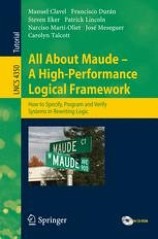
This book gives a comprehensive account of Maude, a language and system based on rewriting logic. Many examples are used throughout the book to illustrate the main ideas and features of Maude, and its many possible uses. Maude modules are rewrite theories. Computation with such modules is - cient deduction by rewriting. Because of its logical basis and its initial model semantics,aMaude module defines a precise mathematical model.This means that Maude and its formal tool environment can be used in three, mutually reinforcing ways: • as a declarative programming language; • as an executable formal specification language; and • as a formal verification system. Maude’s rewriting logic is simple, yet very expressive. This gives Maude good representational capabilities as a semantic framework to formally represent a wide range of systems, including models of concurrency, distributed al- rithms, network protocols, semantics of programming languages, and models of cell biology. Rewriting logic is also an expressive universal logic,making Maude a fiexible logical framework in which many difierent logics and - ference systems can be represented and mechanized. This makes Maude a useful metatool to build many other tools, including those in its own formal tool environment. Thanks to the logic’s simplicity and the use of advanced semi-compilation techniques, Maude has a high-performance implementation, making it competitive with other declarative programming languages.
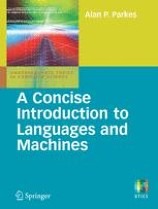
This easy-to-follow text provides an accessible introduction to the key topics of formal languages and abstract machines within Computer Science.
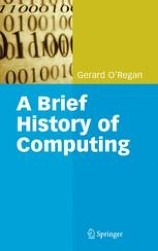
This text provides a comprehensive introduction to the key topics in the history of computing, in an easy-to-follow and concise manner. It covers the significant areas and events in the field.
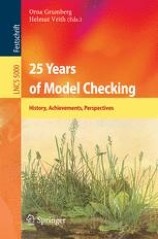
Model checking technology is among the foremost applications of logic to computer science and computer engineering. The model checking community has achieved many breakthroughs, bridging the gap between theoretical computer science and hardware and software engineering, and it is reaching out to new challenging areas such as system biology and hybrid systems. Model checking is extensively used in the hardware industry and has also been applied to the verification of many types of software. Model checking has been introduced into computer science and electrical engineering curricula at universities worldwide and has become a universal tool for the analysis of systems.
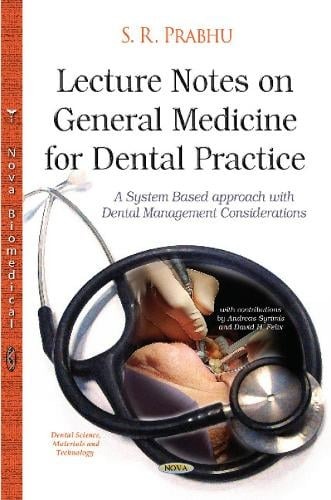
Offers a system based approach covering a broad range of topics in general medicine for dental practice. The book includes chapters on history taking and patient interview, general physical examination, system specific examination, common health related complaints, systemic infections, and diseases of the gastrointestinal, cardiovascular, respiratory, neurological, immunological, renal, endocrinal, dermatological and musculoskeletal systems. Nutritional disorders, psychiatric disorders, the female patient with menstrual, menopause and pregnancy related disorders, dental management of patients taking medications for systemic conditions and medical emergencies in dental practice have also been discussed in some detail.
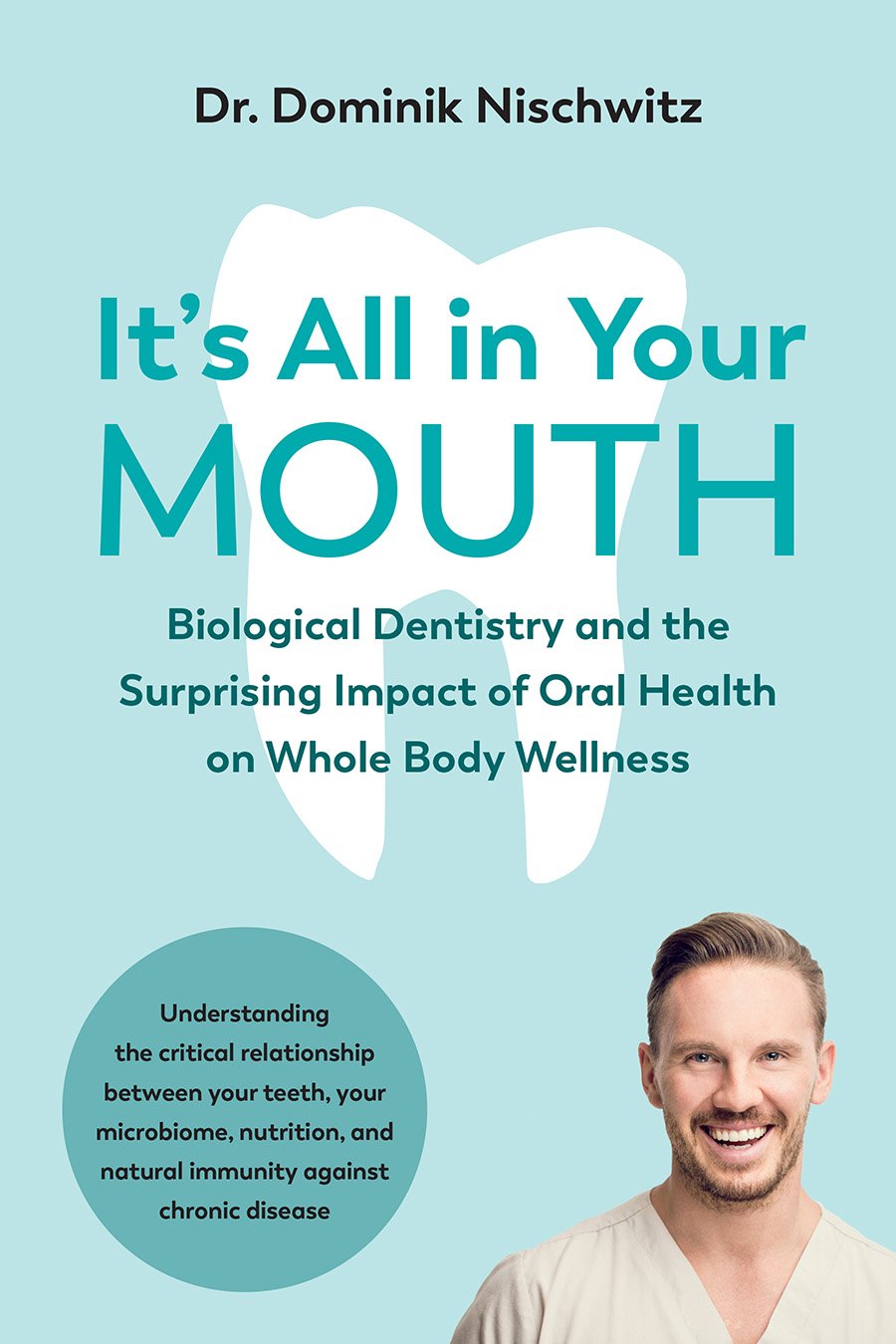
Pesents the principles of biological dentistry along with emerging scientific research on the mouth’s vital role in the body’s microbiome—a key to whole body wellness. Challenging conventional dental wisdom that views the teeth as separate from the rest of the body, and conventional dental practices that often cause more harm than good. Offers a necessary new approach to natural immunity to chronic disease and integrating dental hygiene into whole body health.
Presents the most current and comprehensive review of oral anatomy for clinicians and researchers alike. In 26 chapters, the reader is taken on a unique anatomical journey, starting with the oral fissure, continuing via the maxilla and mandible to the tongue and floor of the mouth, and concluding with the temporomandibular joint and masticatory muscles. Each chapter offers a detailed description of the relevant anatomical structures and their spatial relationships, provides quantitative morphological assessments, and explains the relevance of the region for clinical dentistry. All dental health care professionals require a sound knowledge of anatomy for the purposes of diagnostics, treatment planning, and therapeutic intervention. A full understanding of the relationship between anatomy and clinical practice is the ultimate objective, and this book will enable the reader to achieve such understanding as the basis for provision of the best possible treatment for each individual patient as well as recognition and comprehension of unexpected clinical findings.

This book combines explanation of the scientific base underpinning vital pulp treatment with description of current and emerging trends in clinical practice. It guides the reader through modern views on pulp diagnostics, deep caries, and pulp exposure management, leading to an analysis of the biological aspects of regenerative techniques such as angiogenesis, neurogenesis, inflammation, and epigenetics.
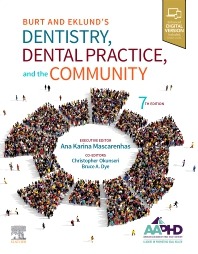
Presents dentistry and dental practice against the ever-changing backdrop of economic, technological, and demographic trends, as well as the distribution of the oral diseases that dental professionals treat and prevent. Readers will learn the latest techniques of research and measurement, and how oral disease may be limited through control and prevention. This updated text also addresses the new educational competencies for predoctoral/ post-doctoral dental students and dental hygiene students with updated and new content on cultural competency, oral health literacy, social responsibility, motivational interviewing, and oral systemic associations.

Presents a comprehensive and cohesive science-based approach to bad breath, combining basic research with clinical approaches to diagnosis and treatment. All aspects of the subject are examined thoroughly and critically, including the psychological impact of breath odor and future prospects.
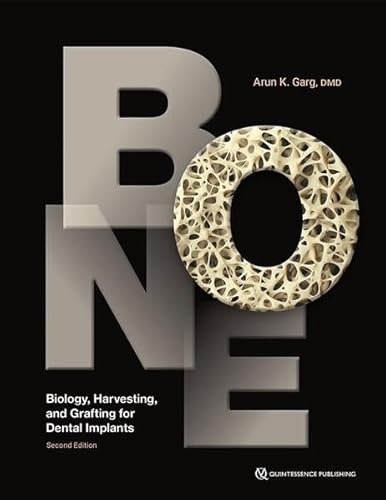
Dental implant placement often requires bone grafting to ensure sufficient bony support for the implants being placed. Depending on the biologic conditions of the patient, including the level of bone atrophy and the status of the remaining teeth in the mouth, more adjunctive procedures like bone harvesting or sinus grafting may be required. This book covers it all, from the biology of bone and how dental implants work within that framework to the many procedures for harvesting bone and using it to augment sites for implant placement. The different types of bone grafts and membranes are discussed as well as procedures to preserve the alveolar ridge following tooth extraction.
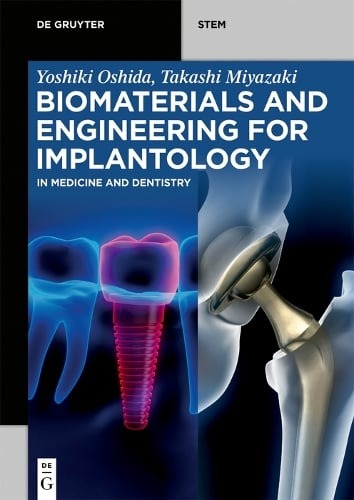
Biomaterials are composed of metallic materials, ceramics, polymers, composites and hybrid materials. Biomaterials used in human beings require safety regulations, toxicity, allergic reaction, etc. When used as implantable materials their biological compatibility, biomechanical compatibility, and morphological compatibility must be acessed. This book explores the design and requirements of biomaterials for the use in implantology.

سوريا - اتستراد درعا - غباغب
+963-15 2050 - 15 860 380 /1/2/3 - 11 662 3900