


تحسين النتائح
ترتيب حسب
من
الى


This book develops a hybrid architecture that allows to incorporate anaphora resolution into grammatical deduction while avoiding these consequences. To this end, the grammar logic is enriched with a connective that specifically deals with anaphora.After giving a self-contained introduction into Type Logical Grammar in general, the book discusses the formal properties of this connective. In the sequel, Jäger applies this machinery to numerous linguistic phenomena pertaining to the interaction of pronominal anaphora, VP ellipsis and quantification. In the final chapter, the framework is extended to indefiniteness, specificity and sluicing.
Fundamentals of Analytical Chemistry are usually presented as a sum of chemical and physical foundations, laws, axioms and equations for analytical methods and procedures. In contrast, this book delivers a practice-oriented, general guiding theory valid for all methods and techniques. Starting with a closer look to analytical signals and their dependencies, all the important figures of merit characterizing the power of analytical procedures and the reliability of analytical results are discussed and quantified, such as sensitivity, precision, accuracy and ruggedness. Elements of signal theory, information theory, statistics and fundamentals of calibration are also presented for this aim.
This book contains a representative collection of surveys by experts in mathematical relativity writing about the current status of, and problems in, their fields. There are four contributions for each of the following mathematical areas: differential geometry and differential topology, analytical methods and differential equations, and numerical methods. This book addresses graduate students and specialist researchers alike.
"Analog-Baseband Architectures and Circuits reviews the fundamentals and studies the state-of-the-art multistandard transceivers before describing novel architectural and circuit techniques for implementing multimode and wideband (tens of MHz) baseband analog front-ends under low-voltage constraints. Techniques developed on architecture level for efficient system-in-package (SiP) integration, testability and multi-standardability; and on circuit level for reducing the required supply voltage, power and area are generally applicable for most wireless systems, and are somewhat independent to technology scaling. Experimental 1-V baseband building blocks (i.e., double-quadrature-downconversion filter, programmable-gain amplifier and dc-offset canceler) and a 1-V fully-integrated receiver analog-baseband chain for IEEE 802.11a/b/g WLAN validate the techniques. The implementations are all in standard-VTH CMOS process, and no voltage boosting is required at any node." "Analog-Baseband Architectures and Circuits will be relevant to system architects, circuit designers, professors and students engaged in wireless transceiver front-ends research and development."
Intends to support a second teaching of Mathematical Analysis according to the principles of the new Didactic Regulations. It is especially designed for those study courses (such as Engineering, Computer Science, Physics) in which the mathematical tool is a significant part of the training. The fundamental concepts and methods of the differential and integral calculus of several variables, the series of functions and the ordinary differential equations are presented with the primary objective of training the student in their operational but critical use. The didactic setting of the text follows the one used for ANALYSIS I. The method of presentation of the arguments allows a flexible and modular use of the text, in order to respond to the various possible didactic choices in the organization of a Mathematical Analysis course.
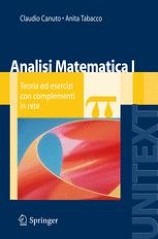
Intends to support a first teaching of Mathematical Analysis according to the principles of the new Didactic Regulations. It is especially designed for Engineering, Computer Science, Physics. The text has three different levels of reading. An essential level allows the student to grasp the essential concepts of the subject and to familiarize himself with the related calculation techniques. An intermediate level provides justifications for the main findings and enriches the presentation with useful observations and complements. A third level of reading, based on numerous references to a virtual text available online, allows the more motivated and interested student to deepen his or her preparation on the subject. Numerous examples and exercises with solutions complete the text. The captivating 2-color graphics make this text a fundamental point of reference for the study of the discipline.

Point processes and random measures find wide applicability in telecommunications, earthquakes, image analysis, spatial point patterns and stereology, to name but a few areas. The authors have made a major reshaping of their work in their first edition of 1988 and now present An Introduction to the Theory of Point Processes in two volumes with subtitles Volume I: Elementary Theory and Methods and Volume II: General Theory and Structure.
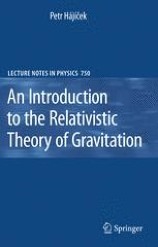
The geometric interpretation of gravitation is one of the major foundations of modern theoretical physics. This primer introduces classical general relativity with emphasis on the clarity of conceptual structure and on the basic mathematical methods to build up systematically application skills. The wealth of physical phenomena entailed by the Einstein‘s equations is revealed with the help of specific models describing gravitomagnetism, gravitational waves, cosmology, gravitational collapse and black holes. End-of-chapter exercises complete the main text.
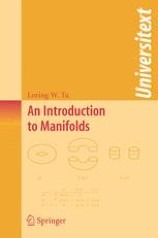
Manifolds, the higher-dimensional analogs of smooth curves and surfaces, are fundamental objects in modern mathematics. Combining aspects of algebra, topology, and analysis, manifolds have also been applied to classical mechanics, general relativity, and quantum field theory. In this streamlined introduction to the subject, the theory of manifolds is presented with the aim of helping the reader achieve a rapid mastery of the essential topics. By the end of the book the reader should be able to compute, at least for simple spaces, one of the most basic topological invariants of a manifold, its de Rham cohomology. Along the way the reader acquires the knowledge and skills necessary for further study of geometry and topology.

This book is the based on the work of many people, and while I discuss many of them in the general context of this book in Chapter 1. The backbone of the book is based on a project, 'Farm Lives' conducted between 1999 and 2002, funded exclusively by the McDonald Institute for Archaeolog-ical Research at the University of Cambridge.

This book describes how the basic building blocks of life, the amino acids, formed. After a comprehensible introduction into stereochemistry, the author addresses the inherent property of amino acids in living organisms, namely the preference for left-handedness. What was the cause for violation of parity of amino acids in the emergence of life on Earth? All the fascinating models proposed by physicists, chemists and biologist are vividly presented including the scientific conflicts.

Algorithms are the heart of computer science and mathematics, since without them the use of computers would not be possible. In this book, which in its English edition has been a longtime bestseller, Harel and Feldmann answer all questions relating to this topic. They talk about the evaluation, correctness and effectiveness of algorithms, but also clarify some doubts about programming techniques and also refer to the very current discussion on quantum computing. The book is useful both as a basic text for an introductory university course in computer science, and as a general introduction to natural sciences, mathematics or engineering.

To do algebra is essentially to calculate, that is to say to perform, on elements of a set, (<algebraic operations n, the best-known example of which is provided by the (<four rules)) of elementary arithmetic. This is not the place to retrace the slow process of progressive abstraction by which the notion of algebraic operation, initially restricted to natural integers and to measurable quantities, gradually widened its field, as it grew. at the same time generalized the notion of ((number O, until, going beyond the latter, it came to apply to elements which no longer had any character ((numeric)>, for example to permutations of a - seems (see Historical Note in chap. 1).
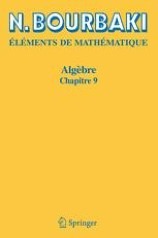
Sesquilinear and quadratic forms : The Mathematics Elements of Nicolas BOURBAKI aim to provide a rigorous, systematic presentation without prerequisites of mathematics from their foundations. This ninth chapter of the Book of Algebra, the second Book of the treatise, is devoted to quadratic, symplectic or Hermitian forms and to associated groups.
This book provides both the classical aspects of the theory of groups and their representations as well as a general introduction to the modern theory of representations including the representations of quivers and finite partially ordered sets and their applications to finite dimensional algebras.
Describes the coming about and first results of the AiREAS "healthy city" cooperative in the city of Eindhoven and Province of North Brabant in the Netherlands. AiREAS is an initiative focused on the multidisciplinary co-creation of healthy cities using the core human value of human health and air quality as guiding principle for profound regional innovation. The unique group process that followed uses the complexity of the city of Eindhoven as living lab. It is an anthropology based initiative that invites directly to the same table of core innovative responsibility the local government, innovative business partners, scientific insights and reseach, and civilian participation.
This volume describes phase 3 of the AiREAS multidisciplinary cocreation effort to produce a Healthy City. Phase 1 referred to making visible the invisible from an air quality and human exposure perspective. Phase 2 studies air quality related to health and Phase 3 looks at air quality, health and lifestyle from the perspective of persuasion to innovative change. The three books together describe the coming about and first results of the AiREAS "healthy city" cooperative in the city of Eindhoven and Province of North Brabant in the Netherlands. AiREAS is an initiative focused on the multidisciplinary co-creation of healthy cities using the core human value of human health and air quality as guiding principle for profound regional innovation.

Develops a framework for advancing agroecology transformations focusing on power, politics and governance. It explores the potential of agroecology as a sustainable and socially just alternative to today’s dominant food regime. Agroecology is an ecological approach to farming that addresses climate change and biodiversity loss while contributing to the Sustainable Development Goals

Reports on studies undertaken at contaminated sites such as farmland, forests, and marine and freshwater environments, with a particular focus on livestock, wild plants and mushrooms, crops, and marine products in those environments. It also provides additional data collected in the subsequent years to show how the radioactivity levels in agricultural products and their growing environments have changed with time and the route by which radioactive materials entered agricultural products as well as their movement between different components (e.g., soil, water, and trees) within an environmental system (e.g., forests). The book covers various topics, including radioactivity testing of food products; decontamination trials for rice and livestock production; the state of contamination in, trees, mushrooms, and timber; the dynamics of radioactivity distribution in paddy fields and upland forests; damage incurred by the forestry and fishery industries; and the change in consumers’ attitudes. Chapter 19 introduces a real-time radioisotope imaging system, a pioneering technique to visualize the movement of cesium in soil and in plants.

As is now generally accepted mankind’s burning of fossil fuels has resulted in the mass transfer of greenhouse gases to the atmosphere, a modification of the delicately-balanced global carbon cycle, and a measurable change in world-wide temperatures and climate. Although not the most powerful greenhouse gas, carbon dioxide (CO) drives climate 2 change due to the enormous volumes of this gas pumped into the atmosphere every day. Produced in almost equal parts by the transportation, industrial and energy-generating sectors, atmospheric CO concentrations have 2 increased by about 50% over the last 300 years, and according to some sources are predicted to increase by up to 200% over pre-industrial levels during the next 100 years. If we are to reverse this trend, in order to prevent significant environmental change in the future, action must be taken immediately.

سوريا - اتستراد درعا - غباغب
+963-15 2050 - 15 860 380 /1/2/3 - 11 662 3900