


تحسين النتائح
ترتيب حسب
من
الى

we will investigate the 'market-conform' pricing of newly issued contingent claims. A contingent claim is a derivative whose value at any settlement date is determined by the value of one or more other underlying assets, e. g. , forwards, futures, plain-vanilla or exotic options with European or American-style exercise features. Market-conform pricing means that prices of existing actively traded securities are taken as given, and then the set of equivalent martingale measures that are consistent with the initial prices of the traded securities is derived using no-arbitrage arguments.

Despite the social, nutritional, economical and environmental importance of Tanzanian coastal areas, yet they are vulnerable to both over-exploitation and degradation of their habitats. Using the data from two coastal villages and econometric methods as well as Stochastic Production Frontier techniques, the book demonstrates the extent which various socio-economic dimensions of rural coastal households influence livelihood pathways, production efficiency and attitudes towards conservation initiatives. Thus, attention to differential patterns of rural coastal households presents more viable possibilities for coastal villages to have conservation-development policies/programs that lead to poverty reduction.
Expands on the previous editions’ explorations of management essentials including handling stress, building diverse teams, running inclusive meetings, and how to lead in times of crisis. The education of a great leader never stops, and Lopp applies crucial insights to help continue your never-ending leadership education. Whether it is approaching a myriad of engineering personalities or handling unexpected conflict, you will come away with the wisdom to handle any team situation.

Discusses the risks and opportunities that arise in Emerging Asia given the context of a new environment in global liquidity and capital flows. It elaborates on the need to ensure financial and overall economic stability in the region through improved financial regulation and other policy measures to minimize the emergent risks. "Managing Elevated Risk: Global Liquidity, Capital Flows, and Macroprudential Policy—An Asian Perspective" also explores the range of policy options that may be deployed to address the impact of global liquidity on domestic financial and socio-economic conditions including income inequality. The book is primarily aimed at policy makers, financial market regulators and supervisory agencies to help them improve national regulatory systems and to promote harmonization of national regulations and practices in line with global standards.

Digital technology determines today’s world and will be one of the key technologies of the future. Successful technology development, introduction and management are not only a question of technical issues; due to their complexity a close cooperation between different scientific disciplines is required to discuss various consequences, chances and risks from manifold points of view as a starting point for the design of adequate solutions. The ability to integrate business and technology decisions will become a crucial core competence.
Introduction Closing supply chains refers to taking care of items once they are no longer desired or can no longer be used by their user. Smart management of closed-loop supply chains means profitable recovery of value from these items (products, functional components, materials or packaging). The company closing the supply chain may be the original equipment manuf- turer (OEM), a distribution partner or a third party not involved in the f- ward distribution. In recent years, the management of closed-loop supply chains has gained importance because of increased legislation on producer respon- bility, requiring companies to take back products from customers and to organize for proper recovery and disposal. This legislation is partially due to increased awareness of environmental issues. However, smart com- nies have also understood that returned products often contain lots of value to be recovered. They manage closed-loop supply chains simply because it is a profitable business proposition.
This book showcases examples of excellent manufacturing companies who have succeeded in creating value and job growth in Western Europe. The examples show managers of industrial firms how a clearly articulated strategic position can be combined with excellent execution to achieve competitiveness in Europe, in spite of the usually cited disadvantage of high labor costs and rigidity. Not every company is alike — strategic positions differ, and the means of execution differ, but what is common is a clear plan together with mobilization of all employees to apply their abilities in supporting this common plan. The book is indispensable reading for all managers that are interested in improving competitiveness.
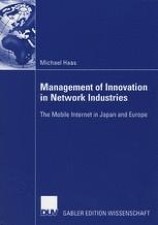
This book focuses on the following questions: Which are the implications of different approaches towards management of systemic innovations? Do differences matter and why do they matter? The author shows that Europeans can learn from the Japanese and gives advice for future approaches to developments in the European telecommunications industry.

Management: Leading and Collaborating in a Competitive World is the perspective of a current or future manager and emphasizes six essential performance dimensions: cost, quality, speed, innovation, service, and sustainability. This bottom-line, results-oriented approach is a unique hallmark of this text. Leadership is also a vital theme and includes working collaboratively toward outstanding results
This book encompasses a collection of in-depth analyses showcasing the challenges and ways forward for macroeconomic modelling of R&D and innovation policies. Based upon the proceedings of the EC-DG JRC-IEA workshop held in Brussels in 2017, it presents cutting-edge contributions from a number of leading economists in the field. It provides a comprehensive overview of the current academic and policy challenges surrounding R&D as well as of the state-of-the-art modelling techniques.
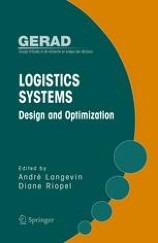
In a context of global competition, the optimization of logistics systems is inescapable. LOGISTICS SYSTEMS: Design and Optimization falls within this perspective and presents twelve chapters that well illustrate the variety and the complexity of logistics activities. Each chapter is written by recognized researchers who have been commissioned to survey a specific topic or emerging area of logistics. The first chapter, by Riopel, Langevin, and Campbell, develops a framework for the entire book. It classifies logistics decisions and highlights the relevant linkages to logistics decisions. The intricacy of these linkages demonstrates how thoroughly the decisions are interrelated and underscores the complexity of managing logistics activities. Each of the following chapters focus on quantitative methods for the design and optimization of logistics systems.
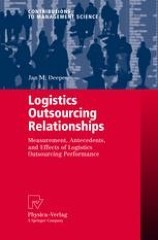
In recent years, logistics outsourcing has gained increasing importance and today is used by a large number of firms across virtually all industries worldwide. Logistics service providers have developed a wide array of services that are utilized to improve logistics processes - and mainly to cut costs.This book uses state-of-the-art scientific methods to reveal that most firms currently do not realize the full potential of logistics outsourcing. It shows the complexity of outsourcing performance and that its true drivers lie in the relationship between service providers and their customers. Through the results of a large-scale empirical survey, the book also emphasizes the importance of a firm's approach towards outsourcing: solely striving for cost reductions may be a dead end, while the often overlooked increased logistics service levels are equally important for boosting logistics performance. In the light of current outsourcing practices, this indicates substantial room for improvement for most firms.

This book addresses four standard business school subjects: microeconomics, macroeconomics, finance and information systems as they relate to trading, liquidity, and market structure. It provides a detailed examination of the impact of trading costs and other impediments of trading that the authors call “frictions”. It also presents an interactive simulation model of equity market trading, TraderEx, that enables students to implement trading decisions in different market scenarios and structures. Addressing these topics shines a bright light on how a real-world financial market operates, and the simulation provides students with an experiential learning opportunity that is informative and fun.
Intelligence is wasted on problems that themselves have been caused by an excess of intelligence. Lean Brain Management strives toward uncompromising Lean Brain Quality. Lean Brain stands for consistent economization of intelligence in all realms of life: Intelligent systems will only be operated by unskilled workers. Education, universities, and schools would become obsolete. A week of training would be enough for virtually any job. ("You are now the physician for the measles in the State of Ohio. In response to phone calls, send this prescription.") Lean Brain is not aimed at dumbing down! Lean Brain can survive on just a very small amount of central intelligence. Potential savings amount to trillions! This is demonstrated using Germany as an example. With this book, Dueck presents a radical suggestion for world improvement. The desire to laugh infinitely about it will eventually segue into a collective rude awakening. The book contains concrete advice for managers to economize on intelligence, and is thus--in keeping with the theme--written in an easy-to-read fashion.
Presents a unique blend of articles which combines both conceptual and practical concerns related to devising and implementing sustainable Knowledge Management systems and solutions in contemporary global organizations. The book's contributors are among the leading thinkers and practitioners in this growing field. The seamless synthesis of the human, organizational, and technological dimensions of Knowledge Management makes this book a definitive guide for academics and practising managers alike.

Aims to revisit the “traditional” interaction between channel strategies and the marketing mix in a connected world. In particular, it focuses on the following four dimensions in this context: Consumers, Products, Value Proposition and Sustainability. Keeping in mind the growing digitalization of business processes in the retail world and the move towards omni-channel retailing.

Change initiatives fail because humans are hardwired to return to what's worked for them in the past. This book offers a straightforward process for building support for change from the ground up

Catastrophe Modeling: A New Approach to Managing Risk is the first book that systematically analyzes how catastrophe models can be used for assessing and managing risks of extreme events. It focuses on natural disaster risk, but also discusses the management of terrorism risk. A unique feature of this book is the involvement of three leading catastrophe modeling firms, AIR Worldwide, EQECAT, and Risk Management Solutions, who examine the role of catastrophe modeling in rate setting, portfolio management and risk financing. Given the uncertainties associated with terrorism the book points out the opportunities for utilizing catastrophe models to set insurance rates and to examine public-private partnerships for providing financial assistance in the event of a terrorist attack. This book is strongly recommended for individuals who must make decisions regarding the management of impacts of catastrophe risks including those in both the public and private sector.
Hellermann addresses in his dissertation one of the most interesting - pects of this evolution for OR/MS, the parallel development of long-term and short-term markets for capacity and output, accompanied by a range of option and ?xed-commitment (i. e. , forward) contracts as the basic mec- nisms supporting transactions. This has been a fascinating topic for OR/MS research because it builds on the powerful framework of real options, while connecting directly to key operations decisions (capacity planning, network design, staf?ng, routing, maintenance, and so forth) of the equipment and technologies whose output is the focus of contracts.

In 2003, Goldman Sachs published a startling report on the BRICs (Brazil, Russia, India, and China) region: These four countries would be larger than the G6 economics within 40 years, muscling their way to economic dominance over the coming decades, and powering past developed countries such as the United Kingdom, Germany, and Japan. This book focuses on the technology and technology-enabled services that underpin this social and economic revolution. The editor analyses the reasons why these four countries are in a unique position to lead a 21st century growth in international services. He then features 12 chapters written by the most important chief executives from the BRICs service economy. Indian technology leaders, such as Nandan Nilekani (Infosys), Shiv Nadar (HCL), and Rajendra Pawar (NIIT), feature alongside their peers from Brazil, Russia, and China outlining their views on the next decade for offshoring.

سوريا - اتستراد درعا - غباغب
+963-15 2050 - 15 860 380 /1/2/3 - 11 662 3900