


تحسين النتائح
ترتيب حسب
من
الى

climate change focussing on technical solutions for the most important and climate relevant economic sectors is presented. It is intended for key decision makers, and administrators within industry, agricultural and energy sectors, as well as masters students and post graduates. The first of three sections covers the scientific basis of climate change and the instruments to prevent or reduce negative climate effects. It includes a survey covering current practices at different levels.It discusses evaluation methods for climate impacts from industrial processes. Climate relevant processes and measures to reduce their impact such as sequestration are defined in the final section, with the main focus being on renewable resources. Details are given on climate impacts of waste prevention, recycling and waste management as well as are proposals for every day solutions.
When the ?rst edition of this book was published in 2004, the following year 2005 has happened to have been the warmest year since 1880, when the ?rst reliable worldwide instrumental records came into existance. Claiming no li- age between the publication of our book and the temperature record, yet this record demonstrates the trend of increase in the global surface temperatures during thepast20years,reinforcedbyevidenceofriseofatmosphere’sand oceans’ temperatures, and increased melting of ice and snow in the arctic and antarctic regions as well as on mountain tops. All these observations are par- leled by the increase in the quantity of heat trapping gases in the atmosphere, causing most probably, the global greenhouse effect. In order to try and predict, what might be the impact of this effect on the on the natural and human environments of the Near East, (Figs. 1–1d) the authors adopted the saying that the past is the key for the future. The practical conclusion of this principle says that the acquiring knowledge of the impact of past climate changes on the nature and human societies, may allow conclusions with regard to future possible impact of climate changes. By correlating proxy data of all types, paleo-sea and lake levels, paleo-hydrology, pollen pro?les, environmental isotopes as well as archaeological and historical documents, the authors tried to collect as much as possible of this knowledge.
Child Neuropsychology guides therapists and neurologists toward common goals: early, accurate diagnosis and finely focused interventions across disciplines. By analyzing the affects of brain development on children and adolescents’ behavioral, cognitive, learning, and psychosocial abilities and deficits, this groundbreaking volume brings vital perspectives to assessment and treatment. Leading experts Ellison and Semrud-Clikeman start with the basics of child clinical neuropsychology and functional neuroanatomy, taking readers through examination protocols and assessment instruments to treatment planning and methods. In this volume, the authors address the full range of neurodevelopmental pathologies, from learning disabilities to autism, ADHD to CNS disorders, traumatic brain injury to fetal alcohol syndrome.

Child Maltreatment and the Law is a must-read for psychologists, developmentalists, sociologists, social workers, criminologists, and researchers focusing on family life as well as policymakers and advocates working within the legal system. The book is particularly useful for courses relating to child welfare law or child abuse and neglect.
Ceramic Materials: Science and Engineering is an up-to-date treatment of ceramic science, engineering, and applications in a single, integrated text. Building on a foundation of crystal structures, phase equilibria, defects and the mechanical properties of ceramic materials, students are shown how these materials are processed for a broad diversity of applications in today's society. Concepts such as how and why ions move, how ceramics interact with light and magnetic fields, and how they respond to temperature changes are discussed in the context of their applications. References to the art and history of ceramics are included throughout the text. The text concludes with discussions of ceramics in biology and medicine, ceramics as gemstones and the role of ceramics in the interplay between industry and the environment. The text is extensively illustrated and includes references and questions for the student.
This book gives an unparalleled, up-to-date, in-depth treatment of all kinds of flow phenomena encountered in centrifugal pumps including the complex interactions of fluid flow with vibrations and wear of materials.
Many times all of us could hear from mass media that an asteroid approached and swept past the Earth. Such an asteroid or comet will inevitably strike the planet some day. This volume considers hazards due to collisions with cosmic objects, particularly in light of recent investigations of impacts by the authors. Each chapter written by an expert contains an overview of an aspect and new findings in the field. The main hazardous effects – cratering, shock, aerial and seismic waves, fires, ejection of dust and soot, tsunami are described and numerically estimated. Numerical simulations of impacts and impact consequences have received much attention in the book. Fairly small impacting objects 50 -100 m in diameter pose a real threat to humanity and their influence on the atmosphere and ionosphere is emphasized.
The book by Professors is an impressive and in-depth treatment of the essence of the case–based reasoning strategy and case-based design dwelling upon the algorithmic facet of the paradigm, the authors provided an excellent applied research framework by showing how this development can be effectively utilized in real word complicated environment of process engineering.
Carbon and carbon dioxide always played an important role in the geobiosphere that is part of the Earth’s outer shell and surface environment. The book’s eleven chapters cover the fundamentals of the biogeochemical behavior of carbon near the Earth’s surface, in the atmosphere, minerals, waters, air-sea exchange, and inorganic and biological processes fractionating the carbon isotopes, and its role in the evolution of inorganic and biogenic sediments, ocean water, the coupling to nutrient nitrogen and phosphorus cycles, and the future of the carbon cycle in the Anthropocene. This book is mainly a reference text for Earth and environmental scientists; it presents an overview of the origins and behavior of the carbon cycle and atmospheric carbon dioxide, and the human effects on them. The book can also be used for a one-semester course at an intermediate to advanced level addressing the behavior of the carbon and related cycles.
The book describes in detail how to design, build, calibrate, and use inexpensive instruments for measuring solar radiation, ranging from total radiation from the entire sky to narrow spectral bands of radiation travelling along a path directly from the sun. Students and their teachers will learn a great deal about weather, the seasons, and the atmosphere, and they will develop a much better understanding of how to measure the physical world around them.
Borders, Mobility and Technologies of Control provides a model of criminological inquiry that is global in scope, constructionist in vision, and capable of combining the insights of dialogic and political-economic analyses into a holistic understanding of the growing conflict between nation-states and multitudes.

This is the first book to provide a cutting edge reference to the fascinating topic of blind source separation (BSS) for convolved speech mixtures. Through contributions by the foremost experts on the subject, the book provides an up-to-date account of research findings, explains the underlying theory, and discusses potential applications. The individual chapters are designed to be tutorial in nature with specific emphasis on an in-depth treatment of state of the art techniques. Blind Speech Separation is divided into three parts:Part 1 presents overdetermined or critically determined BSS. Here the main technology is independent component analysis (ICA). ICA is a statistical method for extracting mutually independent sources from their mixtures. Part 2 addresses underdetermined BSS, where there are fewer microphones than source signals. Here, the sparseness of speech sources is very useful; we can utilize time-frequency diversity, where sources are active in different regions of the time-frequency plane.Part 3 presents monaural BSS where there is only one microphone. Here, we can separate a mixture by using the harmonicity and temporal structure of the sources. We can build a probabilistic framework by assuming a source model, and separate a mixture by maximizing the a posteriori probability of the sources.

Blast cleaning is one of the most frequently utilised surface treatment-method in modern industry. The book is the first comprehensive monograph in this subject. It provides a practical and comprehensive review of the technology. This book systematically and critically reviews the theory behind the technology, the state of current blast cleaning, surface quality aspects and the effects of blast cleaning on the performance of applied coatings.
An international board of authors from universities, research institutes, and industries describe various biotechnological methods ranging from laboratory, to pilot evaluation and to full-scale process implementation. Topics include bioprocesses for the treatment of odors and air pollutants in wastewater treatment plants, rendering plants, chemical production facilities, and food and flavor manufacturing facilities. In addition to the basic microbiological and engineering aspects, the design, modeling and control of bioreactors are also presented.
The past 30 years have seen the emergence of a growing desire worldwide to take positive actions to restore and protect the environment from the degrading effects of all forms of pollution: air, noise, solid waste, and water. The Handbook of Environmental Engineering series guides readers to answer the fundamental questions facing pollution in the modern era – How serious is pollution? Is the technology needed to abate it not only available, but feasible? Among the topics included in this, the sixth edition, are: biosolids, flotation thickening, anaerobic and aerobic digestion, pressurized ozonation, lime stabilization, elutriation and polymer conditioning, and animal waste treatment.
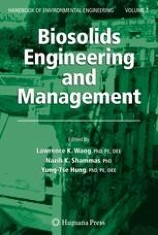
Biosolids Engineering and Management, is a collection of methods of practical design, calculation and numerical examples that illustrate how organized, analytical reasoning can lead to the discovery of clear, direct solutions, especially in the areas of biosolids management, treatment, disposal and beneficial use. The book’s including sludge and biosolids transport, pumping and storage, sludge conversion to biosolids, chlorination, stabilization, regulatory requirements, costs, agricultural land application, landfill, ocean disposal, combustion, incineration and sludge treatment process selection.
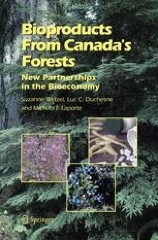
For the first time, this opportune book provides a comprehensive treatment of the many innovative, non-timber bioproducts that may be derived from Canada’s vast forests, including their potential economic, social and environmental impacts. It also offers a balanced discussion of the technological, policy and regulatory issues surrounding the emerging global bioeconomy. This book will not only be of interest to Canadian forestry professionals and entrepreneurs, but also to those interested in the contribution of forestry to the bioeconomy worldwide.
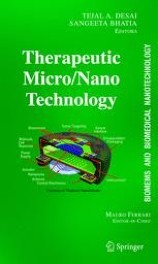
The human body is composed of structures organized in a hierarchical fashion: from biomolecules assembled into polymers, to multimeric assemblies such as cellular or-ganelles, to individual cells, to tissues, to organ systems working together in health and disease- each dominated by a characteristic length scale. Decades of science and engineer-ing are now converging to provide tools that enable the orderly manipulation of biological systems at previously inaccessible, though critically important, length scales (<100 mi-crons). Thus, the approaches described in this volume provide a snapshot of how micro-and nanotechnologies can enable the investigation, prevention, and treatment of human disease.The volume is divided into three parts. The first part, Cell-based therapeutics; cov- ers the merger of cells with micro- and anosystems for applications in regenerative medicine spanning the development of novel nanobiomaterials.
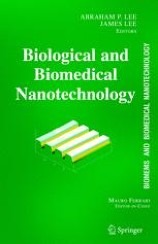
Abe Lee has been working on micro/ and nanotechnology for biomedical and biotech applications since 1992. His recent research focuses on the development of integrated micro and nano fluidic chip processors for the following applications: point-of-care diagnostics, "smart" nanomedicine for early detection and treatment, stem cell biology and therapeutics, the synthesis of novel and pure materials, and biosensors to detect environmental and terrorism threats. Jim Lee's research interest includes BioMEMS/NEMS, and polymer micro/nanotechnology. In the last 4 years, he has over 20 refereed journal publications, 2 book chapters, and 5 patents in these areas. He is now leading an NSF Nanoscale Science and Engineering Center for Affordable Nanoengineering of Polymer Biomedical Devices at OSU.
Biology and Mechanics of Blood Flows presents the basic knowledge and state-of-the-art techniques necessary to carry out investigations of the cardiovascular system using modeling and simulation. Part II of this two-volume sequence, Mechanics and Medical Aspects, refers to the extraction of input data at the macroscopic scale for modeling the cardiovascular system, and complements Part I, which focuses on nanoscopic and microscopic components and processes. This volume contains chapters on anatomy, physiology, continuum mechanics, as well as pathological changes in the vasculature walls including the heart and their treatments. Methods of numerical simulations are given and illustrated in particular by application to wall diseases. This authoritative book will appeal to any biologist, chemist, physicist, or applied mathematician interested in the functioning of the cardiovascular system.

سوريا - اتستراد درعا - غباغب
+963-15 2050 - 15 860 380 /1/2/3 - 11 662 3900