


تحسين النتائح
ترتيب حسب
من
الى

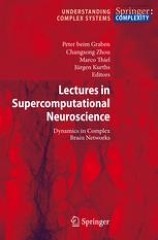
The present volume is an introduction, largely from the physicists' perspective, to the subject matter with in-depth contributions by system neuroscientists. A conceptual model for complex networks of neurons is introduced that incorporates many important features of the real brain, such as various types of neurons, various brain areas, inhibitory and excitatory coupling and the plasticity of the network. The computational implementation on supercomputers, which is introduced and discussed in detail in this book, will enable the readers to modify and adapt the algortihm for their own research.
Presents 8 novel approaches to measure and improve diagnostic competences with simulation. The book compares the effects of interventions on these diagnostic competences in both teacher and medical education. It includes analyses showing that important aspects of diagnostic competences and effects of instructional interventions aiming to facilitate them are comparable for teachers and doctors.
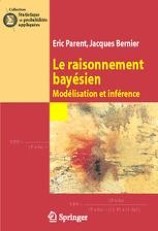
Describes in detail the practice of the Bayesian statistical approach using many examples chosen for their educational interest. The first part gives the general principles of statistical modeling making it possible to supervise but also to come to the aid of the imagination of the apprentice modeler. By examining examples of increasing difficulty, the reader forges the keys to building their own model. The second part presents the most useful calculation algorithms for estimating the unknowns of the model. Each inference method is presented and illustrated by numerous application cases.

Both experimental and theoretical studies of nearly every aspect of the LDH structure are discussed, including the range of metal cations and interlayer anions, M 3+ /M 2+ ratios, LDH polytypes, arrangement of the "interlayer" anions and water molecules, molecular modeling and molecular dynamics simulations, and the long- and short-range order in both the layers and interlayer galleries. Of especial value is the treatment of the more detailed aspects of the LDH structure that are still unresolved.
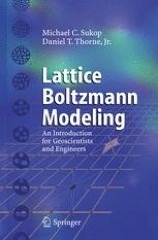
Lattice Boltzmann models have a remarkable ability to simulate single- and multi-phase fluids and transport processes within them. A rich variety of behaviors, including higher Reynolds numbers flows, phase separation, evaporation, condensation, cavitation, buoyancy, and interactions with surfaces can readily be simulated. This book provides a basic introduction that emphasizes intuition and simplistic conceptualization of processes. It avoids the more difficult mathematics that underlies LB models. The model is viewed from a particle perspective where collisions, streaming, and particle-particle/particle-surface interactions constitute the entire conceptual framework. Beginners and those with more interest in model application than detailed mathematical foundations will find this a powerful "quick start" guide. Example simulations, exercises, and computer codes are included. Working code is provided on the Internet.

This essential work provides a thorough description of the fundamentals and applications in the field of laser-tissue interactions. Concepts such as the optical and thermal properties of tissue, and optical breakdown and its related effects, are treated in detail.

Laser Ablation and its Applications emphasizes the wide range of these topics rather than focusing on one specialty or discipline. It is intended for a graduate course in laser interactions with plasmas and materials, but it should be accessible to anyone with a graduate degree in physics or engineering.

First concise textbook on Large-Eddy Simulation, a very important method in scientific computing and engineeringFrom the foreword to the third edition written by Charles Meneveau: ".

A mathematically consistent formulation of relativistic quantum electrodynamics (QED) has still to be found. Nevertheless, there are several simplified effective models that successfully describe many body quantum systems and the interaction of radiation with matter. Large Coulomb Systems explores a selection of mathematical topics inspired by QED. It comprises selected, expanded and edited lectures given by international experts at a topical summer school and is intended as a high-level introduction for graduate students, postdocs and nonspecialists from related fields.
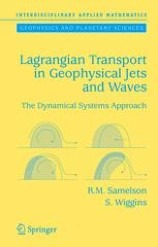
This book provides an accessible introduction to a new set of methods for the analysis of Lagrangian motion in geophysical flows. These methods were originally developed in the abstract mathematical setting of dynamical systems theory, through a geometric approach to differential equations. Despite the recent developments in this field and the existence of a substantial body of work on geophysical fluid problems in the dynamical systems and geophysical literature, this is the first introductory text that presents these methods in the context of geophysical fluid flow. The book is organized into seven chapters; the first introduces the geophysical context and the mathematical models of geophysical fluid flow that are explored in subsequent chapters. The second and third cover the simplest case of steady flow, develop basic mathematical concepts and definitions, and touch on some important topics from the classical theory of Hamiltonian systems. The fundamental elements and methods of Lagrangian transport analysis in time-dependent flows that are the main subject of the book are described in the fourth, fifth, and sixth chapters. The seventh chapter gives a brief survey of some of the rapidly evolving research in geophysical fluid dynamics that makes use of this new approach. Related supplementary material, including a glossary and an introduction to numerical methods, is given in the appendices.

A Differential-Geometric Approach for Bernstein’s Degrees-of-Freedom Problem.- Nonsmooth Riemannian Optimization with Applications to Sphere Packing and Grasping.- Synchronization of Networked Lagrangian Systems.- An Algorithm to Discretize One-Dimensional Distributed Port Hamiltonian Systems.- Virtual Lagrangian Construction Method for Infinitedimensional Systems with Homotopy Operators.- Direct Discrete-Time Design for Sampled-Data Hamiltonian Control Systems.- Kinematic Compensation in Port-Hamiltonian Telemanipulation.- Interconnection and Damping Assignment Passivity-Based Control of a Four-Tank System.- Towards Power-based Control Strategies for a Class of Nonlinear Mechanical Systems.- Power Shaping Control of Nonlinear Systems: A Benchmark Example.- Total Energy Shaping Control of Mechanical Systems: Simplifying the Matching Equations via Coordinate Changes.- Simultaneous Interconnection and Damping Assignment Passivity–Based Control: Two Practical Examples.
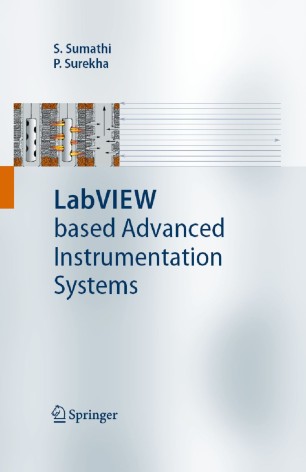
Information is a valuable resource to an organization. User-friendly, computer-controlled instrumentation and data analysis techniques are revolutionizing the way measurements are being made, allowing nearly instantaneous comparison between theoretical predictions, simulations, and actual experimental results. This book provides comprehensive coverage of fundamentals of advanced instrumentation systems based on LabVIEW concepts. This book is for those who wish a better understanding of virtual instrumentation concepts, its purpose, its nature, and the applications developed using the National Instrument’s LabVIEW software.

Cosmic microwave background radiation is the residue of the great heat following the Big Bang. A tenuous sign, over 13 billion years old, in which the answers to many of the questions about the nature of our Universe are hidden. Discovered by chance in 1964, in the last forty years this fossil trace of the origins of the Cosmos has been explored with every available means. Two Nobel Prizes in physics have already been awarded for research involving it, the last in 2006 for the results of the COBE satellite. Much of the information encoded in the cosmic background radiation was impressed by the superimposition of acoustic waves present in the early Universe: a "music" of the Big Bang, which cosmologists have tried for years to reconstruct, using techniques similar to those that allow to distinguish the sound of different musical instruments. Only recently have the first notes of this extraordinary cosmic symphony finally been revealed, but the investigation is not over yet. This book illustrates, with a language suitable even for non-specialists, the theories, observations and discoveries that have brought cosmology into a new era.
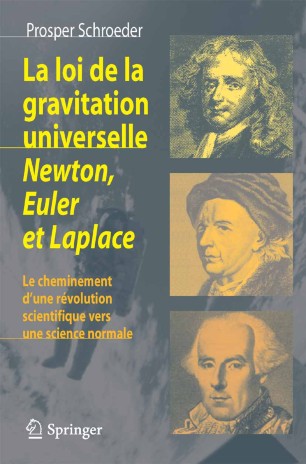
An analysis of Newton's ideas dismisses this hypothesis by the simple fact that the Principia sought to demonstrate the fallacy of earlier approaches. However, Newton suffered a failure in the application of his theory of gravitation to the explanation of the movement of the Moon, failure which marked the development of celestial mechanics throughout the 18th century. Clairaut, d'Alembert and Euler doubted the validity of Newtonian law almost at the same time and their ideas advanced celestial mechanics which reached the state of "normal science" with Laplace's treatise on celestial mechanics, a century after Newton.
Cosmic microwave background radiation is the residue of the great heat following the Big Bang. A tenuous sign, over 13 billion years old, in which the answers to many of the questions about the nature of our Universe are hidden. Discovered by chance in 1964, in the last forty years this fossil trace of the origins of the Cosmos has been explored with every available means. Two Nobel Prizes in physics have already been awarded for research involving it, the last in 2006 for the results of the COBE satellite. Much of the information encoded in the cosmic background radiation was impressed by the superimposition of acoustic waves present in the early Universe: a "music" of the Big Bang, which cosmologists have tried for years to reconstruct, using techniques similar to those that allow to distinguish the sound of different musical instruments. Only recently have the first notes of this extraordinary cosmic symphony finally been revealed, but the investigation is not over yet. This book illustrates, with a language suitable even for non-specialists, the theories, observations and discoveries that have brought cosmology into a new era.

From the Preface: K-theory was introduced by A. Grothendieck in his formulation of the Riemann- Roch theorem. For each projective algebraic variety, Grothendieck constructed a group from the category of coherent algebraic sheaves, and showed that it had many nice properties. Atiyah and Hirzebruch considered a topological analog defined for any compact space X, a group K{X) constructed from the category of vector bundles on X. It is this ''topological K-theory" that this book will study. Topological K-theory has become an important tool in topology. Using K- theory, Adams and Atiyah were able to give a simple proof that the only spheres which can be provided with H-space structures are S1, S3 and S7. Moreover, it is possible to derive a substantial part of stable homotopy theory from K-theory.

PREFACEThisscientific biography of Kristian Birkeland (1867–1917) was written to bring the story ofa Norwegian national hero to the attention ofthe English-speaking world. Birkeland’sheroic stature was established not on a field of military battle,but in the bitter cold of the Artic wilderness ashe sought to answer basic questions abouthow the Sun controlled northern lights andmag-netic storms. He was also afather of Norsk Hydro one ofNorway’s largest industries. Birkel and died before reaching the age of 50.Because Birkel and never kept adiary, documented information about his family and private life is sparse. Before he died, Olaf Devik, the last of Birke-ffland’s close friends, gave along interview and graciously transferred his personal archive to A.E. Birkeland’s 82 scientific papers and three book-length publications map the progress of his investigations. addressed this book questions that had vexed European scientists for centuries. Why do the northern lights appear overhead when the Earth’s magnetic field is disturbed? How are magnetic storms connected to disturbances on the Sun? To answer these questions Birkeland interpreted his advance laboratory simulations and daring campaigns in the Arctic wilderness in the light of Maxwell’s newly discovered laws of electricity and magnetism. Birkeland’s ideas were dismissed for decades, only to be vindicated when satellites could fly above the Earth’s atmosphere.
Knowledge-Driven Computing constitutes an emerging area of intensive research located at the intersection of Computational Intelligence and Knowledge Engineering with strong mathematical foundations. It embraces methods and approaches coming from diverse computational paradigms, such as evolutionary computation and nature-inspired algorithms, logic programming and constraint programming, rule-based systems, fuzzy sets and many others. The use of various knowledge representation formalisms and knowledge processing and computing paradigms is oriented towards the efficient resolution of computationally complex and difficult problems.
The book covers a multitude of important issues on the subject of "Innovations in Knowledge-Based Virtual Education ", aiming at researchers and practitioners from academia, industry, and government. The carefully selected contributions report on research, development and real-world experiences of virtual education.
Explores some of the historical roots and epistemological ramifications of perspectivism. Perspectivism has recently emerged in philosophy of science as an interesting new position in the debate between scientific realism and anti-realism.

سوريا - اتستراد درعا - غباغب
+963-15 2050 - 15 860 380 /1/2/3 - 11 662 3900