


تحسين النتائح
ترتيب حسب
من
الى


Blockchain technology is a powerful, cost-effective method for network security. Essentially, it is a decentralized ledger for storing all committed transactions in trustless environments by integrating several core technologies such as cryptographic hash, digital signature and distributed consensus mechanisms. Over the past few years, blockchain technology has been used in a variety of network interaction systems such as smart contracts, public services, Internet of Things (IoT), social networks, reputation systems and security and financial services. With its widespread adoption, there has been increased focus on utilizing blockchain technologies to address network security concerns and vulnerabilities as well as understanding real-world security implications.
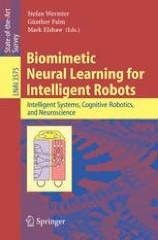
This book presents research performed as part of the EU project on biomimeticmultimodal learning in a mirror neuron-based robot (MirrorBot) and contribu-tions presented at the International AI-Workshop on NeuroBotics. The over-all aim of the book is to present a broad spectrum of current research intobiomimetic neural learning for intelligent autonomous robots. In this book we show the development of newtechniques using cell assemblies, associative neural networks, and Hebbian-typelearning in order to associate vision, language and motor concepts. We havedeveloped biomimetic multimodal learning and language instruction in a robotto investigate the task of searching for objects. As well as the research performedin this area for the MirrorBot project, the second part of this book incorporatessignificant contributions from other research in the field of biomimetic robotics.This second part of the book concentrates on the progress made in neuroscienceinspired robotic learning approaches (in short: NeuroBotics). We hope that this book stimulates and encourages new research in this in-teresting and dynamic area.
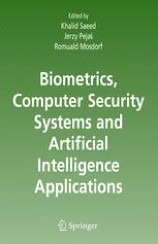
This book presents the most recent achievements in some fascinating and rapidly developing fields within Computer Science. The scientific works presented in this book have been partitioned into three topical groups: Image Analysis and Biometrics, Computer Security Systems, and Artificial Intelligence and Applications. Image Analysis and Biometrics is the branch of Computer Science dealing with the very difficult task of artificial, visual perception of objects and surroundings, as well as the problems connected with it. Computer Security and Safety is at present a very important and intensively investigated branch of Computer Science because of the menacing activity of hackers and computer viruses.
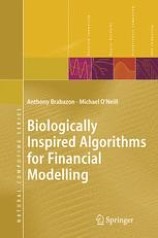
Then Part I provides a thorough guide to the various bioinspired methodologies – neural networks, evolutionary computing (particularly genetic algorithms and grammatical evolution), particle swarm and ant colony optimization, and immune systems. Part II brings the reader through the development of market trading systems. Finally, Part III examines real-world case studies where BIA methodologies are employed to construct trading systems in equity and foreign exchange markets, and for the prediction of corporate bond ratings and corporate failures.
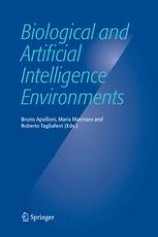
The book reports the proceedings of the 15th Italian workshop on neural networks issued by the Italian Society on Neural Networks SIREN. The longevity recipe of this conference stands in three main points that normally renders the reading of these proceedings so interesting as appealing. 1. The topics of the neural networks is considered an attraction pole for a set of researches centered on the inherent paradigm of the neural networks, rather than on a specific tool exclusively. Thus, the subsymbolic management of the data information content constitutes the key feature of papers in various fields such as Pattern Recognition, Stochastic Optimization, Learning, Granular Computing, and so on, with a special bias toward bioinformatics operational applications. An excerpt of all these matters may be found in the book. 2. Though managed at domestic level, the conference attracts contributions from foreign researchers as well, so that in the book the reader may capture the flavor of the state of the art in the international community. 3. The conference is a meeting of friends as well. Thus the papers generally reflect a relaxed atmosphere where researchers meet to generously exchange their thought and explain their actual results in view of a common cultural growing of the community.
This book constitutes the refereed proceedings of the Second International Bioinformatics Research and Development Conference, BIRD 2008, held in Vienna, Austria in July 2008.
In this textbook present mathematical models in bioinformatics and they describe the biological problems that inspire the computer science tools used to handle the enormous data sets involved. The first part of the book covers the mathematical and computational methods, while the practical applications are presented in the second part. The mathematical presentation is descriptive and avoids unnecessary formalism, and yet remains clear and precise. Emphasis is laid on motivation through biological problems and cross applications. Each of the four chapters in the first part is accompanied by exercises and problems to support an understanding of the techniques presented. Each of the six chapters of the second part is devoted to some specific application domain: sequence alignment, molecular phylogenetics and coalescence theory, genomics, proteomics, RNA, and DNA microarrays. Each chapter concludes with a problems and projects section, to deepen the reader's understanding and to allow for the design of derived methods. Many of the projects involve publicly available software and/or Web-based bioinformatics depositories. Finally, the book closes with a thorough bibliography, reaching from classic research results to very recent findings, providing many pointers for future research.Overall, this volume is ideally suited for a senior undergraduate or graduate course on bioinformatics, with a strong focus on its mathematical and computer science background.
Covers analytical techniques for handling the huge amount of data generated by the Internet of Things, from architectures and platforms to security and privacy issues, applications, and challenges as well as future directions. The fields of Big Data and the Internet of Things (IoT) have seen tremendous advances, developments, and growth in recent years. The IoT is the inter-networking of connected smart devices, buildings, vehicles and other items which are embedded with electronics, software, sensors and actuators, and network connectivity that enable these objects to collect and exchange data. The IoT produces a lot of data. Big data describes very large and complex data sets that traditional data processing application software is inadequate to deal with, and the use of analytical methods to extract value from data. This edited book covers analytical techniques for handling the huge amount of data generated by the Internet of Things, from architectures and platforms to security and privacy issues, applications, and challenges as well as future directions.
Combines experimental and theoretical research on big data recommender systems to help computer scientists develop new concepts and methodologies for complex applications. It includes original scientific contributions in the form of theoretical foundations, comparative analysis, surveys, case studies, techniques and tools. First designed to generate personalized recommendations to users in the 90s, recommender systems apply knowledge discovery techniques to users’ data to suggest information, products, and services that best match their preferences. In recent decades, we have seen an exponential increase in the volumes of data, which has introduced many new challenges. recommender systems. Volume 2 covers a broad range of application paradigms for recommender systems over 22 chapters
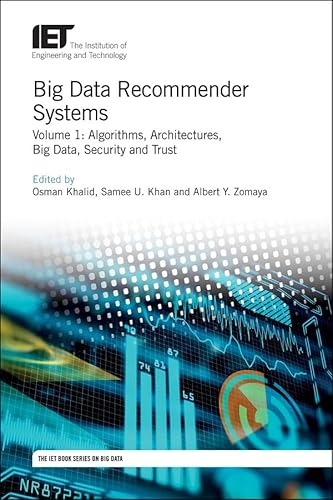
Combines experimental and theoretical research on big data recommender systems to help computer scientists develop new concepts and methodologies for complex applications. It includes original scientific contributions in the form of theoretical foundations, comparative analysis, surveys, case studies, techniques and tools.
This book presents how cutting-edge digital technologies like Machine Learning, Artificial Intelligence (AI), and Blockchain are set to disrupt the financial sector. The book illustrates how recent advances in these technologies facilitate banks, FinTechs, and financial institutions to collect, process, analyze, and fully leverage the very large amounts of data that are nowadays produced and exchanged in the sector. To this end, the book also introduces some of the most popular Big Data, AI and Blockchain applications in the sector, including novel applications in the areas of Know Your Customer (KYC), Personalized Wealth Management and Asset Management, Portfolio Risk Assessment, as well as variety of novel Usage-based Insurance applications based on Internet-of-Things data.
The book is devoted to the analysis of big data in order to extract from these data hidden patterns necessary for making decisions about the rational behavior of complex systems with the different nature that generate this data. To solve these problems, a group of new methods and tools is used, based on the self-organization of computational processes, the use of crisp and fuzzy cluster analysis methods, hybrid neural-fuzzy networks, and others. The book solves various practical problems. In particular, for the tasks of 3D image recognition and automatic speech recognition large-scale neural networks with applications for Deep Learning systems were used.
There are no silver bullets in algorithm design, and no single algorithmic idea is powerful and flexible enough to solve every computational problem. Nor are there silver bullets in algorithm analysis, as the most enlightening method for analyzing an algorithm often depends on the problem and the application. However, typical algorithms courses rely almost entirely on a single analysis framework, that of worst-case analysis, wherein an algorithm is assessed by its worst performance on any input of a given size. The purpose of this book is to popularize several alternatives to worst-case analysis and their most notable algorithmic applications, from clustering to linear programming to neural network training. Forty leading researchers have contributed introductions to different facets of this field, emphasizing the most important models and results, many of which can be taught in lectures to beginning graduate students in theoretical computer science and machine learning.
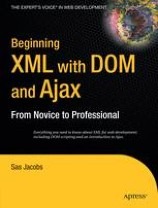
Don't waste time on 1,000-page tomes full of syntax; this book is all you need to get ahead in XML development. Renowned web developer Sas Jacobs presents an essential guide to XML. Beginning XML with DOM and Ajax is practical and comprehensive. It includes everything you need to know to get up to speed with XML development quickly and painlessly.
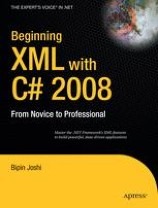
Beginning XML with C# 2008 focuses on XML and how it is used within .NET 3.5. As you'd expect of a modern application framework, .NET 3.5 has extensive support for XML in everything from data access to configuration, from raw parsing to code documentation. This book demystifies all of this. It explains the basics of XML as well as the namespaces and objects you need to know in order to work efficiently with XML. You will see clear, practical examples that illustrate best practices in action. With this book, you'll learn everything you need to know from the basics of reading and writing XML data to using the DOM, from LINQ and SQL Server integration to SOAP and web services.
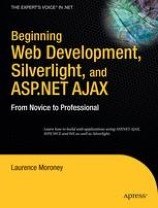
Beginning Web Development, Silverlight, and ASP.NET AJAX: From Novice to Professional aims to give you the skills you need to start building web applications with Microsoft's next–generation technology as quickly as possible. Whether you're interested in ASP.NET AJAX, Silverlight, or the technologies that support them (WPF, WCF, WF, etc.), this book is the starting point that you need. It adopts a “zero to hero” approach that concentrates on achieving practical results you can use in real projects rather than presenting a deep academic treatment that can't be immediately applied.
Beginning Perl Web Development: From Novice to Professional introduces you to the world of Perl Internet application development. This book tackles all areas crucial to developing your first web applications and includes a powerful combination of real-world examples coupled with advice. Topics range from serving and consuming RSS feeds, to monitoring Internet servers, to interfacing with e-mail. You'll learn how to use Perl with ancillary packages like Mason and Nagios. Though not version-specific, this book is an ideal read if you have had some grounding in Perl basics and now want to move into the world of web application development. Author Steve Suehring emphasizes the security implications of Perl, drawing on years of experience teaching readers how to think safe, avoid common pitfalls, and produce well-planned, secure code.
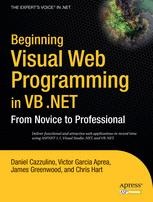
Beginning Web Programming in VB .NET: From Novice to Professional will teach you the fundamentals of the web environment and how Visual Studio .NET (VS .NET) makes it accessible to VB programmers. You'll build a working website that demonstrates all the elements of a VB web application. Author Daniel Cazzulino takes a step-by-step approach to each example to explore the essential technologies and how VS .NET helps to integrate them into a highly interactive, attractive web application.
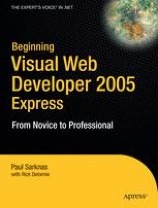
The primary goal of this book is to demonstrate Visual Web Developer 2005 Expresss effectiveness when developing applications. The secondary goal is to examine how coding best-practices can be applied with this new product. Beginning Visual Web Developer 2005 Express provides a rigorous overview of the application: how it operates, how it compares to the other versions of Visual Studio .NET 2005 now available, and the best way to use it.
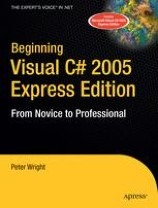
Wright took the same approach with this book that he did with the VB titles, and inside you'll find a fast–paced guide to the essentials to get you programming fast. You'll learn the C# language and the tools Visual C# 2005 Express provides. He covers everything from simple console programs to code that talks to the Internet, and even how to write your own database programs. Whatever your reasons for wanting to learn to program with C#, this book will get you where you want to be quickly, and hopefully with a smile on your face. So dive in and change the way you use computers forever.

سوريا - اتستراد درعا - غباغب
+963-15 2050 - 15 860 380 /1/2/3 - 11 662 3900