


تحسين النتائح
ترتيب حسب
من
الى


This volume gives answers to different questions concerning damage caused by children. Are children directly liable and is there any age limit below which they have no tortious capacity Can children, in spite of their lack of tortious capacity, for reasons of equity be held liable in exceptional conditions? What is the relationship between liability of children and liability of their parents or guardians? Are these questions answered by special rules of general application in all fields of tort liability or are there specific rules for specific torts
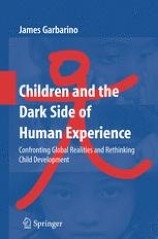
Synthesizing insights from psychology and philosophy with his own wide-ranging, first-hand experiences around the world, Dr. James Garbarino takes readers on a personalized journey into the dark side of human experience as it is lived by children. In these highly readable pages, Dr. Garbarino intertwines a discussion of children’s material and spiritual needs with a detailed examination of the clinical knowledge and experiential wisdom required to understand and meet complex developmental needs. Fusing anecdotal observations, empirical evidence, and an ecological perspective, he reveals a path to ensuring the fundamental human rights of all children: the right to safety, to equality, to economic parity, and to a meaningful life.

This book's multi-layered emphasis on context, structural determinants of peace and conflict, and use of research for action towards social cohesion for children and youth has not been brought together in other peace psychology literature to the same extent. Children and Peace: From Research to Action will be a useful resource for peace psychology academics and students, as well as social and developmental psychology academics and students, peace and development practitioners and activists, policy makers who need to make decisions about the matters covered in the book, child rights advocates and members of multilateral organizations such as the UN.

This open access book provides an overview of childlessness throughout Europe. It offers a collection of papers written by leading demographers and sociologists that examine contexts, causes, and consequences of childlessness in countries throughout the region.The book features data from all over Europe. It specifically highlights patterns of childlessness in Germany, France, the United Kingdom, Finland, Sweden, Austria and Switzerland. An additional chapter on childlessness in the United States puts the European experience in perspective.

Explores how children, parents, and survivors reshaped the politics of child protection in late twentieth-century England. Activism by these groups, often manifested in small voluntary organisations, drew upon and constructed an expertise grounded in experience and emotion that supported, challenged, and subverted medical, social work, legal, and political authority. New forms of experiential and emotional expertise were manifested in politics – through consultation, voting, and lobbying – but also in the reshaping of everyday life, and in new partnerships formed between voluntary spokespeople and media. While becoming subjects of, and agents in, child protection politics over the late twentieth century, children, parents, and survivors also faced barriers to enacting change, and the book traces how long-standing structural hierarchies, particularly around gender and age, mediated and inhibited the realisation of experiential and emotional expertise.
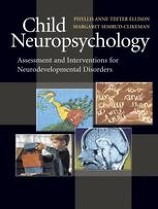
Child Neuropsychology guides therapists and neurologists toward common goals: early, accurate diagnosis and finely focused interventions across disciplines. By analyzing the affects of brain development on children and adolescents’ behavioral, cognitive, learning, and psychosocial abilities and deficits, this groundbreaking volume brings vital perspectives to assessment and treatment. Leading experts Ellison and Semrud-Clikeman start with the basics of child clinical neuropsychology and functional neuroanatomy, taking readers through examination protocols and assessment instruments to treatment planning and methods. In this volume, the authors address the full range of neurodevelopmental pathologies, from learning disabilities to autism, ADHD to CNS disorders, traumatic brain injury to fetal alcohol syndrome.

Child Maltreatment and the Law is a must-read for psychologists, developmentalists, sociologists, social workers, criminologists, and researchers focusing on family life as well as policymakers and advocates working within the legal system. The book is particularly useful for courses relating to child welfare law or child abuse and neglect.
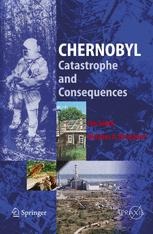
The long-term effects of the Chernobyl incident on the environment are still becoming apparent, twenty years after the event. This book, written by two researchers with frontline experience in this field, provides a detailed review of these over a wide range of ecosystems. It also discusses the responses and countermeasures utilised to combat the effects of the accident, as well as considering the health, social, psychological and economic impacts on the human population. Chernobyl - Catastrophe and Consequences provides a comprehensive assessment of the Chernobyl accident and its long-term consequences draws on the most recent measurements of contamination in the terrestrial and aquatic food chains discusses the sociological consequences of such disasters in detail This book adds valuable weight to the debate about the environmental cost of nuclear power and the issue of nuclear safety.
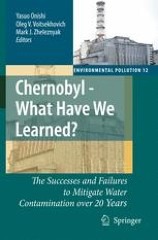
Twenty million people have been exposed to Chernobyl radionuclides through the Dnieper River aquatic pathways. This book presents a 20-year historical overview and comprehensive study results of the aquatic environment affected by the 1986 Chernobyl nuclear accident. During this time, many water quality management practices and countermeasures were enacted. The book presents in-depth analyses of these water remediation actions, using current science and mathematical modeling, and discusses why some were successful, but many others failed. The chapter entitled Where Do We Go From Here? incorporates a comprehensive discussion of the planned New Safe Confinement (NSC) structure to cover the Chernobyl plant. The book closes with a summary and conclusions drawn from these analyses, making it a valuable reference tool for the future. This book will be of interest to engineers, scientists, decision-makers, and those involved in radiation protection and radioecology, environmental protection and risk assessment, water remediation and mitigation measures, and radioactive waste disposal. In addition, the detailed, almost day-to-day, emergency responses to the Chernobyl accident described in this book will also be useful to people developing emergency and long-term responses to accidental or intentional (by terrorists) releases of radionuclides, toxic chemicals and biological agents.
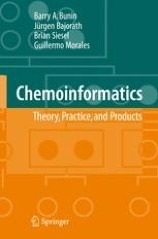
Chemoinformatics: Theory, Practice & Products covers theory, commercially available packages and applications of Chemoinformatics. Chemoinformatics is broadly defined as the use of information technology to assist in the acquisition, analysis and management of data and information relating to chemical compounds and their properties.The book also provides a summary of currently available, state-of-the-art, commercial Chemoinformatics products, with a specific focus on databases, toolkits, and modelling technologies designed for drug discovery.

This book examines the appearance of matter in its most primitive form, from the vacuum and the diversity that results from the fusion of elementary units in the genesis of atomic matter; considers the empirical rules of chemical affinity that regulate the synthesis and properties of molecular matter; analyzes the compatibility of the theories of chemistry with the quantum and relativity theories of physics; formulates a consistent theory, based on clear physical pictures and manageable mathematics, to account for chemical concepts such as the structure and stability of atoms and molecules, the periodicity of nuclides and elements, valence states, activation and chemical reactivity, electronegativity and general covalency, the exclusion principle, electronic energy, orbital angular momentum and spin in relation to molecular shape, torsional rigidity, chirality and molecular modeling; explains the self-similarity between space-time, nuclear structure, covalent assembly, biological growth, planetary systems and galactic conformation.

This volume is the proceedings of the first CPE conference in the new millennium and the thirteenth in a well-established series of conferences on Chemistry for the Protection of the Environment, first established in 1976. With support of the U.S. EPA, the series of conferences provides an opportunity for interdisciplinary exchange of ideas among international specialists, from diverse fields and backgrounds, on the chemical aspects of environmental protection. Over the years, the CPE conferences have gathered participants from more and more countries, and the scope of interests have been broadened. Held in Hilo, Hawaii, this was the first of these international conferences to take place in the United States. The Organizing Committee attracted to the conference a wide range of talented scientists and engineers who have useful ideas to contribute on how to clean our environment.
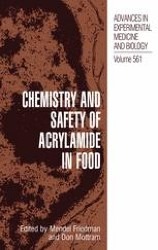
Specifically covered are the following aspects: exposure from the environment and the diet; biomarkers of exposure; risk assessment; epidemiology; mechanism of formation in food; biological alkylation of amino acids, peptides, proteins, and DNA by acrylamide and its epoxide metabolite glycidamide; neurotoxicity, reproductive toxicity, and carcinogenicity; protection against adverse effects; and possible approaches to reducing levels in food. Cross-fertilization of ideas among several disciplines in which an interest in acrylamide has developed, including food science, pharmacology, toxicology, and medicine, will provide a better understanding of the chemistry and biology of acrylamide in food, and can lead to the development of food processes to decrease the acrylamide content of the diet.
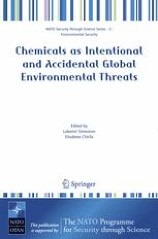
The book contains fields of ecology, chemistry, medicine, epidemiology, public health, toxicology, risk assessment, environmental protection and management, modelling, environmental remediation technologies came together to discuss the chemicals threats for the global environment. The intentional or accidental release of chemicals into environment poses a global threat to public health and security.
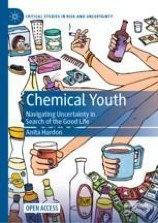
This book explores how young people engage with chemical substances in their everyday lives. It builds upon and supplements a large body of literature on young people’s use of drugs and alcohol to highlight the subjectivities and socialities that chemical use enables across diverse socio-cultural settings, illustrating how young people seek to avoid harm, while harnessing the beneficial effects of chemical use.
Research in the area of chemical and biochemical sensors and the development of respective applications is still growing rapidly. In the last decade it has become evident that the successful development of chemical and biochemical sensors resistant to the harsh conditions in the various routine applications calls for a cooperation between chemists and engineers.Thus, this book aims at instructing researcher and practitioners in both disciplines in a strictly systematic, interdisciplinary and practice-oriented way about the basic technology of chemical and biochemical sensors. This concise volume bridges the gap between the different "ways of thinking" in chemistry, physics and engineering

Chemical Reactor Modeling closes the gap between Chemical Reaction Engineering and Fluid Mechanics. It presents the fundamentals of the single-fluid and multi-fluid models for the analysis of single- and multiphase reactive flows in chemical reactors with a chemical reactor engineering rather than mathematical bias.

Chemical Kinetics and Reaction Dynamics brings together the major facts and theories relating to the rates with which chemical reactions occur from both the macroscopic and microscopic point of view. This book helps the reader achieve a thorough understanding of the principles of chemical kinetics and includes: *Detailed stereochemical discussions of reaction steps *Classical theory based calculations of state-to-state rate constants *A collection of matters on kinetics of various special reactions such as micellar catalysis, phase transfer catalysis, inhibition processes, oscillatory reactions, solid-state reactions, and polymerization reactions at a single source. The growth of the chemical industry greatly depends on the application of chemical kinetics, catalysts and catalytic processes.

Chemical genomics is a highly interdisciplinary and very exciting field of research both in academics and in the life sciences industry.Various aspects of the interface between chemistry and biology are covered in this volume, such as chemogenomics efforts in the pharmaceutical industry, diversity-oriented synthesis, chemogenomic approaches to the study of cell function, screening technologies, and natural products as tools in chemical biology.
Up to now, we do not have a generally accepted theory about the origin of life and about the process of development of life, we only have a great number of - to some extent even contradictory – hypotheses. Meanwhile there came up some scientific findings beyond thought only a few years ago.Horst Rauchfuss is comparing the different theories from the view of the latest results and is giving an exciting and easy understandable insight into the present state of research.

سوريا - اتستراد درعا - غباغب
+963-15 2050 - 15 860 380 /1/2/3 - 11 662 3900