


تحسين النتائح
ترتيب حسب
من
الى

The present book combines three main aspects: five major mass extinctions; contributions on some other minor extinctions; and more importantly contributions on the current mass extinction.
This monograph firstly provides a detailed description of the constitutive equation of masonry-like materials, clearly setting out its most important features. It then goes on to provide a numerical procedure to solve the equilibrium problem of masonry solids.
Markov chains are a particularly powerful and widely used tool for analyzing a variety of stochastic (probabilistic) systems over time. This monograph will present a series of Markov models, starting from the basic models and then building up to higher-order models. Included in the higher-order discussions are multivariate models, higher-order multivariate models, and higher-order hidden models. In each case, the focus is on the important kinds of applications that can be made with the class of models being considered in the current chapter. Special attention is given to numerical algorithms that can efficiently solve the models. Therefore, Markov Chains: Models, Algorithms and Applications outlines recent developments of Markov chain models for modeling queueing sequences, Internet, re-manufacturing systems, reverse logistics, inventory systems, bio-informatics, DNA sequences, genetic networks, data mining, and many other practical systems.
This book goes beyond a descriptive analysis of wrecks by exploring them and their cargoes as embodiments of 18th century social relations. Maritime Archaeology and Social Relations challenges traditional maritime approaches providing a different perspective that emphasises the richness, diversity and complexity of British action.By applying the concept of praxis, British action is integrated in both land and maritime spaces. A closer look into the associated experienced landscapes enhances our understanding of how social identities were projected at local and global levels.
Subject areas discussed in this book include shipwrecks and abandoned vessels, The application of National and State legislation and management regimes to these underwater cultural heritage sites is also highlighted, together with the important role of avocational divers and training programs in raising the profile of underwater and maritime heritage sites.The book includes a comprehensive bibliography of work conducted both in Australia and by Australian maritime archaeologists in the Asia-Pacific region. This book will be of interest to students and practitioners of maritime and historical archaeology and cultural heritage managers throughout the world .
Since the late 1960s, various groups have investigated the influence of marine surface films on mechanisms dominating energy and mass transfer across the ocean/atmosphere interface. However, a compendium summarizing the state-of-the-art research in this field is still missing. The book fills this gap and transfers the accumulated knowledge to the scientific community. After a brief historical chapter basic chemical insights are presented, followed by theoretical and experimental approaches carried out in laboratory facilities. Air-sea interaction experiments are then described and finally, remote sensing applications with sea slicks and crude oil spills are presented.
This book was originally conceived at a conference at the University of Turin in Italy. The conference was organized to examine the so-called “Malaria Hypothesis”, that is to say, the higher fitness of t- lassemia heterozygotes in a malarial environment, and to pay tribute to the proponent of that hypothesis, J.B.S. Haldane. Contributors to this book examine certain genetic and evolutionary aspects of malaria which is a major killer of human populations, especially in Africa and Asia. There were attempts to discredit Haldane’s contribution from two directions: (a) it has been suggested that the “Malaria Hypothesis” was known long before Haldane and that there was nothing original about his idea (Lederberg 1999), and that (b) the hypothesis of heterozygote su- riority was first suggested by the Italian biologist Giuseppe Montalenti who communicated his idea to Haldane (Allison 2004).
This book seeks to widen the perspective taken on implementation in fisheries management. The cases presented in this volume addresses legal, administrative, and political challenges regarding implementation of resource conservation policies. The book addresses problems relating to goal achievement, but also causes of deliberate change of political goals during implementation. Fisheries management systems are embedded in inert social structures and natural conditions that vary among different states. Consequently, the book takes a historical and comparative approach, describing the historical developments of national implementation systems and the conditions that shaped their development. It thus seeks to explain why national fisheries management systems have evolved differently, focusing on Norwegian, Faeroese, and EU/Danish management systems. The descriptive and explanatory outlines are accompanied by qualitative assessments of the systems effectiveness as tools for collective action.
This book discusses the progress of science and the transfer of scientific knowledge to technological application. It also identifies the factors necessary to achieve this progress. Based on a case study of the physical chemist Fritz Haber's discovery of ammonia synthesis between 1903 and 1909, the book places Haber's work in historical and scientific (physicochemical) context. The scientific developments of the preceding century are framed in a way that emphasizes the confluence of knowledge needed for Haber's success. Against this background, Haber's work is presented in detail along with the indispensable contributions of his colleague, the physical chemist, Walter Nernst, and their assistants. The detailed accounts of scientific advancement remind us of the physical basis on which our scientific theories and ideas are built. Without this reminder we often forget how complex, and how beautiful achievements in science can be.
Magnetohydrodynamics (MHD) studies the interaction between the flow of an electrically conducting fluid and magnetic fields. It involves such diverse topics as the evolution and dynamics of astrophysical objects, thermonuclear fusion, metallurgy and semiconductor crystal growth, etc. Although the first ideas in magnetohydrodynamics appeared at the beginning of the last century, the "explosion" in theoretical and experimental studies occurred in the 1950s-60s. This state-of-the-art book aims at revising the evolution of ideas in various branches of magnetohydrodynamics (astrophysics, earth and solar dynamos, plasmas, MHD turbulence and liquid metals) and reviews current trends and challenges.
Gives an comprehensive account of magnetism, spanning the historical development, the physical foundations and the continuing research underlying the field, one of the oldest yet still vibrant field of physics. It covers both the classical and quantum mechanical aspects of magnetism and novel experimental techniques. Perhaps uniquely, it also discusses spin transport and magnetization dynamics phenomena associated with atomically and spin engineered nano-structures against the backdrop of spintronics and magnetic storage and memory applications.
Addresses the exciting and rapidly developing topic of nanostructured magnetic materials. It combines modern topics in nanoscale magnetism with issues relating to the fabrication and characterization of magnetic nanostructures. The chapters describe a wide range of physical aspects, together with theoretical and experimental methods. "Magnetic Nanostructures" will be of interest to researchers and specialists both in academic and industrial research. Graduate students will also find in this book an accessible introduction to the essential issues.
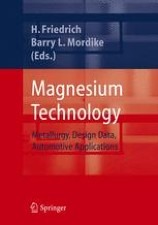
Magnesium, with a density of 1.74 g/cm², is the lightest structural metal and magnesium are increasingly chosen for weight-critical applications such as in land-based transport systems. "Magnesium Technology" substantially updates and complements existing reference sources on this key material. It assembles international contributions from seven countries covering a wide range of research programs into new alloys with the requisite property profiles, i.e., the current state of both research and technological applications of magnesium. In particular, the international team of authors covers key topics, such as: casting and wrought alloys; fabrication methods; corrosion and protection; engineering requirements and strategies, with examples from the automobile, aerospace, and consumer-goods industries, and recycling.
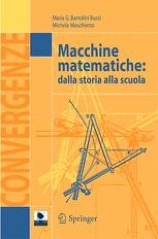
Presents the main mathematical machines for drawing curves, for applying geometrical transformations or for making classical perspectives.The publication constitutes an example of how history of mathematics may be useful for teaching today’s mathematics.

Takes an in-depth look at Louisiana as a state which is ahead of the curve in terms of extreme weather events, both in frequency and magnitude, and in its responses to these challenges including recovery and enhancement of resiliency.
Focuses on theoretical issues and empirical findings related to trends and determinants of healthy aging, including factors related to "healthy longevity" of the oldest-old, aged 80 and over. The group is the most rapidly increasing elderly sub-population and is most likely to need assistance in daily living in all countries. Chapters include both longitudinal and cross-sectional data from North America, Europe, and Asia in country-specific studies and cross-national comparisons. Part I focuses on the definition, components, concepts, measurements, and determinants of healthy aging, and discusses the trends and patterns of disability and healthy life expectancy at the macro level. Part II addresses individual healthy aging, including its biological and socio-demographic aspects. Part III focuses on issues concerning the family and healthy aging, and Part IV explores formal and informal care for healthy aging through governmental policy interventions and community service programs.
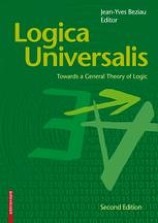
Modern logic has been intimately connected with algebra since its origins in figures such as Boole, De Morgan, and Peirce. But while universal algebra is a long recognized field, universal logic has only recently been named as such. This is perhaps because classical logic was until relatively recently taken by many as the "one true logic". But with the proliferation of special purpose non-classical logics in recent years, universal logic is clearly a field whose time has come. This book contains many excellent papers demonstrating the value of this approach.

Signifies the arrival of a new renaissance in logic, a new revival not only of logic, but of the vision of logic as a unifying tool for science as a whole, including mathematics, physics, cosmology, computer science and AI. The book and the vision behind it give logic, conceived as a scientific study of rationality, new unifying power, new perspectives, and new horizons.Universal Logic is not a new logic, but a general theory of logics, considered as mathematical structures. The name was introduced about ten years ago, but the subject is as old as the beginning of modern logic: Alfred Tarski and other Polish logicians such as Adolf Lindenbaum developed a general theory of logics at the end of the 1920s based on consequence operations and logical matrices. The subject was revived after the flowering of thousands of new logics during the last thirty years: there was a need for a systematic theory of logics to put some order in this chaotic multiplicity.
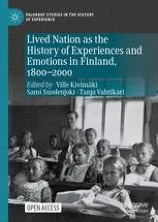
It revolves around the following questions: What kinds of experiences have engendered national mobilization and feelings of national belonging? How have political and societal conflicts turned into new communities of experience and emotion? What kinds of experiences have been integrated into, or excluded from, the national context in different instances? How have people internalized or contested the nation as a context for their personal, family and minority-group experiences? In what ways has the nation entered and affected people’s intimate spheres of life? How have “national” experiences been transmitted to children in the renewal of the nation? This edited collection points to the histories of experience and emotions as a novel way of studying nations and nationalism. Building on current debates in nationalism studies, it offers a theoretical framework for analyzing the historical construction of “lived nations,” and introduces a number of new methodological approaches to understand the experiences of the nation, extending from the investigation of personal reminiscences and music records to the study of dreams and children’s drawings.
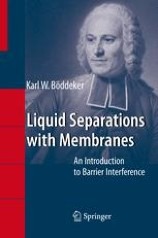
On the level of a textbook a self-consistent approach to liquid separations with membranes is presented, contrasting equilibrium separations with the rate-controlling effects of barrier interference on mass transfer. As a corollary objective, an effort is made to observe context, factual and historical, when introducing concepts and applications of membrane separation science. Ordering principle is the formal structure of mass transfer across barriers, being construed of a driving force (allocated to the condition of the mixtures to be separated) and a barrier permeability (holding the keys to membrane selectivity). The membranes, by this approach, appear by way of the mass transport demands which they are to meet, or else by way of the separation effects which they inspire.

سوريا - اتستراد درعا - غباغب
+963-15 2050 - 15 860 380 /1/2/3 - 11 662 3900