


تحسين النتائح
ترتيب حسب
من
الى

Bringing together an international team of scholars, this book offers new perspectives on the impact that the Bauhaus and its teaching had on a wide range of artistic practices.
This book focuses on the phenomenon of art intervention—an expression of local initiatives by artists, collectives, and art centers wishing to influence the design of the space or make a change in its lifestyle.
Examines how the design and provision of housing around the world have become central both to competing political projects and to the architecture profession. How have architects acting as housing experts helped alleviate or enforce class, race, and gender inequality? What are the disciplinary implications of taking on shelter for the multitude as an architectural assignment and responsibility? The book features essays in the historiography of architecture and the housing question, and a collection of historical case studies from Belgium, China, France, Ghana, the Netherlands, Kenya, the Soviet Union, Turkey, and the United States.
Essential guide to creating well-lit, visually appealing interior spaces. The book begins with an overview of light and color theory, lighting fundamentals, and design principles. It then covers artificial, natural, decorative, and professional lighting in interior design, as well as standards and regulations, controls and systems, sustainable lighting, energy efficiency, light pollution reduction, and the use of environmentally friendly materials. With a focus on practical applications and real-world examples, this book provides readers with the tools and knowledge necessary to achieve their design goals while considering the latest trends and techniques in the field. A valuable resource for professionals and students in architecture and lighting design, it will also appeal to anyone interested in creating visually stunning and functional interior spaces.
Architectonics and Parametric Thinking begins by clearly positioning the potentials of parametric design through a series of chapters written by leaders in their respective industries. This helps to situate the vast potential of parametric softwares, allowing the reader to understand the full range of what is made possible by working computationally. Following this theoretical introduction, the book presents a manual that walks readers through the step-by-step construction of parametric modeling scripts built through an architectonic lens using clear, compelling diagrams.
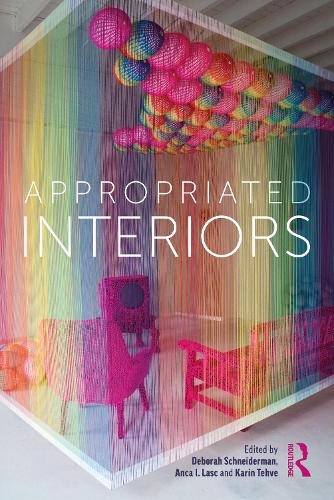
Uncoversthe ways interiors participate explicitly and implicitly in embedded cultural and societal values and explores timely emergent scholarship in the fields of interior design history, theory, and practice. An informative read for students and scholars of design history and theory, this collection considers the standards, assumptions, codes, and/or conventions that need to be dismantled and how we can expand our understanding of the history, theory, and practice of interior design to challenge the status quo.
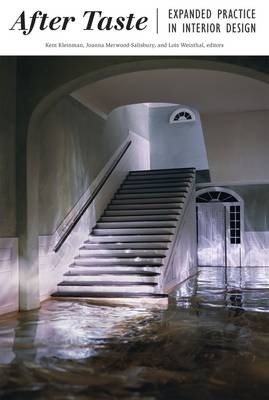
Comprising texts, interviews and portfolios that collectively document new theories and emerging critical practices in the field of interior design. The material is informed by, but not limited to, the annual AfterTaste symposia hosted by Parsons The New School of Design. The book s central argument is that the field of interior design is inadequately served by its historical reliance on taste-making and taste-makers, and, more recently from a set of theoretical concerns derived from architecture; the volume seeks to set an expanded frame by advancing new voices and perspectives in both the theory and practice of interior design, considered as an independent discipline. In 2007, the Department of Architecture, Interior Design and Lighting at Parsons The New School for Design inaugurated an annual international symposium series dedicated to the critical study of the interior.
Interweaving architecture, philosophy and cultural history, Materials and Meaning in Architecture develops a rich and multi-dimensional exploration of materials and materiality, in an age when architectural practice seems otherwise preoccupied with image and visual representation.
Traces the roots of landscape as a form of urbanism from its origins in the Renaissance through the twentieth century. Growing out of progressive architectural culture and populist environmentalism, the concept was further informed by the nineteenth-century invention of landscape architecture as a "new art" charged with reconciling the design of the industrial city with its ecological and social conditions. In the late twentieth and early twenty-first centuries, as urban planning shifted from design to social science, and as urban design committed to neotraditional models of town planning, landscape urbanism emerged to fill a void at the heart of the contemporary urban project.
Introduces a comfortable approach to learning landscape architectural design free of design jargon and derived from their existing knowledge. A step-by-step process has readers consider their knowledge of language as metaphorically related to basic design and landscape design. Through information delivery and questioning processes, readers build on what they already know, their tacit understanding of language as applied to problem solving and storytelling. Everyone is a storyteller.
Claude-Nicolas Ledoux (1736-1806) is today regarded as chief representative of French revolutionary architecture. With his extraordinary inventiveness he projected the architectural ideals of his era. Ledoux's influential buildings and projects are presented and interpreted both aesthetically and historically in this book. His best-known projects - the Royal Saltwords of Arc-et-Senans, the tollgates of Paris, the ideal city of Chaux - reveal the architect's allegiance to the principles of antiquity and Renaissance but also illustrate the evolution of his own utopian language. With the French Revolution, Ledoux ceased building as his contemporaries perceived him as a royal architect. He focused on the development of his architectural theory and redefined the vision of the modern architect
Based on a history of climate control on urban scales, it promotes the integration of indoors and outdoors in order to reduce environmental and thermal loads in cities. Just as heating and cooling practices inside the buildings are affecting the (urban) climate outdoors, urban heat islands are influencing the energy requirements and thermal conditions inside the buildings. While the first part of the book focuses on the interwar period in Europe, the publication’s second part considers examples from all over the globe, tracing the growing significance of ecological thinking for the design of urban environments.
Discusses the content of treatises, essays, articles, and letters by those who have been, throughout history, committed to the art of building. In this, Building Theories argues for the return of a practice of architectural theory that is set amongst building, buildings, and builders. This journey of close reading reinterprets the words of Vitruvius, Alberti, de L’Orme, Le Camus de Mézières, Boullée, Laugier, Rondelet, Semper, Viollet-le-Duc, Hübsch, Bötticher, Berlage, Muthesius, Wagner, Behrendt, Gropius, and Arup. With chapters dedicated to texts from antiquity, the Renaissance, and the nineteenth century, and with a critical eye on architectural theory popularized in the Anglo-Saxon world post-1968, readers are introduced to a wider, more inclusive definition of architectural ideas.
Focuses on the wide-ranging aspects of facade design, from the selection and use of materials to the advanced technical possibilities now open to the architect. A wide array of carefully selected international examples show the theory in the practice.
presents a comprehensive and systematic overview of the subject. It provides a working definition of building performance, and an in-depth discussion of the role building performance plays throughout the building life cycle. The book also explores the perspectives of various stakeholders, the functions of buildings, performance requirements, performance quantification (both predicted and measured), criteria for success, and the challenges of using performance analysis in practice. Assembles the current body of knowledge on building performance analysis in one unique resource Offers deep insights into the complexity of using building performance analysis throughout the entire building life cycle, including design, operation and management Contributes an emergent theory of building performance and its analysis
Introduction to the complex relationship between form making, historical analysis, and conceptual explorations. This book focuses on the relationship and interdependence between design, theory, and history for an innovative and holistic studio approach. Draws from a diverse range of thinkers and designers to highlight the many interpretations of key architectural concepts, and provides readers with the context essential for developing their own approaches to any design problem.
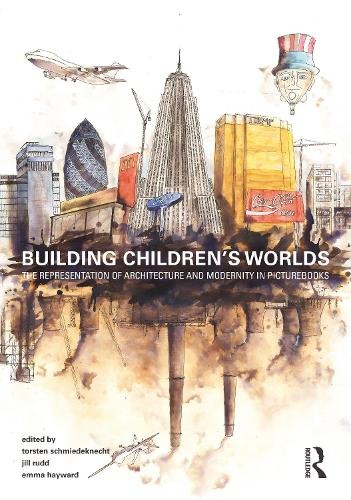
Children are the future architects, clients and users of our buildings. The kinds of architectural worlds they are exposed to in picturebooks during their formative years may be assumed to influence how they regard such architecture as adults. Contemporary urban environments the world over represent the various stages of modernism in architecture. This book reads that history through picturebooks and considers the kinds of national identities and histories they construct. Reveals what stories are told about modern architecture and shows how those stories affect future attitudes towards and expectations of the built environment.
In this book, acclaimed architectural theorist Mark Jarzombek examines this tension head-on, and uses it to rethink the nature of the history of architecture. He reveals architecture to be a troubled, interconnected realm, incomplete and unstable, where labor, craft, and occupation are the ‘invisible’ complements to the work of the architect.
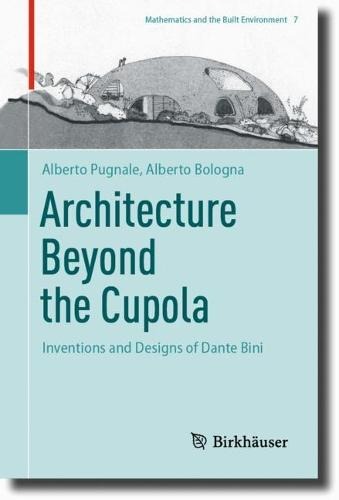
This book reviews Dante Bini’s inventions and designs, focusing on his form-resistant Binishell and other pneumatic construction systems. Dante Bini’s double profile of architect and builder underpins the narrative of the entire book. It is used to analyse the evolution of the early reinforced-concrete Binishell patent into a variety of automated construction systems based on the use of air. Dante Bini has always been quite proactive in promoting his work and disseminating the results of his experimentations and achievements via journal articles, conference presentations and public talks.
The book is divided into seven chapters, which in turn analyze the interconnections between the novel and architecture in theory and in practice. The first six chapters cover debates on State art, on the novel and on architecture, as well as their historical development and their unfolding in key journals of the period. The last chapter offers a detailed analysis of some important novels and buildings, which have in practice realized some of the key principles articulated in the theoretical disputes.

سوريا - اتستراد درعا - غباغب
+963-15 2050 - 15 860 380 /1/2/3 - 11 662 3900