


تحسين النتائح
ترتيب حسب
من
الى

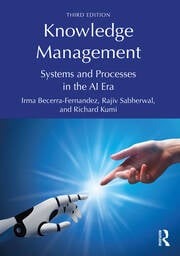
Aimed at students and managers who seek detailed insights into contemporary knowledge management (KM). It explains the concepts, theories, and technologies that provide the foundation for knowledge management; the systems and structures that constitute KM solutions; and the processes for developing, deploying, and evaluating these KM solutions. It serves as a complete introduction to the subject of knowledge management, incorporating technical and social aspects, as well as concepts, practical examples, traditional KM approaches, and emerging topics. This third edition has been revised and expanded to include more coverage of emergent trends such as cloud computing, online communities, crowdsourcing and artificial intelligence.
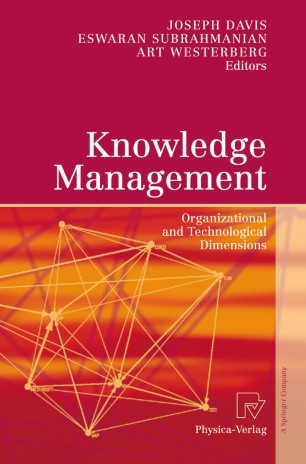
Presents a unique blend of articles which combines both conceptual and practical concerns related to devising and implementing sustainable Knowledge Management systems and solutions in contemporary global organizations. The book's contributors are among the leading thinkers and practitioners in this growing field. The seamless synthesis of the human, organizational, and technological dimensions of Knowledge Management makes this book a definitive guide for academics and practising managers alike.

In times of fierce competition in business-to-business markets strong and economically sound business relationships with a company's customers rank among the main success factors. As a well established marketing management conception, key account management is of particular significance in this context. Interestingly enough, empirical research studies have recently proved that relationship marketing, and particularly key account management, does not achieve the economic value originally expected.
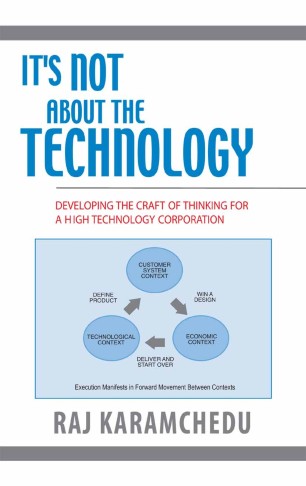
This book is not about a new concept, or a new technique. It tackles the big questions of how to develop the craft of the thinking that is required of us in high technology companies. It is predicated on a radical notion that, even though the problematic is the execution in a high technology corporation, neither a high level market strategy nor the kind of technology itself matters, insofar as learning the craft of execution goes. How marketers and engineers comprehend a context uniquely shapes the ways they interact, engage in decision-making phenomenon, and eventually their execution performance in a company. The breakdown of their interaction occurs when the individual contexts of a marketer and an engineer are permanently secluded from one another.this book methodically demystifies the key to successful execution in the high technology space

The ongoing digitization process affects all areas of the media industry. Within the scientific discussion, movie production is little observed although it currently faces crucial structural developments. The change to digital production processes allows new ways of cooperation and coordination in the project networks. Marcus Pankow examines the specifics of the movie production industry and its value-creating processes, reflecting the digitization and its impact on the information systems strategy. An empirical case study analysis forms the basis for the development of a reference model for a company-wide application system to support the entire movie production process. Following the concept of a Service Oriented Architecture (SOA), he encapsulates established applications in services and integrates them on one platform.

This monograph introduces new concepts of unstable periodic orbits and chaotic saddles which are unstable structures embedded in a chaotic attractor, responsible for economic intermittency.
In his book, Jan Brinckmann develops a comprehensive competence concept for new technology-based firms. It is grounded in competence-related literature combining insights from entrepreneurship and management research. The competence concept comprises three domains: general entrepreneurial competencies, social competencies, and functional competencies in technology, marketing, and financial management. A measurement model is developed to specify the contents of each sub-domain and to facilitate self-assessment of these competencies. In an empirical study, 212 executives of German NTBFs assessed their team’s competencies. This data is analyzed using structural equation modelling to identify the most relevant competencies for new venture success.

Investigation reveals enterprises small and large delivering a stimulating message, from changes in entrepreneurial mindsets to the inclusive use of new technologies and a push for innovation. Zucchella and Urban explore the novel concept of circular enterprise, showing how, with their capacity to innovate, these firms are becoming the most powerful actors of a new, sustainable social order.

CELLULAR GENETIC ALGORITHMS defines a new class of optimization algorithms based on the concepts of structured populations and Genetic Algorithms (GAs). The authors explain and demonstrate the validity of these cellular genetic algorithms throughout the book. This class of genetic algorithms is shown to produce impressive results on a whole range of domains, including complex problems that are epistatic, multi-modal, deceptive, discrete, continuous, multi-objective, and random in nature. The focus of this book is twofold. On the one hand, the authors present new algorithmic models and extensions to the basic class of Cellular GAs in order to tackle complex problems more efficiently. On the other hand, practical real world tasks are successfully faced by applying Cellular GA methodologies to produce workable solutions of real-world applications.
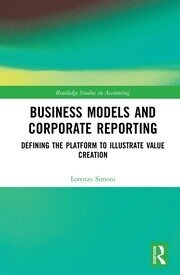
This book discusses the role of business models in corporate reporting. It illustrates the evolution of non-financial reporting, the importance of business model reporting, and the main conceptualisations of business models. It also offers a methodological contribution to the assessment of business model reporting. Finally, it discusses the main implication of business model reporting for different categories of subjects and some challenges related to this kind of disclosure

Business Financial Information Secrets shows you how to produce, understand, and utilize financial information to the greatest effect for your business and the economy at large. This book guides you through the surprisingly clean and simple process of proper accounting and reporting, regardless of your organization’s size or structure. Cash flow and business capital management are covered extensively throughout the book as without a thorough understanding of these all-important concepts, you could be lacking critical information about the lifeline of your business.

Focuses on the concept of “brand hate” and consumer negativity in today’s digital markets. It explores the emotional detachment consumers generate against valued brands and how negative experiences affect their and other consumers' loyalty. The book defines consumer brand hate and discusses its dimensions, antecedents, and consequences as well as the semiotics and legality of such brand hate activities based on current brand dilution arguments. It describes the situations which lead to anti-branding and how consumers choose to express their dissatisfaction with a company on individual and social levels. This newly updated edition discusses recent research findings from brand hate literature with new cases and extended managerial analysis.

This book defines the new field of "Bioeconomy" as the sustainable and innovative use of biomass and biological knowledge to provide food, feed, industrial products, bioenergy and ecological services. The chapters highlight the importance of bioeconomy-related concepts in public, scientific, and political discourse. Using an interdisciplinary approach, the authors outline the dimensions of the bioeconomy as a means of achieving sustainability.

Makes use of Lie groups to shed new light on the analysis of economic conservation laws. Economic conservation laws are not simply abstract concepts; this book shows that they are tools of empirical analysis that can be applied to such topics as analyses of macro performance and corporate efficiency.

Hints of globalization have actually been around for several decades, even though they made only a modest impact; however, the availability of global capital and advances in communication technology have emp- sized the process of internationalization and the tools available to connect and integrate business activities to answer to more complex needs of c- ents. Moreover, the financial scandals and the review of mutual fund trade activity in the US by the Attorney General Elliot Spitzer have highlighted the importance to focus all efforts on renewing the confidence of prof- sional investors and their clients who have entrusted their capital to asset managers. Therefore, there is a growing need in the market to reinforce the concept of “Shared Positive Values” among the entire industry and among its stakeholders.

Key for successful knowledge management is a balance between exploration and exploitation. Danger arises when exploration is neglected in favour of exploitation since that may result in an organization which lacks innovation capability. In order to prevent this, an idea has been put forward in recent knowledge management research called ambidexterity, which means the simultaneous and balanced pursuing of both exploration and exploitations activities. Tatjana-Xenia Puhan follows up on this idea by concluding that ambidexterity need not necessarily be implemented in one single organization but can also be realised in a network of associated organizations. The interorganizational ambidexterity is based on co-specialisation: one organisation is devoted solely to exploration while associated organizations focus on their competences in exploitation. Furthermore, the author develops the concept of think tanks as organizations that concentrate on radical innovations while their network associates exploit this newly generated knowledge commercially.

Our book is one of the first to probe deeply into the art and science of branding industrial products. We provide the concepts, the theory, and dozens of cases illustrating the successful branding of industrial goods.
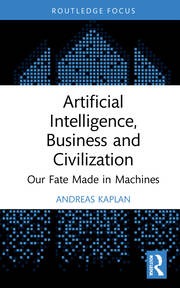
Looks at what exactly artificial intelligence is, how it can be classified, how it differentiates from other concepts such as machine learning, big data, blockchain, or the Internet-of-Things, and how it has evolved and might evolve over time.

ARIS is ranked as the leading Business Process Modelling tool in the Gartner Quadrant for Business Process Analysis and Optimization. The ARIS Design Platform is being used as a business process management (BPM) tool for projects in BPM, quality management, business analysis and design, software development, implementation of service-oriented architectures and so forth. Following on from Rob Davis’ successful introductory text, ARIS Design Platform: Getting Started with BPM, this new book covers in detail some of the more advanced concepts of using ARIS Business Architect in the new ARIS 7 Design Platform. Written in a reader-friendly style, it contains detailed explanations of key concepts combined with numerous examples, hints and tips gained from many years of practical experience of using ARIS.

It is designed to be a "first port of call" for people wishing to study efficiency and productivity analysis. The book provides an accessible introduction to the four principal methods involved: econometric estimation of average response models; index numbers; data envelopment analysis (DEA); and stochastic firontier analysis (SFA). For each method, we provide a detailed introduction to the basic concepts, give some simple numerical examples, discuss some of the more important extensions to the basic methods, and provide references for further reading. In addition, we provide a number of detailed empirical applications using real-world data.

سوريا - اتستراد درعا - غباغب
+963-15 2050 - 15 860 380 /1/2/3 - 11 662 3900