


تحسين النتائح
ترتيب حسب
من
الى


Discusses the latest advancements in modern methodologies used to study liver carcinogenesis. The first half of this book describes pertinent preclinical models of hepatocellular carcinoma (HCC) and cholangiocarcinoma (CCA), established either through orthotopic induction of ectopic implantation. The second half of this book covers a diverse array of techniques applied to characterize the biochemical and cellular composition of hepatic malignancies that operate at the single-cell and histological levels. Written in the highly successful Methods in Molecular Biology series format, chapters include introductions to their respective topics, lists of the necessary materials and reagents, step-by-step, readily reproducible laboratory protocols, and tips on troubleshooting and avoiding known pitfalls.
This updated volume presents experimentation-based approaches to lactic acid bacteria (LAB) research. Split into three parts, the book explores techniques for analyzing lactic acid bacteria metabolism and characteristics, applications for food-related industries, such as yogurt production, beer, and wine making, and functions of LAB in human health. Written for the highly successful Methods in Molecular Biology series, chapters include introduction to their respective topic, lists of the necessary materials and reagents, step-by-step and readily reproducible laboratory protocols, and tips on troubleshooting and avoiding known pitfalls.
This fully updated volume describes methods and protocols for a number of drugs and toxins in a stepwise manner. Exploring the versatility and flexibility of mass spectrometry, the book covers the advantages of this technology, which typically include elimination of the need for special reagents such as antibodies, increased sensitivity and specificity, and multi-component analysis enabling the screening of tens to hundreds of compounds in a single assay run. Written for the highly successful Methods in Molecular Biology series, chapters include introductions to their respective topics, lists of the necessary materials and reagents, step-by-step and readily reproducible laboratory protocols, as well as tips on troubleshooting and avoiding known pitfalls.
Covers the latest advancements in the study of ciliary complexity. Protocols cover genomic, proteomic, imaging, and functional analysis of different ciliated tissues and their wide applicability in cilia biology. Chapters in this book primarily focus on methods to study multiciliated cells, and discuss topics such as SARS-CoV-2 infections of human primary nasal multiciliated epithelial cells; expansion microscopy of ciliary proteins; live-imaging centriole amplification in mouse brain multiciliated cells; biophysical properties of cilia motility; and mucociliary transport device construction. Written in the highly successful Methods in Molecular Biology series format, chapters include introductions to their respective topics, lists of the necessary materials and reagents, step-by-step, readily reproducible laboratory protocols, and tips on troubleshooting and avoiding known pitfalls.

Pesents hands-on technological protocols used to target an array of cell-secreted extracellular vesicles (EVs) in a variety of biological systems. Beginning with methods for EV purification and analysis, the book continues with sections on the study of EV functions as well as specific systems and models allowing for the study of EVs of different origin. Written for the highly successful Methods in Molecular Biology series, chapters include introductions to their respective topics, lists of the necessary materials and reagents, step-by-step and readily reproducible laboratory protocols, and tips on troubleshooting and avoiding known pitfalls.

Collects techniques to study the highly regulated cell cycle process. Beginning with chapters investigating these processes and assessing how cells respond when these complicated pathways are simplified by using synthetic biology and in vitro reconstitutions, the book continues by exploring how cells sense and respond to environmental conditions, different model systems and cellular types used to visualize cellular architecture during cell division, as well as innovative single cell microscopy techniques to highlight the heterogeneity of the cell population with respect to cell cycle progression. Written for the highly successful Methods in Molecular Biology series, chapters include introductions to their respective topics, lists of the necessary materials and reagents, step-by-step and readily reproducible laboratory protocols, and tips on troubleshooting and avoiding known pitfalls.

Discussions on topics such as gene suppression, editing, and reprogramming; cardiac gene therapy vectors and promoters; cardiac gene delivery methods; pulmonary hypertension; and patient screening and measuring the efficacy of cardiac gene therapy. Written in the highly successful Methods in Molecular Biology series format, chapters include introductions to their respective topics, lists of the necessary materials and reagents, step-by-step, readily reproducible laboratory protocols, and tips on troubleshooting and avoiding known pitfalls.
Details multiple areas of new and emerging methods to develop the next generation of immunotherapy treatments. Chapters guide readers through analysis and characterisation of the interactions between tumour and immune cells, and cell engineering tools for cancer treatment, to provide a unique and compelling set of techniques instrumental to work with, and engineer, immune cells. Written in the highly successful Methods in Molecular Biology series format, chapters include introductions to their respective topics, lists of the necessary materials and reagents, step-by-step, readily reproducible laboratory protocols, and tips on troubleshooting and avoiding known pitfalls.

Covers the latest advancements and techniques used to understand the fastidious bacterium, Borrelia burgdorferi, and its significance in infectious disorders by combining both conventional and cutting-edge approaches. This book covers diverse topics, including direct detection, diagnostic methods, immune response analysis, alternative model systems, advanced proteomics, social media analysis, and clinical research. It also discusses unconventional wet lab research such as content analysis, the use of ChatGPT, clinical algorithms for chronic Lyme, establishment of a pregnancy Lyme disease biobank, and investigates Lyme in pregnant women. Written in the highly successful Methods in Molecular Biology series format, chapters include introductions to their respective topics, lists of the necessary materials and reagents, step-by-step, readily reproducible laboratory protocols, and tips on troubleshooting and avoiding known pitfalls.
Aims to build a new generation of experts with a broader understanding of key topics in the Alzheimer’s disease field. Chapters guide readers through innovative approaches to the discovery of novel biomarkers in cerebrospinal fluid, innovation in blood-based biomarkers, a comprehensive overview of magnetic resonance imaging and molecular imaging approaches and their value for developing drugs for Alzheimer’s disease, cutting-edge developments in neuropathology and their relevance for Alzheimer’s disease trials, novel genomic strategies for biomarker development, and related topics including neuropsychological testing and advanced analytical methods.Written in the highly successful Methods in Molecular Biology series format, chapters include introductions to their respective topics, lists of the necessary materials and reagents, step-by-step, readily reproducible laboratory protocols, and tips on troubleshooting and avoiding known pitfalls.
Provides up-to-date guidance on techniques used to work with baculoviruses and insect cells. The book provides basic methods to create recombinant baculoviruses, to improve productivity, to produce a variety of products, to purify products, to quantify baculovirus stocks or to quantify product produced, and it concludes with alternative uses of either baculovirus or insect cells as tools. Written for the highly successful Methods in Molecular Biology series, chapters include introductions to their respective topics, lists of the necessary materials and reagents, step-by-step and readily reproducible laboratory protocols, and tips on troubleshooting and avoiding known pitfalls.
Details new and updated experimental approaches for isolating, formulating, and engineering bacteriophage medicinal products. Authored by leading experts and written in the highly successful Methods in Molecular Biology series format, each chapter includes introductions to their respective topics, lists of the necessary materials and reagents, step-by-step reproducible laboratory protocols, and valuable tips for troubleshooting and avoiding known pitfalls.
Details new and updated methods used for studying prokaryotic non-coding RNAs and their protein accomplices. Chapters detail discovery of ncRNAs, characterization of their structure, functions, and their interactomes. Written in the highly successful Methods in Molecular Biology series format, chapters include introductions to their respective topics, lists of the necessary materials and reagents, step-by-step, readily reproducible laboratory protocols, and tips on troubleshooting and avoiding known pitfalls.
Brings together new and updated methods to explore the structure and function of bacterial chromatin from molecular to the cellular scale. Chapters detail experimental protocols of in vivo and in vitro approaches, approaches to genome structure modeling, and data analysis. Written in the highly successful Methods in Molecular Biology series format, chapters include introductions to their respective topics, lists of the necessary materials and reagents, step-by-step, readily reproducible laboratory protocols, and key tips on troubleshooting and avoiding known pitfalls.
This volume gathers a variety of models, delivery systems, and approaches that can be used to assess RNA technology for exploiting antisense as a therapeutic intervention. Beginning with a section on the design of antisense technology and their delivery, the book continues by covering model systems developed to evaluate efficacy, both in vivo and in vitro, as well as methods to evaluate preclinically the toxicity associated with these new potential drugs, and intellectual property considerations. Written for the highly successful Methods in Molecular Biology series, chapters include introductions to their respective topics, lists of the necessary materials and reagents, step-by-step, readily reproducible laboratory protocols, and tips on troubleshooting and avoiding known pitfalls.
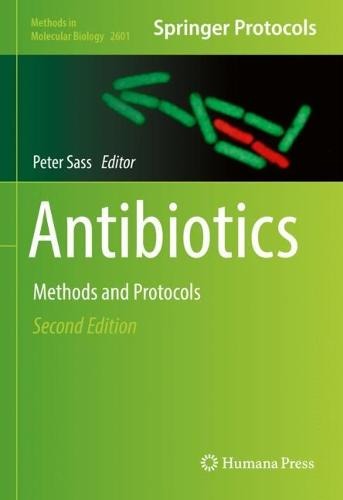
Provides state-of-the-art and novel methods on antibiotic isolation and purification, identification of antimicrobial killing mechanisms, as well as methods for the analysis and detection of microbial responses and adaptation strategies. Antibiotics: Methods and Protocols, Second Edition, guides readers through updated and entirely new chapters on production and design, mode of action, and response and resistance. Written in the highly successful Methods in Molecular Biology series format, chapters include introductions to their respective topics, lists of the necessary materials and reagents, step-by-step, readily reproducible laboratory protocols, and tips on troubleshooting and avoiding known pitfalls.

Provides a collection of protocols that will allow researchers to further explore the multiple, fascinating activities of Alpha-1 Antitrypsin (AAT) isoforms in innate immunity, and gene therapy. Written in the highly successful Methods in Molecular Biology series format, chapters include introductions to their respective topics, lists of the necessary materials and reagents, step-by-step, readily reproducible laboratory protocols, and tips on troubleshooting and avoiding known pitfalls.
Discusses of the latest technology and advancements in the field of human-derived ASC and SVF. The chapters in this book are organized into four parts. Part One focuses on human ASC’s isolation, characterization, and differentiation. Part Two describes the isolation and characterization of ASC and SVF from canine, feline, and murine tissues. Part Three looks at hydrogels, scaffolds, and microphysiological systems, and Part Four talks about the new assays and applications using ASC. Written in the highly successful Methods in Molecular Biology series format, chapters include introductions to their respective topics, lists of the necessary materials and reagents, step-by-step, readily reproducible laboratory protocols, and tips on troubleshooting and avoiding known pitfalls.
Expands on the previous edition with discussions about the latest organoid models developed for many more organs; new hydrogels and devices for 3D culture; and the organoid systems that have been improved by incorporating more components of tissue microenvironments in the in vitro culture. The chapters in this book are organized into five parts and cover topics such as biofabrication, organoids, microfluidic systems, bioprinting, and image analysis. Written in the highly successful Methods in Molecular Biology series format, chapters include introductions to their respective topics, lists of the necessary materials and reagents, step-by-step, readily reproducible laboratory protocols, and tips on troubleshooting and avoiding known pitfalls.
The book begins by discussing the background of Linux and open source software, then proceeds to guide you through the SUSE installation process. You'll learn how to use the basic functions, and modify the look and feel according to your tastes. This book is packed with troubleshooting tips, so even the most cautious beginner will feel right at home. Next, the book covers the daily usage tasks that are enjoyable and interesting to learn. You'll learn how to configure your system to listen to audio CDs and MP3s, burn CDs, watch movies, connect to the Internet, and reproduce common Windows tasks.

سوريا - اتستراد درعا - غباغب
+963-15 2050 - 15 860 380 /1/2/3 - 11 662 3900